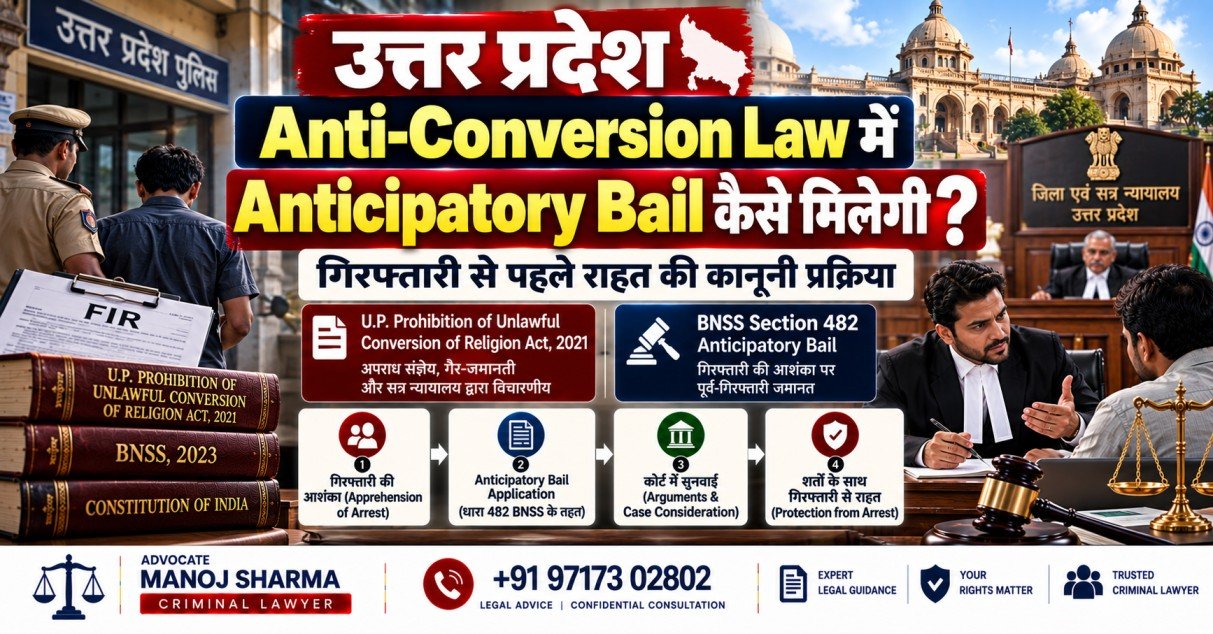
उत्तर प्रदेश में Anti-Conversion Law के तहत FIR दर्ज होने के बाद सबसे पहला डर अक्सर यही होता है—“अब पुलिस गिरफ्तार करेगी तो क्या होगा?”
इस सवाल का जवाब केवल यह देखकर नहीं दिया जा सकता कि FIR में Uttar Pradesh Prohibition of Unlawful Conversion of Religion Act, 2021 की कौन-सी धारा लगी है। क्योंकि इस कानून में offences को cognizable और non-bailable बनाया गया है और उनका trial Court of Sessions के सामने होता है। लेकिन non-bailable offence होना और anticipatory bail का रास्ता पूरी तरह बंद होना एक ही बात नहीं है। Current Section 7 स्वयं post-arrest bail की स्थिति में “if in custody” की language इस्तेमाल करता है।
इसलिए अगर किसी व्यक्ति को apprehension है कि Conversion Act की FIR के आधार पर उसे गिरफ्तार किया जा सकता है, तो असली legal question यह होगा कि क्या BNSS की Section 482 के तहत pre-arrest protection मांगी जा सकती है, और Court उस protection को देने या रोकने के लिए किन facts और legal tests को देखेगी?
यहाँ एक और सावधानी जरूरी है।
हर Conversion Act FIR एक जैसी नहीं होती। किसी FIR में केवल interfaith relationship का allegation हो सकता है; दूसरी FIR में force, coercion, allurement या misrepresentation का specific allegation हो सकता है; किसी तीसरे मामले में religious conversion कराने वाले व्यक्ति पर abetment या conspiracy का आरोप हो सकता है। 2024 amendment के बाद punishment structure भी काफी कठोर हुआ है।
इसलिए anticipatory bail की असली लड़ाई FIR की धारा पढ़ने से शुरू होकर accused की exact role और arrest की वास्तविक आवश्यकता तक जाती है।
UP Anti-Conversion Act की FIR में गिरफ्तारी का डर हो तो क्या Anticipatory Bail मिल सकती है?
सीधा जवाब है—हाँ, परिस्थितियों के अनुसार anticipatory bail मांगी जा सकती है।
यहाँ सबसे पहले एक basic लेकिन महत्वपूर्ण distinction समझना चाहिए।
UP Prohibition of Unlawful Conversion of Religion Act के Section 7 के अनुसार इस Act के offences cognizable, non-bailable और Court of Sessions द्वारा triable हैं। Section 7(2) custody में मौजूद accused की bail को लेकर Public Prosecutor को opportunity और, objection होने पर, Court द्वारा statutory conditions satisfy करने की बात करता है.
लेकिन anticipatory bail का प्रश्न arrest से पहले पैदा होता है।
BNSS की Section 482 उस व्यक्ति को High Court या Court of Session से direction मांगने का statutory route देती है जिसे reasonable apprehension हो कि उसे किसी non-bailable offence के आरोप में गिरफ्तार किया जा सकता है।
यही कारण है कि recent Allahabad High Court practice में Conversion Act के आरोपों वाले मामलों में Section 482 BNSS के तहत anticipatory-bail applications entertain हुई हैं। 2026 के Manmohan Singh जैसे orders भी Allahabad High Court में Section 482 BNSS anticipatory-bail jurisdiction के exercise को दिखाते हैं, जबकि Conversion Act से जुड़े अन्य recent cases में भी यही pre-arrest route इस्तेमाल हुआ है.
इसलिए legal position को इस तरह समझना ज्यादा सही है:
“Act के तहत offence non-bailable है”
≠
“Pre-arrest protection का jurisdiction ही समाप्त हो गया।”
लेकिन इसका दूसरा पक्ष भी उतना ही महत्वपूर्ण है।
Anticipatory bail कोई automatic statutory entitlement नहीं है। Court को यह देखना होगा कि accused के खिलाफ allegation कितना specific है, alleged offence के ingredients prima facie कैसे बनते हैं, accused की individual role क्या है, custodial interrogation की वास्तविक आवश्यकता है या नहीं और applicant की conduct कैसी है।
यहीं से अगला सवाल आता है—
2024 amendment के बाद यह law इतना कठोर हुआ है, तो anticipatory bail Court के सामने उसका असर कितना पड़ेगा?
2024 Amendment के बाद UP Conversion Act में Arrest और Bail का Legal Framework इतना महत्वपूर्ण क्यों है?
अगर किसी lawyer को Conversion Act की FIR में anticipatory bail argue करनी है, तो केवल Section 3 पढ़ना पर्याप्त नहीं होगा। 2024 amendment ने Act के punishment और procedural framework दोनों को materially बदल दिया है।
Current Section 5 में अलग-अलग situations के लिए substantially enhanced punishments रखी गई हैं। सामान्य unlawful conversion के लिए imprisonment की range बढ़ाई गई है और कुछ aggravated categories—जैसे minor, woman, SC/ST person, mass conversion, certain institutional/foreign-funding allegations और specified marriage/promise-to-marry related situations—के लिए अधिक गंभीर punishment structure रखा गया है.
इसी तरह Section 7 यह declare करता है कि Act के offences cognizable और non-bailable होंगे तथा Sessions Court द्वारा tried होंगे.
लेकिन यहाँ एक ऐसी बात है जिसे bail article में गलत तरीके से लिखना बहुत आसान है।
Section 7(2) कहता है कि:
“if in custody”
accused को bail देने के लिए Public Prosecutor को opportunity और objection होने पर statutory satisfaction की requirement आती है.
इसलिए regular bail after arrest और anticipatory bail before arrest को एक ही procedural stage मानना सही नहीं होगा।
यह distinction केवल technical नहीं है।
अगर व्यक्ति अभी custody में ही नहीं है, तो Court के सामने प्रश्न यह है कि—
क्या arrest की स्थिति आने से पहले उस व्यक्ति को protection दी जानी चाहिए?
और अगर व्यक्ति arrest होकर custody में आ चुका है, तब Section 7(2) का express statutory framework सामने आता है।
इसलिए इस article में Section 7(2) को यह कहकर नहीं पढ़ा जाएगा कि “UP Conversion Act में anticipatory bail के लिए accused को पहले ही साबित करना पड़ेगा कि वह guilty नहीं है।” Current statutory text उस तरह का simple proposition नहीं देता।
यही वह जगह है जहाँ bare Act को ध्यान से पढ़ना और bail-stage jurisprudence को अलग रखना जरूरी है।
BNSS Section 482 में Anticipatory Bail का रास्ता कहाँ से खुलता है?
अब सवाल purely procedural हो जाता है।
अगर व्यक्ति को reasonable apprehension है कि UP Conversion Act की FIR के आधार पर उसे गिरफ्तार किया जा सकता है, तो BNSS Section 482 के तहत anticipatory bail का remedy relevant होता है।
Application Court of Session या High Court के सामने facts और jurisdiction के अनुसार रखी जा सकती है।
लेकिन यहाँ भी एक महत्वपूर्ण practical point है।
Anticipatory bail को FIR quashing का substitute नहीं समझना चाहिए।
दोनों remedies का उद्देश्य अलग है।
Quashing:
क्या FIR/proceeding को ही legal grounds पर continue नहीं किया जाना चाहिए?
Anticipatory Bail:
अगर investigation/proceeding जारी रहती है और arrest की apprehension है, तो क्या व्यक्ति को pre-arrest protection दी जानी चाहिए?
इस distinction को Supreme Court की recent approach में भी महत्व मिला है। Sanjay Kumar Gupta v. State of U.P. में Supreme Court ने यह स्पष्ट किया कि FIR quashing jurisdiction और anticipatory-bail protection को इस तरह combine नहीं किया जा सकता कि proper anticipatory-bail mechanism को bypass करके blanket “no arrest” protection प्राप्त कर ली जाए।
इसलिए अगर applicant का immediate problem arrest apprehension है, तो remedy को उसी legal character में approach करना होगा।
FIR में Section 3 का कौन-सा “Unlawful Conversion” आरोप लगाया गया है?
अब हम article के असली courtroom stage पर पहुँचते हैं।
Conversion Act की Section 3 को केवल इस तरह पढ़ना कि—
“किसी का धर्म बदलना prohibited है”
कानूनी रूप से अधूरा होगा।
Section 3 का focus unlawful conversion पर है। Current statutory language misrepresentation, force, fraud, undue influence, coercion, allurement और marriage जैसे specified means/contexts से जुड़े conversion को prohibit करती है। Provision conversion को केवल completed act तक सीमित नहीं रखती; attempt, abetment, convincing और conspiracy भी statutory scheme में relevant हैं.
इसलिए FIR पढ़ते समय defence lawyer को सबसे पहले यह identify करना होगा कि prosecution का actual theory क्या है।
क्या allegation है कि—
- accused ने झूठ बोलकर conversion कराया?
- force या threat इस्तेमाल किया?
- undue influence का इस्तेमाल किया?
- कोई allurement दिया?
- fraudulent means इस्तेमाल किए?
- conversion कराने में सहायता की?
- किसी व्यक्ति को conversion के लिए convince किया?
- या कई लोगों के बीच conspiracy alleged है?
क्योंकि हर allegation का evidentiary foundation अलग होगा।
और यहीं anticipatory bail का पहला serious test पैदा होता है।
FIR में Act की section लिखी होना एक बात है; उस section के आवश्यक ingredients के लिए specific factual allegation होना दूसरी बात है।
“Conversion हुई ही नहीं” और “Section 3 का Offence नहीं बनता”—क्या दोनों एक ही Defence हैं?
नहीं।
यह distinction छोटा दिखाई देता है, लेकिन anticipatory bail में बहुत महत्वपूर्ण हो सकता है।
मान लीजिए FIR में आरोप है कि actual religious conversion हो ही गया।
यह एक factual allegation है।
लेकिन दूसरी FIR में prosecution का case हो सकता है कि accused ने conversion कराने का प्रयास किया, किसी दूसरे व्यक्ति को allegedly convince किया, conversion में सहायता की या conspiracy में शामिल था।
ऐसी स्थिति में defence केवल यह कहकर समाप्त नहीं हो जाता कि—
“आखिर conversion तो हुआ ही नहीं।”
क्योंकि Section 3 की statutory scheme completed conversion के अलावा attempt और abetment जैसे conduct को भी cover करती है.
लेकिन इसका reverse भी उतना ही महत्वपूर्ण है।
अगर FIR में conversion का allegation है, तो केवल conversion का label लगा देना भी पर्याप्त नहीं है।
Court को देखना होगा:
conversion किस prohibited means से हुआ?
अगर prosecution force कहती है—तो force का material क्या है?
अगर coercion कहती है—तो coercive act क्या alleged है?
अगर allurement कहती है—तो alleged inducement क्या था?
अगर misrepresentation कहती है—तो किस representation को false बताया गया है?
अगर fraudulent means कहती है—तो fraud का factual foundation क्या है?
और अगर accused पर केवल यह आरोप है कि वह दूसरे accused को जानता था या किसी religious institution से जुड़ा था, तो अगला प्रश्न होगा—
उस व्यक्ति की individual role क्या थी?
FIR में Accused का Specific Role है या सिर्फ नाम और सामान्य आरोप हैं?
Anticipatory bail में यह distinction कई बार case का centre बन जाता है।
मान लीजिए FIR में पाँच लोग accused हैं।
लेकिन FIR में conversion कराने का specific allegation केवल एक व्यक्ति पर है।
दूसरे के खिलाफ केवल यह लिखा है कि वह उसके साथ था।
तीसरे के बारे में केवल यह कहा गया है कि वह उसी institution से जुड़ा था।
चौथे के खिलाफ कोई particular act नहीं बताया गया।
पाँचवें पर alleged financial assistance का specific material है।
इन पाँचों को एक ही legal footing पर रखना उचित नहीं होगा।
Court को यह देखना पड़ेगा कि किस accused ने कौन-सा act allegedly किया है।
यहाँ Section 11 भी relevant हो सकता है क्योंकि Act केवल principal act को नहीं, बल्कि aiding, abetting और counselling/convincing/procuring जैसे conduct को भी statutory consequences से जोड़ता है.
इसलिए defence में केवल यह कहना कि—
“मेरा नाम गलत डाल दिया गया है”
कमजोर argument हो सकता है।
बेहतर legal question होगा:
“FIR और investigation material में मेरे client को Section 3/5 के किस specific ingredient और किस specific act से जोड़ा गया है?”
यदि उस question का prosecution के पास स्पष्ट उत्तर नहीं है, तो anticipatory bail के लिए यह distinction material हो सकता है।
Recent Allahabad High Court anticipatory-bail decisions में भी applicant की individual role, criminal antecedents, cooperation और prosecution material की nature को देखा गया है। इसलिए bail argument को केवल Act की seriousness पर नहीं, accused-specific factual analysis पर बनाना अधिक meaningful है।
क्या Section 8 और Section 9 की Procedure पूरी नहीं हुई हो तो Anticipatory Bail का Ground बन सकता है?
यह वह point है जहाँ Conversion Act की procedural provisions सीधे bail argument से जुड़ती हैं।
Section 8 proposed conversion से पहले statutory declaration और religious convertor की advance notice का framework रखता है। Act के अनुसार person wishing to convert को prescribed declaration के माध्यम से पहले से District Magistrate/authorised authority को अपनी इच्छा और free consent की जानकारी देनी होती है; conversion ceremony करने वाले religious convertor के लिए भी prescribed advance notice का requirement है। इसके बाद District Magistrate police inquiry के माध्यम से proposed conversion की real intention, purpose और cause के संबंध में inquiry कराता है.
Section 8 का contravention proposed conversion को illegal and void होने की statutory consequence से जोड़ता है और अलग punishment भी prescribe करता है.
Section 9 conversion के बाद declaration और verification का framework रखता है।
अब defence में सवाल उठ सकता है:
“अगर statutory procedure follow ही नहीं हुई, तो prosecution का case किस factual basis पर खड़ा है?”
लेकिन यहाँ फिर वही courtroom discipline जरूरी है।
Section 8 या 9 का non-compliance अपने-आप anticipatory bail का automatic ticket नहीं है।
Court को यह भी देखना होगा कि—
- actual conversion alleged है या attempt;
- applicant की individual role क्या है;
- victim/complainant का statement क्या कहता है;
- force, coercion, allurement या misrepresentation का independent material है या नहीं;
- Section 8/9 का alleged violation applicant से किस तरह connected है;
- और arrest की आवश्यकता वास्तव में क्या है।
यानी Section 8/9 bail argument का एक component हो सकता है; पूरा bail case नहीं।
इसी procedural area में recent Allahabad High Court decisions महत्वपूर्ण हैं। Courts ने prescribed declaration/notice requirements को केवल informal communication से automatically satisfied मानने से इनकार किया है। इसलिए किसी case में Section 8 की exact compliance और prescribed form का record practical importance रख सकता है।
Section 12 का Reverse Burden Anticipatory Bail में कितना असर डालेगा?
अब एक कठिन statutory question आता है।
Current Section 12 conversion के prohibited means के संबंध में burden of proof को specifically address करता है। Act में यह व्यवस्था है कि जहाँ conversion के cause/facilitation का allegation है, वहाँ यह establish करने का burden उस person पर रखा गया है जिसने conversion cause किया या facilitate किया कि conversion prohibited means से नहीं हुई.
यह provision prosecution और defence दोनों के लिए महत्वपूर्ण है।
लेकिन इसे anticipatory-bail stage पर सीधे trial की तरह apply करना भी गलत होगा।
क्यों?
क्योंकि trial में burden of proof का प्रश्न और anticipatory bail में arrest की necessity तथा prima-facie case का assessment अलग judicial exercises हैं।
Anticipatory bail Court यह final finding नहीं देती कि accused ने offence किया या नहीं।
वह यह देखती है कि allegations और available material को देखते हुए pre-arrest protection देना न्यायसंगत है या नहीं।
इसलिए Section 12 को देखकर यह कहना—
“Burden accused पर है, इसलिए anticipatory bail नहीं मिल सकती।”
बहुत broad proposition होगा।
सही question यह होगा:
Section 12 के statutory burden के बावजूद, इस particular applicant के खिलाफ ऐसा prima-facie material क्या है जिसके कारण arrest और custodial interrogation आवश्यक दिखाई देती है?
यहीं Section 12 और anticipatory-bail jurisprudence आपस में connect होते हैं।
और अब सबसे महत्वपूर्ण statutory question सामने आता है—
जब Section 7 offence को non-bailable बनाता है, तो क्या उसकी special bail conditions anticipatory bail पर भी उसी तरह लागू होंगी?
यही अगले हिस्से में इस पूरे matter का सबसे technical और important point बनेगा।
Section 7 Non-Bailable है—तो क्या उसकी Bail Conditions Anticipatory Bail पर भी लागू होंगी?
यहीं इस पूरे कानून का सबसे technical सवाल सामने आता है।
Current Section 7(1) के अनुसार Uttar Pradesh Prohibition of Unlawful Conversion of Religion Act के offences cognizable और non-bailable हैं तथा Court of Sessions द्वारा triable हैं।
इसके बाद Section 7(2) कहता है कि “if in custody” accused को bail देने से पहले Public Prosecutor को opportunity दी जाएगी और objection होने पर Court को यह reasonable grounds पर satisfy होना होगा कि accused ऐसे offence का दोषी नहीं है और bail पर रहते हुए कोई offence करने की संभावना नहीं है. (indiacode.nic.in)
अब शब्दों पर ध्यान दीजिए—
“if in custody.”
Anticipatory bail में applicant उस समय custody में नहीं होता। वह Court से यह direction मांग रहा होता है कि यदि investigation के दौरान उसकी गिरफ्तारी की स्थिति आती है, तो उसे specified conditions पर release किया जाए।
इसलिए Section 7(2) की regular-bail conditions को mechanically anticipatory bail का identical statutory test कहना सही नहीं होगा।
Current research में Supreme Court का ऐसा binding decision सामने नहीं आता जिसमें यह कहा गया हो कि Section 7(2) की “reasonable grounds for believing not guilty” और “no future offence” conditions pre-arrest stage पर उसी रूप में mandatory हैं।
इसका अर्थ यह भी नहीं कि Section 7 की seriousness को Court ignore करेगी।
बल्कि सही legal approach यह है:
Section 7 Act की special statutory severity बताता है; Section 482 BNSS anticipatory bail का procedural jurisdiction देता है; और Court दोनों को established anticipatory-bail principles के साथ पढ़ती है।
यही distinction इस मामले में सबसे ज्यादा महत्वपूर्ण है।
Supreme Court के Anticipatory Bail Principles UP Conversion Cases पर कैसे लागू होंगे?
Anticipatory bail कोई ऐसी remedy नहीं है जिसमें Court FIR की पूरी trial-like adjudication कर दे।
Supreme Court की Constitution Bench ने Sushila Aggarwal v. State (NCT of Delhi) में स्पष्ट किया था कि anticipatory bail को सामान्यतः किसी arbitrary fixed period तक सीमित करना जरूरी नहीं है और appropriate conditions लगाई जा सकती हैं। Protection सामान्यतः summons, charge-sheet या framing of charge के कारण अपने-आप समाप्त नहीं होती, हालांकि special circumstances में Court relief को appropriately regulate कर सकती है.
इस principle को current BNSS regime में भी पढ़ना होगा, क्योंकि Section 482 BNSS ने pre-arrest protection का statutory mechanism जारी रखा है।
और यहाँ एक बात विशेष रूप से समझनी चाहिए।
Anticipatory bail का Court यह final फैसला नहीं कर रही होती कि accused ने conversion कराया या नहीं।
Court का immediate question होता है:
क्या इस stage पर applicant को arrest करके custody में लेना वास्तव में आवश्यक है, या investigation को उसकी liberty protect करते हुए conditions के साथ आगे चलाया जा सकता है?
इसलिए Court सामान्यतः accusation की nature, seriousness, applicant की specific role, antecedents, investigation में cooperation, evidence/witness को प्रभावित करने का risk, absconding की possibility और custodial interrogation की आवश्यकता जैसे factors को साथ रखती है।
यही कारण है कि “Act बहुत serious है” अकेला argument नहीं हो सकता।
लेकिन दूसरी तरफ “मेरे खिलाफ कोई criminal history नहीं है” भी अकेला sufficient answer नहीं है।
दोनों को पूरा factual record चाहिए।
क्या Custodial Interrogation सच में जरूरी है? यही Bail Hearing का Practical Battlefield क्यों बनता है?
Conversion Act की FIR में State का सबसे मजबूत practical objection कई बार यह होता है:
“Investigation अभी बाकी है और custodial interrogation आवश्यक है।”
लेकिन Court को केवल यह statement सुनकर arrest की आवश्यकता मान लेना भी उचित नहीं होगा।
Defence को अगला प्रश्न पूछना होगा:
ऐसी कौन-सी information, recovery, confrontation या evidence है जो applicant की custody के बिना investigation में प्राप्त नहीं हो सकती?
मान लीजिए:
- alleged conversion documents पहले से police के पास हैं;
- mobile/chat material already seized है;
- accused का address known है;
- applicant investigation में उपस्थित हो रहा है;
- कोई criminal antecedent नहीं है;
- कोई recovery specifically applicant से बाकी नहीं है।
ऐसे facts custodial interrogation की आवश्यकता को challenge करने के लिए relevant हो सकते हैं।
लेकिन यदि prosecution material यह दिखाता है कि:
- applicant से specific recovery बाकी है;
- electronic evidence उसके device से collect होना है;
- witnesses को confront करना है;
- alleged conversion network में उसका role trace करना बाकी है;
- उसने investigation में cooperate नहीं किया;
- या evidence tampering/absconding का genuine risk है,
तो State का custody argument मजबूत हो सकता है।
Recent Allahabad High Court orders में यही distinction दिखाई देती है। Malishka @ Malishka Fatma में Court ने applicant की limited role, lack of criminal history और cooperation सहित circumstances को देखा; जबकि अलग cases में specific material और investigation concerns के कारण protection से इनकार भी हुआ है.
इसलिए bail petition में “custody की जरूरत नहीं है” लिखना पर्याप्त नहीं।
यह दिखाना होगा कि क्यों नहीं है।
2025–26 में Allahabad High Court ने Conversion Act के किन मामलों में Anticipatory Bail दी और Court ने क्या देखा?
Recent decisions को केवल case-name list की तरह पढ़ने से reader को ज्यादा फायदा नहीं होगा। इन orders से यह देखना जरूरी है कि Court ने कौन-से factual distinctions को material माना।
Malishka @ Malishka Fatma
May 2026 के इस matter में Section 482 BNSS के तहत anticipatory bail consider की गई। Court के सामने applicant की criminal history का अभाव, allegations में उसके specific role की nature और investigation में cooperation जैसे factors थे। Court ने anticipatory protection दी.
इस order का practical lesson यह नहीं है कि:
“Conversion Act में महिला को bail मिल जाती है।”
सही lesson यह है:
जब prosecution material applicant की individual role को उतनी मजबूती से नहीं जोड़ता और custody की आवश्यकता स्पष्ट नहीं होती, तो general anticipatory-bail principles के भीतर protection संभव हो सकती है।
Harjeet @ Hanuk
इस प्रकार के cases में Court ने यह भी देखा कि alleged conversion का actual material किस accused से जुड़ा है और applicant के खिलाफ specific incriminating role कितनी स्पष्ट है।
यहाँ defence के लिए useful distinction है:
Association with an accused ≠ participation in unlawful conversion.
लेकिन यह तभी meaningful है जब case diary और FIR में वास्तव में specific participation absent हो।
Roshan
July 2026 के Roshan v. State of U.P. में Conversion Act के साथ अन्य serious allegations भी थे। फिर भी Court ने applicant की criminal antecedents, allegations की specific nature, investigation cooperation और surrounding material को evaluate करके anticipatory protection दी.
यह case यह समझने के लिए महत्वपूर्ण है कि अलग-अलग offences FIR में जुड़ जाने से Court केवल section-counting नहीं करती।
Court को applicant की individual criminal liability देखनी होती है।
Ayasa @ Sajroon
2026 के इस case में charge-sheet filing और co-accused से संबंधित circumstances के बावजूद anticipatory protection का question आया।
यहाँ Sushila Aggarwal का principle practical importance लेता है—anticipatory bail को केवल investigation के एक procedural milestone तक mechanically confined करना जरूरी नहीं है।
लेकिन applicant का conduct और order की exact conditions हमेशा महत्वपूर्ण रहेंगी।
लेकिन हर Conversion Act Case में Anticipatory Bail नहीं मिली—Court किन परिस्थितियों में पीछे हट सकती है?
अब favourable cases से opposite picture देखना जरूरी है।
कुछ मामलों में Court के सामने ऐसा material था जहाँ allegations केवल relationship या general association तक सीमित नहीं थे।
उदाहरण के लिए Aftab और Mohd. Shane Alam जैसे matters में Section 8 compliance, alleged conversion circumstances और victim statement सहित material को prima facie गंभीरता से लिया गया।
ऐसी स्थिति में defence का यह कहना कि—
“मैंने किसी को force नहीं किया।”
तभी प्रभावी होगा जब record में prosecution का allegation वास्तव में उस assertion से टकराता हो।
इसी तरह mass-conversion/institutional allegations वाले cases में Court ने applicants की alleged organisational role, multiple persons और investigation material को अधिक गंभीरता से देखा है।
यहाँ Parminder Singh जैसी adverse line महत्वपूर्ण है।
इससे एक बहुत practical principle निकलता है:
UP Conversion Act में anticipatory bail का कोई automatic formula नहीं है।
न तो Act की कठोर punishment अपने-आप bail रोकती है, और न ही no-criminal-history अपने-आप bail दिलाती है।
Specific allegation + specific role + available material + custodial necessity—इनका combined assessment होगा।
अगर FIR में Marriage या Promise of Marriage के जरिए Conversion का आरोप है तो क्या Anticipatory Bail का Test बदल जाएगा?
यहाँ एक अलग सावधानी जरूरी है।
2024 amendment ने कुछ marriage/promise-to-marry related conversion allegations को aggravated punishment framework में रखा है। इसलिए ऐसी FIR में accusation की statutory gravity बढ़ सकती है. (indiacode.nic.in)
लेकिन Court के सामने केवल यह साबित करना पर्याप्त नहीं होगा कि:
“दोनों अलग धर्म के थे और relationship में थे।”
Interfaith relationship अपने-आप unlawful conversion का proof नहीं है।
Conversion Act का question यह होगा कि prosecution ने relationship को unlawful conversion के prohibited means से कैसे connect किया है।
इसलिए ऐसे case में Court के सामने अलग-अलग facts को अलग रखना होगा:
- relationship था;
- marriage का promise alleged था;
- conversion हुआ या attempt alleged है;
- conversion का purpose क्या alleged है;
- misrepresentation/force/coercion/allurement/fraudulent means का specific material क्या है;
- applicant का individual role क्या है।
यदि prosecution केवल relationship को unlawful conversion का substitute बना दे, तो defence उस factual/legal gap को identify कर सकता है।
लेकिन यदि FIR और case diary में specific material है कि marriage/promise का इस्तेमाल conversion कराने के लिए prohibited means के रूप में किया गया, तो allegation की gravity अलग होगी।
Relationship और unlawful conversion—दोनों को एक ही चीज मानना गलत होगा।
FIR 2021–2023 की है या 2024 Amendment के बाद की—इससे Bail Argument क्यों बदल सकता है?
यह एक ऐसा point है जिसे किसी UP-specific legal article में छोड़ना ठीक नहीं होगा।
2024 amendment ने Act की कई महत्वपूर्ण provisions बदलीं। इसलिए किसी पुराने case पर current amended provision को बिना date analysis के लागू करना गलत हो सकता है।
विशेष रूप से Section 4 का history महत्वपूर्ण है।
पुराने Section 4 में information देने वाले व्यक्ति की statutory qualification को लेकर litigation हुआ था। Rajendra Bihari Lal v. State of U.P., 2025 INSC 1249 में Supreme Court ने इसी earlier statutory framework से जुड़े issues examine किए थे.
लेकिन amendment के बाद current Section 4 की language बदल चुकी है और information regarding contravention “any person” द्वारा दी जा सकती है; procedure BNSS के Chapter XIII के अनुसार होगा. (indiacode.nic.in)
इसलिए defence में केवल यह कहना:
“Informant victim नहीं है, इसलिए FIR illegal है।”
हर current FIR में काम नहीं करेगा।
पहले यह देखना होगा:
FIR कब registered हुई थी?
फिर:
उस date पर कौन-सा statutory text लागू था?
यही legislative-date analysis है।
और यही reason है कि Supreme Court के पुराने Section 4 jurisprudence को current amended Section 4 का blanket rule बनाना सुरक्षित नहीं है।
Supreme Court में UP Anti-Conversion Act की Constitutional Challenge Pending हो तो क्या Anticipatory Bail पर असर पड़ेगा?
यह question भी naturally आता है।
UP Conversion Act और उसके amended provisions को लेकर Supreme Court में constitutional challenge proceedings रही हैं। लेकिन किसी provision को challenge किया जाना और उसे unconstitutional घोषित कर दिया जाना दो अलग बातें हैं।
जब तक competent Court operative statutory provision को stay या strike down नहीं करती, individual bail Court सामान्यतः existing law को apply करेगी।
इसलिए anticipatory-bail petition में केवल यह कहना:
“Act Supreme Court में challenge है, इसलिए FIR पर arrest नहीं हो सकती।”
अपने-आप पर्याप्त नहीं होगा।
Constitutional challenge का status अलग legal issue है।
Individual applicant को फिर भी अपनी pre-arrest liberty और case-specific grounds establish करने होंगे।
यानी:
Constitutional validity → अलग question.
Applicant की anticipatory bail → अलग question.
दोनों को मिलाकर एक automatic defence बनाना उचित नहीं होगा।
Lucknow या Allahabad High Court में Anticipatory Bail मांगते समय Defence को Court के सामने क्या रखना चाहिए?
यहाँ case preparation वास्तव में शुरू होती है।
एक मजबूत anticipatory-bail application केवल FIR की copy और “false implication” की कहानी नहीं होनी चाहिए।
Court के सामने factual record को इस क्रम में रखना अधिक प्रभावी हो सकता है:
1. FIR का exact allegation
कौन-सी section?
किस prohibited means का allegation?
2. Applicant का exact role
Applicant ने allegedly क्या किया?
किस date को?
किस व्यक्ति के साथ?
3. Conversion material
Actual conversion?
Attempt?
Abetment?
Conspiracy?
या केवल association?
4. Section 8/9 record
Declaration?
Notice?
Prescribed form?
DM/police inquiry?
Post-conversion declaration?
5. Victim/complainant statement
FIR और statement में material consistency है या कोई important improvement?
6. Documentary/electronic evidence
Chats, calls, bank transactions, conversion documents, photographs, videos, institutional records—इनमें applicant की specific role क्या दिखाई देती है?
7. Criminal antecedents
No criminal history है तो उसका proper relevance दिखाना होगा।
8. Cooperation
क्या applicant investigation join करने और documents/evidence उपलब्ध कराने को तैयार है?
9. Custodial interrogation
Police custody में ऐसा क्या obtain होना है जो conditions के साथ liberty में रहकर नहीं हो सकता?
10. Comparable orders
Co-accused या similarly placed accused को bail मिली है तो क्या factual parity वास्तव में है?
सिर्फ case-name समान होना parity नहीं है।
State Anticipatory Bail का विरोध कैसे करेगी और Defence उसका जवाब कैसे देगा?
यहाँ Courtroom में prosecution की likely case theory को पहले समझना जरूरी है।
State कह सकती है:
“Offence non-bailable है।”
Defence का उत्तर केवल “फिर भी bail चाहिए” नहीं होना चाहिए।
बल्कि:
Non-bailable classification does not itself extinguish Section 482 BNSS jurisdiction; the Court must still assess the applicant under anticipatory-bail principles.
State कह सकती है:
“Investigation अभी बाकी है।”
Defence को पूछना चाहिए:
किस specific investigative purpose के लिए custodial arrest आवश्यक है?
State कह सकती है:
“Section 12 का burden accused पर है।”
Defence को distinction रखना होगा:
Section 12 का statutory evidentiary burden trial-stage question है; anticipatory bail में Court pre-arrest protection की necessity और prima-facie circumstances देखती है।
State कह सकती है:
“Applicant ने conversion कराने में मदद की।”
Defence:
कौन-सा specific act? किस date पर? किस evidence से? किस statutory ingredient से?
State कह सकती है:
“Mass conversion/institutional conspiracy है।”
Defence को फिर individual role पर वापस आना होगा:
मेरे applicant का specific participation कहाँ है?
क्योंकि किसी institution या दूसरे accused की alleged activity अपने-आप हर associated व्यक्ति का criminal role establish नहीं करती।
State कह सकती है:
“Victim statement applicant के खिलाफ है।”
तब Court को statement की exact contents, surrounding material और applicant की alleged role को देखना होगा।
यहाँ defence को victim के character पर unnecessary attack करने के बजाय specific allegation और corroborative material पर legal argument रखना ज्यादा उचित होगा।
Charge-Sheet आने के बाद क्या Anticipatory Bail खत्म हो जाती है?
नहीं, केवल charge-sheet filing से anticipatory protection अपने-आप समाप्त हो जाए—ऐसा general rule नहीं है।
Supreme Court की Constitution Bench के Sushila Aggarwal principle के अनुसार anticipatory bail सामान्यतः किसी arbitrary fixed period तक सीमित नहीं होती और charge-sheet, cognizance या framing of charge अपने-आप protection समाप्त नहीं करते, हालांकि Court special circumstances में relief को limit या condition कर सकती है.
और 2026 में Supreme Court ने Sumit v. State of Uttar Pradesh, 2026 INSC 145 में इसी principle को फिर reinforce किया।
Court ने कहा कि charge-sheet filing, cognizance या summons अपने-आप anticipatory-bail protection terminate नहीं करते; conditions के माध्यम से investigation और attendance को regulate किया जा सकता है.
इसका Conversion Act case में practical मतलब है:
अगर applicant को valid anticipatory protection मिल चुकी है, तो केवल यह कह देना कि—
“अब charge-sheet आ गई, इसलिए protection खत्म।”
अपने-आप पर्याप्त नहीं होगा।
लेकिन अगर:
- protection का order itself time-bound था;
- applicant ने conditions violate कीं;
- investigation में cooperation नहीं किया;
- new material सामने आया;
- additional serious offences जुड़ गए;
- या Court ने किसी specific event पर protection सीमित की थी,
तो position बदल सकती है।
इसलिए हर anticipatory-bail order की exact wording पढ़ना जरूरी है।
Supreme Court के पूरे सिद्धांत और UP Conversion Cases को साथ रखकर Court का असली Test क्या बनता है?
अब तक की पूरी legal chain को Courtroom में रखिए।
Judge के सामने प्रश्न केवल यह नहीं होगा कि—
“Anti-Conversion Act लगा है या नहीं?”
Court को अधिक गहराई से यह देखना होगा:
पहला सवाल — आरोप का statutory foundation क्या है?
क्या FIR Section 3/5 के आवश्यक ingredients को factual allegations के साथ establish करने की कोशिश करती है?
दूसरा — applicant की व्यक्तिगत भूमिका क्या है?
क्या उसने allegedly conversion कराया, attempt किया, facilitate किया, abet किया, convince किया या conspiracy में participate किया?
तीसरा — investigation material क्या कहता है?
FIR के बाहर case diary में applicant के खिलाफ कोई specific material है या नहीं?
चौथा — custodial interrogation क्यों चाहिए?
क्या arrest investigation की वास्तविक आवश्यकता है या केवल accusation की seriousness के कारण मांगी जा रही है?
पाँचवाँ — applicant का conduct कैसा है?
क्या वह investigation join करेगा?
क्या evidence tamper करने या witness influence करने का वास्तविक risk है?
छठा — antecedents क्या हैं?
क्या applicant habitual offender है या पहली बार criminal proceeding में आया है?
सातवाँ — special statute की provisions का individual case पर वास्तविक connection क्या है?
Section 7, Section 8, Section 9, Section 11 और Section 12 को केवल headings की तरह नहीं, बल्कि applicant के actual role से जोड़कर देखना होगा।
और अन्त में—
आठवाँ — क्या arrest की जरूरत liberty protect करते हुए conditions से manage की जा सकती है?
यही anticipatory bail का वास्तविक judicial balance है।
अंतिम कानूनी निष्कर्ष: UP Anti-Conversion FIR में Anticipatory Bail पाने की असली लड़ाई कहाँ होगी?
उत्तर प्रदेश Anti-Conversion Act के offences non-bailable और cognizable हैं। Act का punishment framework भी 2024 amendment के बाद काफी कठोर है। लेकिन इन facts को देखकर यह निष्कर्ष निकालना सही नहीं होगा कि हर accused की anticipatory bail असंभव है।
BNSS Section 482 pre-arrest protection का statutory route देता है और recent Allahabad High Court decisions दिखाते हैं कि Conversion Act के मामलों में यह jurisdiction practically exercise भी हो रही है।
लेकिन दूसरी तरफ यह भी उतना ही गलत होगा कि:
“Conversion Act में FIR हुई है, पर actual conversion साबित नहीं हुई, इसलिए anticipatory bail मिल जाएगी।”
क्योंकि Section 3 attempt, abetment, convincing और conspiracy जैसे conduct को भी statutory framework में रखता है।
इसलिए किसी applicant की वास्तविक defence इस बात पर बनेगी कि:
FIR में कौन-सा unlawful-conversion ingredient alleged है, applicant का exact role क्या है, investigation material उसे किस specific act से जोड़ता है, Section 8/9 की circumstances क्या हैं, Section 12 का statutory burden किस context में आता है, और सबसे महत्वपूर्ण—क्या applicant को arrest करके custody में लेना वास्तव में investigation के लिए आवश्यक है।
Section 7(2) का “if in custody” wording यह सावधानी भी जरूरी बनाता है कि post-arrest bail की statutory conditions को anticipatory bail का mechanically identical test न बताया जाए. (indiacode.nic.in)
Supreme Court की anticipatory-bail jurisprudence—विशेषकर Sushila Aggarwal और उसके बाद की application—यह बताती है कि pre-arrest protection को केवल procedural milestone तक सीमित करना सामान्य नियम नहीं है। 2026 के Sumit में भी Supreme Court ने charge-sheet, cognizance या summons को automatic termination point मानने से इनकार किया.
इसलिए UP Anti-Conversion FIR में सबसे मजबूत legal question यह नहीं होगा—
“क्या इस Act में bail मिलती है?”
बल्कि:
“क्या इस particular applicant के खिलाफ available material ऐसा specific prima-facie case और ऐसी custodial necessity दिखाता है कि arrest जरूरी हो, या investigation को appropriate conditions के साथ उसकी liberty protect करते हुए जारी रखा जा सकता है?”
यही वह question है जिस पर anticipatory-bail hearing वास्तव में घूमती है।
और इसी वजह से किसी भी genuine UP Conversion Act case में FIR की धारा से ज्यादा महत्वपूर्ण हो जाता है—FIR का factual allegation, accused की exact role, investigation material और arrest की वास्तविक आवश्यकता।
कानूनी Disclaimer
यह लेख उत्तर प्रदेश में unlawful conversion से संबंधित कानून और Anticipatory Bail की कानूनी प्रक्रिया को समझाने के सामान्य उद्देश्य से तैयार किया गया है। इसमें दी गई जानकारी किसी व्यक्ति के विशेष मामले में व्यक्तिगत legal opinion, bail की guarantee या case outcome की prediction नहीं है।
Anti-Conversion Law के मामलों में FIR की exact sections, आरोप की प्रकृति, applicant की भूमिका, victim के statement, conversion से संबंधित material, Section 8 और Section 9 की compliance, criminal history तथा investigation की स्थिति के आधार पर न्यायालय का approach अलग हो सकता है। इसलिए किसी भी मामले में केवल इस लेख के आधार पर गिरफ्तारी, bail या court proceeding के संबंध में अंतिम निर्णय नहीं लेना चाहिए।
Practical Legal Disclaimer
अगर आपके विरुद्ध Uttar Pradesh Prohibition of Unlawful Conversion of Religion Act के तहत FIR दर्ज हो चुकी है और गिरफ्तारी की आशंका है, तो FIR की certified copy/उपलब्ध copy, लगी हुई sections, applicant की alleged role और investigation की वर्तमान स्थिति को देखकर ही Anticipatory Bail की strategy तय की जानी चाहिए।
विशेष रूप से यह देखना जरूरी है कि prosecution के पास applicant के विरुद्ध कौन-सा specific material है और police custody की वास्तविक आवश्यकता क्या बताई जा रही है। हर Anti-Conversion FIR में एक जैसा defence या एक जैसा bail ground लागू नहीं होता।
Lucknow में Anti-Conversion Law के मामले में Anticipatory Bail के लिए कानूनी सहायता
उत्तर प्रदेश में Anti-Conversion Law की FIR में Anticipatory Bail का प्रश्न केवल यह देखकर तय नहीं होता कि offence non-bailable है। FIR में applicant की specific भूमिका, alleged unlawful conversion के statutory ingredients, victim के statement, Section 8/9 से जुड़ी परिस्थितियाँ, उपलब्ध documentary या electronic material, antecedents और custodial interrogation की वास्तविक आवश्यकता—इन सभी को साथ देखकर Court के सामने मामला रखना पड़ता है।
Lucknow में ऐसे मामलों में legal strategy बनाते समय यह भी महत्वपूर्ण है कि मामला किस procedural stage पर है और राहत किस forum से मांगी जानी है। Advocate Manoj Sharma की official practice information के अनुसार वे Lucknow में criminal litigation तथा anticipatory bail matters में काम करते हैं और Allahabad High Court, Lucknow Bench में criminal matters से संबंधित representation करते हैं।
इस प्रकार के मामले में practical preparation का पहला चरण FIR और आरोपों की exact legal reading होता है—कौन-सी धारा लगी है, applicant पर कौन-सा specific act लगाया गया है, conversion के लिए alleged prohibited means क्या बताया गया है और investigation में अब तक applicant के विरुद्ध वास्तव में क्या material सामने आया है।
यदि मामला Allahabad High Court की Lucknow Bench तक पहुंचता है, तो anticipatory bail application में केवल आरोपों की seriousness पर प्रतिक्रिया देना पर्याप्त नहीं होता। Defence को prosecution के उस specific material का जवाब देना होता है जिसके आधार पर custody को आवश्यक बताया जा रहा है। इसी कारण प्रत्येक matter की individual factual assessment महत्वपूर्ण रहती है।
किसी भी lawyer की ओर से bail मिलने की guarantee देना उचित नहीं है। अंतिम निर्णय FIR, case diary/investigation material, applicable law और न्यायालय के judicial assessment पर निर्भर करता है।
Frequently Asked Questions
1. क्या UP Anti-Conversion Law में Anticipatory Bail मिल सकती है?
हाँ, परिस्थितियों के अनुसार Anticipatory Bail मांगी जा सकती है। केवल यह तथ्य कि offence non-bailable है, अपने आप pre-arrest protection की jurisdiction समाप्त नहीं करता। Application BNSS की धारा 482 के framework में Sessions Court या High Court के सामने रखी जा सकती है।
2. UP Anti-Conversion Act में FIR होने के बाद Anticipatory Bail कहाँ दाखिल होती है?
आमतौर पर Anticipatory Bail के लिए BNSS Section 482 के तहत jurisdictional Sessions Court या High Court का रास्ता उपलब्ध होता है। किस forum में पहले जाना है, यह case की facts, territorial jurisdiction और procedural circumstances पर निर्भर करेगा।
3. क्या Non-Bailable offence होने से Anticipatory Bail बंद हो जाती है?
नहीं। Non-bailable का अर्थ यह नहीं है कि व्यक्ति को हर स्थिति में arrest से पहले protection नहीं मिल सकती। Court अलग से यह देखती है कि pre-arrest protection के लिए circumstances क्या हैं और investigation में custody वास्तव में क्यों आवश्यक है।
4. क्या Anti-Conversion FIR में केवल “conversion” लिख देना Anticipatory Bail रोकने के लिए पर्याप्त है?
नहीं। Court को FIR में लगाए गए आरोप और statutory ingredients देखने होते हैं। यह महत्वपूर्ण है कि unlawful conversion किस prohibited means—जैसे force, coercion, misrepresentation, undue influence, allurement या fraudulent means—से किए जाने का आरोप है और applicant की specific role क्या बताई गई है।
5. अगर मेरे खिलाफ कहा गया है कि मैंने conversion में मदद की, तो क्या Anticipatory Bail मिल सकती है?
संभव है, लेकिन applicant की actual role महत्वपूर्ण होगी। यदि FIR में केवल general या omnibus allegation है और applicant के विरुद्ध कोई specific act या material नहीं दिखाया गया है, तो यह defence का relevant ground हो सकता है। दूसरी ओर, यदि prosecution specific facilitation, participation या conspiracy का material दिखाती है, तो Court अलग दृष्टिकोण अपना सकती है।
6. क्या Section 8 की प्रक्रिया पूरी न होने से Anticipatory Bail मिल जाती है?
सिर्फ Section 8 की alleged non-compliance अपने आप bail की guarantee नहीं बनाती। लेकिन यदि prosecution की पूरी theory statutory procedure और alleged conversion की circumstances पर आधारित है, तो Section 8 से जुड़ी कमी defence के लिए relevant circumstance बन सकती है। उसका महत्व FIR और investigation material देखकर तय होगा।
7. क्या Section 12 का reverse burden Anticipatory Bail को रोक देता है?
नहीं, Section 12 का evidentiary burden और Anticipatory Bail का pre-arrest judicial test अलग questions हैं। Bail stage पर Court को यह देखना होता है कि applicant के विरुद्ध prima facie material क्या है, उसकी role क्या है और custody की आवश्यकता कितनी वास्तविक है। Section 12 को trial-stage evidentiary provision के रूप में समझना जरूरी है।
8. क्या शादी या interfaith relationship अपने आप Anti-Conversion offence बन जाता है?
नहीं। केवल interfaith relationship या अलग धर्म के दो व्यक्तियों का relationship होना अपने आप unlawful conversion सिद्ध नहीं करता। लेकिन यदि prosecution का आरोप यह है कि marriage या relationship के माध्यम से Act में prohibited means का उपयोग करके unlawful conversion कराया गया, तो current law की applicable aggravated provisions और FIR के specific allegations अलग से examine करने होंगे।
9. अगर FIR में marriage या promise-to-marry का allegation है तो क्या Anticipatory Bail मुश्किल होगी?
ऐसे allegations गंभीर हो सकते हैं, विशेषकर जब prosecution उन्हें Act की aggravated category से जोड़ती है। लेकिन केवल allegation की label से bail automatically तय नहीं होती। Court को relationship, alleged promise, conversion का material, applicant की role और investigation में उपलब्ध evidence को देखना होगा।
10. क्या charge-sheet दाखिल होने के बाद Anticipatory Bail protection खत्म हो जाती है?
सिर्फ charge-sheet दाखिल होने, cognizance लेने या summons जारी होने से हर मामले में anticipatory protection automatically समाप्त नहीं होती। Supreme Court ने इस area में यह स्पष्ट किया है कि protection की continuation facts, original order की conditions, applicant के conduct और बाद में सामने आए circumstances पर निर्भर कर सकती है।
11. Lucknow में Anti-Conversion FIR होने पर Allahabad High Court की Lucknow Bench में Anticipatory Bail मांगी जा सकती है?
हाँ, appropriate jurisdictional circumstances में Allahabad High Court की Lucknow Bench के सामने BNSS Section 482 के तहत relief मांगी जा सकती है। लेकिन forum selection और filing strategy case की exact jurisdiction तथा procedural stage देखकर तय की जानी चाहिए।
12. Anticipatory Bail के लिए सबसे महत्वपूर्ण documents कौन-से होते हैं?
सबसे पहले FIR और उसमें लगी sections महत्वपूर्ण हैं। इसके साथ applicant की role से संबंधित material, available notices, victim statement से संबंधित relevant record, Section 8/9 से जुड़े documents, previous criminal history, investigation की current position और ऐसे documents जो custodial interrogation की आवश्यकता पर सवाल उठाते हों, case-specific importance रख सकते हैं।
13. क्या पहली बार आरोपी बनने से Anticipatory Bail मिलना तय हो जाता है?
नहीं। No criminal history एक favourable circumstance हो सकता है, लेकिन यह अकेला निर्णायक factor नहीं है। Court allegations, applicant की role, evidence, investigation, flight risk, witness influence की possibility और custodial interrogation की आवश्यकता सहित कई factors देख सकती है।
14. UP Anti-Conversion Law में Anticipatory Bail के लिए lawyer को FIR में सबसे पहले क्या देखना चाहिए?
सबसे पहले FIR की exact statutory theory देखनी चाहिए—कौन-सी धारा लगी है, applicant पर कौन-सा specific act आरोपित है, unlawful conversion का alleged prohibited means क्या है, Section 8/9 की स्थिति क्या है और prosecution के पास applicant को घटना से जोड़ने वाला specific material क्या है। इसके बाद arrest की वास्तविक आवश्यकता और appropriate bail forum पर strategy बनाई जानी चाहिए।
15. क्या Anti-Conversion Law में Anticipatory Bail की guarantee कोई lawyer दे सकता है?
नहीं। किसी भी criminal case में bail का अंतिम निर्णय Court करती है। कोई responsible legal assessment केवल उपलब्ध facts, FIR, investigation material और applicable law के आधार पर संभावित legal grounds बता सकती है; outcome की guarantee नहीं।
यह भी पढ़ें 
Lucknow में Criminal Case के लिए सही Criminal Lawyer कैसे चुनें और Lawyer को कब नियुक्त करें?
Regular Bail और Anticipatory Bail में क्या अंतर है और किस स्थिति में कौन-सी Bail चाहिए?