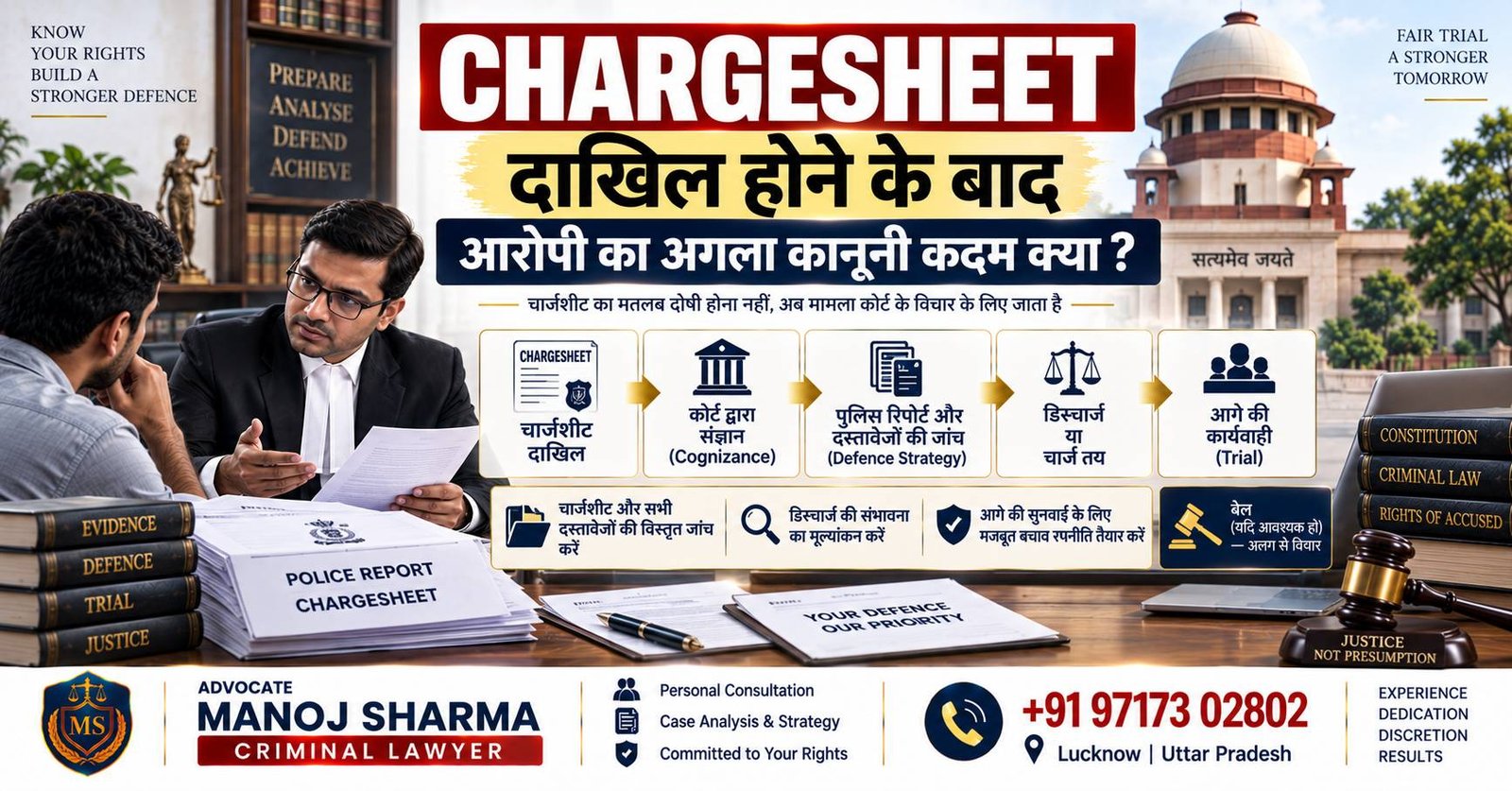
Criminal case में charge-sheet दाखिल होना एक बड़ा procedural stage है, लेकिन इसे case का अंतिम परिणाम समझना पहली और सबसे गंभीर गलती हो सकती है।
Police ने investigation पूरी करके अपनी report Court के सामने रख दी—इसका अर्थ यह है कि investigating agency ने अपने अनुसार prosecution case का material Court के सामने प्रस्तुत किया है। इसका अर्थ यह नहीं कि Court ने उस material को सही मान लिया, और न ही इसका अर्थ यह है कि आरोपी दोषी साबित हो गया।
वर्तमान कानून में investigation complete होने पर police report का framework Section 193 BNSS में है। उसके बाद Court के सामने cognizance, process, documents की supply, discharge और charge-framing जैसी अलग-अलग procedural stages आती हैं। BNSS ने इन stages को अलग provisions में रखा है।
इसलिए charge-sheet मिलने के बाद आरोपी के सामने पहला सवाल यह नहीं होना चाहिए कि “अब trial कब शुरू होगा?”
पहला सवाल होना चाहिए—
“Charge-sheet के बाद मेरे case की exact procedural position क्या है और अगला judicial stage कौन-सा है?”
यही समझ आगे की defence strategy तय करती है।
Charge-sheet दाखिल होने के बाद आरोपी की स्थिति क्या होती है?
Charge-sheet को सरल भाषा में समझें तो यह investigation के बाद police द्वारा Court को दी गई report है जिसमें prosecution यह बताती है कि investigation में उसे क्या material मिला और किन offences के लिए किन persons के विरुद्ध आगे proceedings चलाने का आधार है।
BNSS का Section 193 इसी stage को govern करता है। लेकिन यहाँ एक distinction बहुत जरूरी है:
Police की conclusion और Court की judicial finding एक चीज नहीं हैं।
Investigating Officer यह conclude कर सकता है कि particular accused के विरुद्ध prosecution चलाने के लिए sufficient material है। लेकिन उस conclusion को Court mechanically accept करके आरोपी को guilty घोषित नहीं कर देती।
आगे Court को अपने statutory procedure के अनुसार case को examine करना होता है।
यही कारण है कि charge-sheet को देखकर आरोपी को दो extremes में से किसी एक पर नहीं जाना चाहिए—
एक तरफ यह मान लेना कि “अब तो conviction तय है”;
और दूसरी तरफ यह मान लेना कि “Police ने charge-sheet में मेरा नाम डाल दिया है, इसलिए अब कुछ नहीं हो सकता।”
दोनों गलत approaches हैं।
असल defence work charge-sheet के बाद ही अधिक focused हो जाता है, क्योंकि अब investigation के दौरान police ने जो material collect किया है, वह judicial process के अगले stages में relevant होने लगता है।
Charge-sheet और conviction में क्या अंतर है?
Charge-sheet prosecution का case है।
Conviction Court का final judicial conclusion है।
इन दोनों के बीच कई महत्वपूर्ण stages हो सकती हैं—cognizance, appearance, supply of documents, discharge, framing of charge, prosecution evidence, defence और final judgment।
इसलिए charge-sheet filing को conviction की पूर्व-घोषणा की तरह पढ़ना कानूनी रूप से गलत होगा।
क्या charge-sheet दाखिल होते ही आरोपी को जेल जाना पड़ता है?
नहीं, ऐसा कोई blanket rule नहीं है।
यहाँ Supreme Court का Siddharth v. State of Uttar Pradesh principle अत्यंत महत्वपूर्ण है। Supreme Court ने स्पष्ट किया कि यदि accused investigation के दौरान गिरफ्तार नहीं हुआ और investigating agency ने उसे custody में लेकर investigation आगे बढ़ाने की आवश्यकता नहीं समझी, तो केवल charge-sheet दाखिल करने के लिए उसकी custody लेना हर मामले में आवश्यक नहीं है।
2026 में Satender Kumar Antil v. CBI, 2026 INSC 115 में Supreme Court ने arrest की necessity को लेकर statutory safeguards को फिर से जोर देकर लागू किया और यह स्पष्ट किया कि arrest power और arrest की actual necessity अलग questions हैं।
इसका practical effect यह है कि charge-sheet filing को automatic arrest warrant समझना सही नहीं है।
हाँ, यदि Court के सामने कोई अलग circumstance है—जैसे accused की non-appearance, warrant, bail conditions का उल्लंघन या कोई अन्य legally relevant ground—तो स्थिति अलग हो सकती है।
इसलिए charge-sheet दाखिल होने के बाद सबसे पहले यह देखना जरूरी है कि accused की current custody/bail/appearance status क्या है।
Charge-sheet के बाद Court सबसे पहले क्या करती है?
Charge-sheet Court में आ जाने के बाद अगला step केवल “trial शुरू” होना नहीं है।
सबसे पहले यह देखना होता है कि Court के सामने cognizance और subsequent process की procedural position क्या है।
BNSS में police-report cases के लिए investigation report के बाद का procedural framework अलग provisions में दिया गया है। Magistrate के cognizance और process के लिए Sections 221 और 227 सहित संबंधित provisions को पढ़ना पड़ता है, जबकि Sessions-triable matters में Sections 213 और 232 का framework relevant हो सकता है।
Cognizance और charge framing एक चीज नहीं हैं
यह distinction accused के लिए बहुत महत्वपूर्ण है।
Cognizance का मतलब यह नहीं है कि Court ने आरोपी को guilty मान लिया।
और charge-sheet पर cognizance लेना यह भी नहीं है कि charge automatically frame हो गया।
Charge framing के लिए BNSS में अलग provisions हैं। Sessions trial में Section 251 framing of charge से संबंधित है, जबकि warrant cases instituted on police report में Section 263 relevant provision है।
इसलिए client को अगर Court से summons/court notice मिलता है, तो उसे देखकर यह नहीं मानना चाहिए कि—
“Court ने मुझे दोषी मान लिया है।”
Court अभी criminal process के अगले procedural stage को activate कर रही होती है।
Summons मिलने के बाद क्या करना चाहिए?
यदि charge-sheet के बाद Court ने accused को summon किया है, तो सबसे पहले उस order की exact nature देखनी चाहिए।
यह पता करना जरूरी है कि:
- cognizance किस offence का लिया गया है;
- कौन-कौन से sections में proceedings आगे बढ़ाई गई हैं;
- किस date को appearance है;
- accused को personal appearance करनी है या exemption/dispensation legally possible है;
- कोई warrant या अन्य coercive process तो issue नहीं हुआ;
- और documents की supply की स्थिति क्या है।
BNSS Section 228 Magistrate को कुछ circumstances में accused की personal attendance dispense करने की power भी देता है। इसलिए हर Court date पर mechanically personal presence को unavoidable मानना भी सही नहीं है; लेकिन exemption कोई automatic entitlement नहीं है—case और Court order के अनुसार application करनी होती है।
यहीं lawyer को client को केवल “अगली तारीख पर Court आना है” कहने के बजाय order की procedural meaning समझानी चाहिए।
Charge-sheet की copy और बाकी documents आरोपी को कब और क्यों मिलने चाहिए?
यह stage defence के लिए शायद charge-sheet filing के बाद सबसे महत्वपूर्ण practical stage है।
क्योंकि charge-sheet की केवल पहली page या sections की list देखकर defence तैयार नहीं होती।
आरोपी को यह जानना होता है कि prosecution वास्तव में उसके खिलाफ किस material पर case चला रही है।
इसी purpose के लिए BNSS का Section 230 अत्यंत महत्वपूर्ण है।
Police-report case में Magistrate को बिना delay और, statute के अनुसार, accused की production या appearance से अधिकतम 14 दिनों के भीतर police report, FIR, prosecution witnesses के relevant statements और police report के साथ forwarded अन्य documents की copies furnish करनी होती हैं, subject to the statutory provisions governing such material.
कौन-कौन से documents महत्वपूर्ण हो सकते हैं?
Case की nature पर depend करते हुए accused को prosecution द्वारा relied material में FIR, police report, witness statements और अन्य forwarded documents मिल सकते हैं।
Electronic या voluminous material के लिए भी BNSS ने अलग treatment का framework रखा है।
इसका practical महत्व बहुत बड़ा है।
क्योंकि defence को केवल यह पता होना पर्याप्त नहीं कि—
“मेरे ऊपर Section X और Section Y लगी है।”
Defence को यह पता होना चाहिए कि—
“इन sections को support करने के लिए prosecution के पास वास्तव में क्या material है?”
यही सवाल आगे discharge और charge-framing stage पर निर्णायक हो सकता है।
Section 230 केवल paperwork नहीं है
Allahabad High Court के 27 January 2026 के एक महत्वपूर्ण decision में Court ने Section 230 BNSS के compliance को केवल formal requirement नहीं माना। Court ने कहा कि police papers/documents की statutory supply fair trial का महत्वपूर्ण हिस्सा है और non-compliance के कारण आगे की proceedings तथा framed charge को interfere किया गया; accused को documents उपलब्ध कराकर discharge application के statutory opportunity की ओर वापस भेजा गया।
यह point practical defence के लिए बहुत महत्वपूर्ण है।
यदि accused को prosecution का relied material ही properly उपलब्ध नहीं कराया गया, तो उससे यह उम्मीद करना कि वह meaningful discharge/charge-framing defence तैयार कर ले, fair procedure के basic requirement से टकरा सकता है।
इसलिए charge-sheet के बाद पहला काम केवल “charge-sheet पढ़ना” नहीं है।
पहला काम है—complete statutory document set प्राप्त करना और यह verify करना कि prosecution वास्तव में किस material पर निर्भर कर रही है।
Charge-sheet मिलने के बाद आरोपी को सबसे पहले क्या check करना चाहिए?
यहीं से defence का वास्तविक homework शुरू होता है।
Charge-sheet को एक बार पढ़कर छोड़ देना पर्याप्त नहीं है। इसे FIR के साथ line-by-line compare करना चाहिए।
क्योंकि investigation के बाद prosecution story में कई चीजें बदल सकती हैं—कुछ allegations strengthen हो सकते हैं, कुछ dilute, कुछ accused के खिलाफ specific role जोड़ी जा सकती है, और कुछ sections हट या बढ़ सकती हैं।
FIR और charge-sheet में क्या बदला?
सबसे पहले यह देखा जाना चाहिए कि original FIR में जो factual allegations थीं, क्या charge-sheet उन्हीं facts पर आधारित है।
अगर FIR में accused की कोई specific role नहीं थी लेकिन बाद के material में अचानक specific role सामने आती है, तो उस development को identify करना जरूरी है।
इसी तरह यदि FIR में कोई serious allegation था लेकिन investigation material उसे support नहीं करता, तो वह defence के लिए relevant point हो सकता है।
यह अपने-आप case खत्म नहीं करता—लेकिन discharge या charge-framing analysis में इसका महत्व हो सकता है।
प्रत्येक accused की individual role क्या है?
Multiple-accused cases में यह सबसे जरूरी checks में से एक है।
पूरी charge-sheet को “prosecution बनाम सभी accused” की तरह पढ़ने के बजाय प्रत्येक accused के लिए अलग matrix बनाना ज्यादा उपयोगी है:
किस accused के खिलाफ कौन-सा specific allegation है?
किस witness ने क्या कहा है?
किस document से कौन-सा allegation support होता है?
क्या material केवल दूसरे accused की role दिखाता है?
Criminal liability को केवल इसलिए mechanically transfer नहीं किया जा सकता कि सभी persons एक ही FIR में accused हैं।
यही individual-role analysis आगे defence strategy को sharp बनाता है।
Witness statements वास्तव में क्या support करती हैं?
Charge-sheet में witness list होना और witness statement का prosecution allegation को legally support करना अलग बात है।
हर material witness के statement को relevant allegation के साथ match करना चाहिए।
उदाहरण के लिए यदि किसी accused पर specific act का allegation है, तो defence को देखना चाहिए कि prosecution के statements में उस act का direct attribution है, hearsay है, contradictory version है, या केवल general allegation है।
लेकिन इस stage पर defence को witness credibility का पूरा trial शुरू नहीं करना चाहिए।
Discharge/charge stage और trial evidence stage की सीमा अलग है।
यही distinction आगे Court के सामने argument करते समय भी महत्वपूर्ण होगी।
Documentary और electronic evidence को अलग से examine करें
आज के criminal cases में prosecution material केवल oral statements तक सीमित नहीं रहता।
Documents, CCTV footage, call records, chats, emails, photographs, electronic devices, forensic material और अन्य digital material case के facts पर depend करते हुए महत्वपूर्ण हो सकते हैं।
इसलिए charge-sheet मिलने के बाद यह भी check करना चाहिए कि prosecution ने जिस electronic/documentary material पर reliance रखा है, वह वास्तव में supplied material में मौजूद है या नहीं और उसे किस allegation से connect किया गया है।
यहाँ defence को अभी final trial argument नहीं बनाना है।
पहले यह पता करना है कि prosecution की story का evidentiary skeleton क्या है।
कोई mandatory legal requirement missing तो नहीं?
कुछ cases में prosecution को particular statutory requirement, sanction, authorization, complaint by competent person या अन्य precondition satisfy करनी पड़ सकती है।
यह universal checklist नहीं है—हर offence में अलग requirement नहीं होती।
लेकिन जहाँ applicable statute ऐसी mandatory condition रखता है, वहाँ charge-sheet आने के बाद उसका verification महत्वपूर्ण हो जाता है।
2026 में Allahabad High Court के एक case में इसी तरह एक special statutory requirement की अनदेखी को गंभीर माना गया और Court ने पाया कि उस particular statute के तहत केवल police charge-sheet के आधार पर cognizance नहीं लिया जा सकता था; proceedings और cognizance order को Section 528 BNSS के तहत quash किया गया।
इसका मतलब यह नहीं कि हर charge-sheet में ऐसी technical defect होगी।
Rare point यही है:
Charge-sheet को केवल facts के document की तरह नहीं, बल्कि “क्या prosecution ने legally competent manner में case Court तक पहुँचाया है?” इस सवाल से भी पढ़ना चाहिए।
Charge-sheet के बाद आरोपी को Bail की जरूरत कब पड़ती है?
Charge-sheet filing के बाद bail का सवाल आता है, लेकिन इसे automatic stage मानना गलत होगा।
सबसे पहले आरोपी की current status देखनी होगी।
आरोपी पहले से bail पर है
यदि accused पहले से valid bail/appropriate protection पर है और Court ने उसे custody में लेने का कोई अलग legally sustainable basis नहीं बनाया है, तो charge-sheet filing को देखकर यह assume नहीं किया जाना चाहिए कि bail अपने-आप समाप्त हो गई।
यहाँ Siddharth principle महत्वपूर्ण है—charge-sheet file करने के लिए accused को अनिवार्य रूप से custody में लेना हर case में आवश्यक नहीं है।
2026 में Supreme Court ने Satender Kumar Antil v. CBI में arrest के statutory necessity test को फिर से reinforce किया। Court ने पुराने safeguards को वर्तमान procedural framework के साथ पढ़ते हुए यह स्पष्ट किया कि केवल “arrest की power” होना और “arrest करना आवश्यक होना” एक ही बात नहीं है।
इसलिए charge-sheet के बाद lawyer को सबसे पहले यह देखना चाहिए कि:
क्या accused की existing bail/protection intact है और Court ने कोई contrary order दिया है?
आरोपी investigation के दौरान गिरफ्तार नहीं हुआ था
यह situation खास तौर पर important है।
यदि police ने investigation पूरी कर ली और accused को गिरफ्तार किए बिना charge-sheet file कर दी, तो केवल charge-sheet filing से automatic conclusion नहीं निकलता कि अब उसे जरूर arrest किया जाए।
Court summons के अनुसार appearance और custody का प्रश्न अलग-अलग legal issues हैं।
Supreme Court की Siddharth line इसी practical distinction को protect करती है।
इसलिए ऐसे accused को panic में यह मानकर कि—
“अब charge-sheet आ गई है, मुझे जेल जाना ही पड़ेगा”
बिना order की exact nature देखे कोई step नहीं लेना चाहिए।
लेकिन इसका अर्थ immunity भी नहीं है
यहाँ opposite side का obvious argument भी समझना जरूरी है।
Prosecution कह सकती है कि बाद की circumstances में custody की आवश्यकता सामने आई, accused ने Court process follow नहीं किया, या कोई statutory ground मौजूद है।
इसलिए defence को blanket proposition नहीं बनाना चाहिए कि:
“एक बार charge-sheet बिना arrest के file हो गई, अब arrest कभी नहीं हो सकती।”
कानून इतना absolute नहीं है।
सही proposition यह है:
Charge-sheet filing अपने-आप arrest की necessity establish नहीं करती; यदि custody मांगी जाती है तो उसके लिए applicable law और case-specific justification देखना होगा।
यही अधिक precise legal position है।
Charge-sheet के बाद Bail और Appearance को एक ही चीज क्यों नहीं मानना चाहिए?
कई accused यहाँ दो अलग questions को मिला देते हैं।
पहला: Court में appearance कैसे होगी?
दूसरा: क्या accused को custody में भेजना आवश्यक है?
दोनों अलग हैं।
Court summons मिलने का मतलब यह नहीं कि accused automatically guilty है।
और appearance का मतलब भी हर case में automatic custody नहीं है।
इसीलिए charge-sheet के बाद Court order को carefully पढ़ना जरूरी है—क्या Court ने सिर्फ appearance मांगी है, summons issue किया है, warrant issue किया है, या कोई custody-related direction दिया है।
यह distinction आगे की bail strategy को सीधे प्रभावित कर सकती है।
पहले पाँच stages के बाद accused को कहाँ खड़ा होना चाहिए?
इस point तक accused को कम-से-कम यह स्पष्ट हो जाना चाहिए:
Charge-sheet filed → Court की procedural action identify करें → complete documents लें → prosecution material को FIR के साथ compare करें → अपनी individual role map करें → bail/custody status verify करें।
इसके बाद अगला वास्तविक defence question आता है—
“क्या prosecution के material के बावजूद इस accused के खिलाफ आगे trial चलाने के लिए पर्याप्त legal ground है?”
यहीं से discharge का प्रश्न शुरू होता है।
और यही अगले हिस्से का सबसे महत्वपूर्ण stage होगा।
Charge-sheet दाखिल होने के बाद आरोपी के लिए अगला कानूनी कदम क्या होता है?
पिछले हिस्से तक एक बात साफ हो चुकी है कि charge-sheet filing के बाद आरोपी को panic में कोई भी कदम नहीं उठाना चाहिए।
पहले यह देखना है कि Court ने क्या किया है, कौन-से documents supplied हैं, accused की bail/custody position क्या है और prosecution का material वास्तव में किस आरोप को support करता है।
अब इसके बाद सबसे महत्वपूर्ण सवाल आता है—
क्या इस material के आधार पर accused के खिलाफ trial चलाने के लिए पर्याप्त legal ground मौजूद है?
यहीं से discharge और charge-framing की stage शुरू होती है।
Charge-sheet के बाद आरोपी Discharge कब मांग सकता है?
Discharge का मतलब यह नहीं है कि accused Court से trial में acquittal मांग रहा है।
Discharge का सवाल trial शुरू होने से पहले उठता है—जब Court के सामने prosecution material आ चुका है और यह examine किया जाना है कि accused के खिलाफ proceedings आगे चलाने के लिए statutory threshold पूरा होता है या नहीं।
BNSS ने इस stage को अलग-अलग trial procedures के लिए अलग provisions में रखा है।
Sessions trial में Section 250 BNSS
यदि मामला Court of Session के सामने trial के लिए जाता है, तो Section 250 BNSS discharge से संबंधित है।
इस provision के अनुसार accused, case के Section 232 के तहत commitment के बाद 60 दिनों के भीतर discharge application prefer कर सकता है। यदि Judge record और documents देखकर तथा prosecution और accused को सुनकर यह मानता है कि accused के विरुद्ध आगे proceeding करने के लिए sufficient ground नहीं है, तो accused को discharge किया जा सकता है और Court को reasons record करने होते हैं।
यहाँ defence को एक बात बहुत ध्यान से समझनी चाहिए:
Discharge का application केवल “मैं निर्दोष हूँ” लिखकर सफल नहीं होता।
Court को दिखाना होता है कि prosecution द्वारा relied material को उसके permissible threshold पर देखने के बाद भी accused के खिलाफ आगे proceeding का sufficient legal basis नहीं बनता।
Magistrate के सामने warrant-case में Section 262 BNSS
यदि मामला Magistrate द्वारा trial किए जाने वाले warrant case का है और police report के आधार पर instituted है, तो Section 262 BNSS relevant provision है।
यहाँ BNSS ने एक स्पष्ट time window दी है—accused Section 230 के तहत documents की copies मिलने की तारीख से 60 दिनों के भीतर discharge application prefer कर सकता है। Magistrate police report और Section 193 के तहत भेजे गए documents को consider करता है तथा prosecution और accused दोनों को सुनने के बाद, यदि charge groundless पाता है, तो discharge कर सकता है।
यह distinction practical रूप से बहुत महत्वपूर्ण है।
इसलिए किसी article में केवल यह लिख देना कि—
“Charge-sheet के बाद Section 227 CrPC के तहत discharge लें”
अब current-law answer नहीं है।
BNSS regime में applicable provision और trial forum को देखना जरूरी है।
Discharge और Acquittal में क्या अंतर है?
यह distinction client को शुरू में ही समझाना चाहिए।
Discharge:
Court यह मानती है कि इस stage पर accused के खिलाफ proceeding आगे बढ़ाने के लिए required legal ground नहीं है।
Acquittal:
Trial के बाद Court prosecution evidence और पूरी judicial process के आधार पर accused को दोषी साबित न होने के कारण acquit करती है।
इसलिए discharge को “छोटी acquittal” समझना गलत है।
यह criminal process को threshold stage पर रोकने का judicial mechanism है।
Discharge के बाद Court किस सीमा तक prosecution material को देखती है?
यहीं defence और prosecution दोनों की arguments अक्सर गलत direction में चली जाती हैं।
Accused कह सकता है कि witness झूठ बोल रहा है।
Prosecution कह सकती है कि witness की credibility trial में साबित होगी।
दोनों बातों में कुछ सच्चाई हो सकती है—लेकिन discharge stage पर Court का काम पूरा trial करना नहीं है।
Court prosecution का rubber stamp भी नहीं है
Discharge stage का मतलब यह नहीं कि Judge charge-sheet देखकर mechanically कह दे—
“Police ने charge-sheet दाखिल की है, इसलिए trial चलेगा।”
Court को अपना judicial mind apply करना होता है।
10 February 2026 के Dr. Anand Rai v. State of Madhya Pradesh & Anr., 2026 INSC 141 में Supreme Court ने discharge और charge-framing stage के applicable principles को विस्तार से discuss किया। Court ने BNSS के corresponding provisions को भी देखा और कहा कि नई procedural legislation में discharge और framing of charge के governing standards मूलतः continuity में हैं।
Court ने यह भी स्पष्ट किया कि threshold stage पर prosecution material को mechanically accept करना सही approach नहीं है; Court को यह देखना होता है कि material को उसके face value पर लेने पर alleged offence के आवश्यक ingredients और accused के विरुद्ध proceeding का sufficient basis सामने आता है या नहीं। लेकिन उसी समय Court को evidence की final credibility या defence की पूरी truthfulness पर trial नहीं करना है।
यही balance discharge litigation की असली सीमा है।
“Strong suspicion” और “proof beyond reasonable doubt” में अंतर
Charge-framing stage पर prosecution को वही standard satisfy नहीं करना होता जो conviction के समय लागू होता है।
Conviction के लिए prosecution को guilt को applicable criminal standard पर prove करना होगा।
लेकिन charge stage पर Court यह देखती है कि prosecution material ऐसा है जिससे offence के commission के बारे में legally sufficient ground/presumption बनता है।
Dr. Anand Rai में Supreme Court ने इसी principle को reaffirm किया कि charge stage पर Court को meticulous appreciation of evidence करके यह तय नहीं करना चाहिए कि अंततः conviction होगी या acquittal। ऐसा करना mini-trial में बदल जाएगा।
इसलिए defence की argument भी proportionate होनी चाहिए।
यदि defence केवल यह कहे—
“Witness झूठा है, इसलिए मुझे discharge कर दें”
तो Court उसे trial issue मान सकती है।
लेकिन यदि defence यह दिखाए कि—
“Prosecution के अपने material में offence का आवश्यक statutory ingredient ही मौजूद नहीं है”
तो यह threshold-level legal objection बन सकता है।
यही दोनों arguments के बीच वास्तविक अंतर है।
Discharge reject हो जाए तो आरोपी का अगला कदम क्या होता है?
यदि Court discharge application reject कर देती है, तो इसका सामान्य procedural consequence यह है कि case आगे charge framing की ओर बढ़ता है।
लेकिन इसका मतलब यह भी नहीं कि उस दिन accused को “convicted” मान लिया गया।
Charge framing का अर्थ है कि Court ने prosecution material को उस threshold पर पर्याप्त पाया है जहाँ accused को specified offence के लिए trial face करना चाहिए।
Sessions trial में Section 251 BNSS
BNSS Section 251 Sessions trial में framing of charge से संबंधित है।
यदि Judge को यह opinion बनता है कि accused ने ऐसा offence किया है जिसके लिए आगे trial का statutory basis है, तो applicable circumstances के अनुसार charge frame किया जाता है। Exclusively Sessions-triable offence में charge लिखित रूप में frame किया जाता है और charge accused को पढ़कर/explain करके उससे पूछा जाता है कि वह guilty plead करता है या trial claim करता है।
Magistrate warrant-case में Section 263 BNSS
Police report पर instituted warrant case में Section 263 BNSS charge framing से संबंधित है।
इस stage पर Magistrate police report, accompanying documents और दोनों sides की submissions consider करता है। यदि Court को यह ground for presuming लगता है कि accused ने offence किया है, तो charge frame किया जा सकता है। BNSS इस stage पर charge framing के लिए statutory time framework भी रखता है।
यानी अब procedural map कुछ ऐसा हो जाता है:
Charge-sheet → documents → discharge consideration → discharge या charge framing.
यहीं तक pre-trial threshold scrutiny का मुख्य भाग रहता है।
इसके बाद case trial evidence की ओर बढ़ता है।
Charge frame होने के बाद क्या defence खत्म हो जाती है?
बिल्कुल नहीं।
लेकिन defence का focus बदल जाता है।
Charge framing के बाद बार-बार उसी discharge argument को दोहराने के बजाय defence को prosecution evidence को test करने की तैयारी करनी होती है।
Witness examination, cross-examination, documentary/electronic evidence, contradictions, admissibility, statutory ingredients और prosecution के burden—ये अब trial defence के central components बनते हैं।
यही वजह है कि charge-sheet मिलने के तुरंत बाद documents की careful analysis महत्वपूर्ण है।
अगर defence ने शुरुआत में ही prosecution story का evidentiary structure समझ लिया, तो trial में cross-examination और defence strategy ज्यादा focused हो सकती है।
Charge-sheet के बाद High Court में कब जाना उचित हो सकता है?
हर charge-sheet का जवाब High Court में quashing petition दाखिल करना नहीं है।
लेकिन कुछ cases में charge-sheet आने के बाद High Court intervention का question genuinely arise कर सकता है।
Current BNSS में High Court की inherent powers Section 528 में हैं।
Charge-sheet के बाद भी Section 528 का रास्ता बंद नहीं हो जाता
Supreme Court ने 2026 में यह स्पष्ट किया है कि appropriate circumstances में High Court Section 528 BNSS के तहत केवल FIR ही नहीं, बल्कि investigation के बाद filed charge-sheet और उसके बाद का cognizance order भी examine कर सकती है।
एक 2025 Supreme Court order में Court ने specifically clarify किया कि यदि cognizance अभी नहीं लिया गया है तो Article 226 और Section 528 के jurisdictional questions अलग हो सकते हैं; लेकिन cognizance का judicial order intervene करने के बाद Section 528 के तहत FIR/charge-sheet और cognizance order को appropriate case में challenge किया जा सकता है।
2026 में Supreme Court ने फिर यह distinction reinforce किया कि Section 528 jurisdiction में High Court को mini-trial नहीं करना चाहिए। यदि allegations और prosecution material में basic legal ingredients का अभाव है, या continuation of proceedings abuse of process बनती है, तो High Court appropriate case में intervene कर सकती है।
इसलिए Section 528 को defence के लिए alternative threshold remedy समझना चाहिए, न कि discharge का automatic substitute।
कब High Court intervention ज्यादा relevant हो सकती है?
Facts के अनुसार, उदाहरण के लिए:
- allegations अपने face value पर offence constitute नहीं करतीं;
- कोई fundamental statutory bar है;
- cognizance लेने में legal defect है;
- mandatory statutory requirement पूरी नहीं हुई;
- prosecution continuation abuse of process बन रही है;
- या ऐसी exceptional legal infirmity है जिसे trial में जाने के बावजूद वैध रूप से sustain नहीं किया जा सकता।
लेकिन यदि defence का पूरा argument यह है कि—
“मेरी कहानी सही है और complainant झूठ बोल रहा है”
तो High Court ordinarily evidence की credibility का पूरा trial नहीं करेगी।
इसी limitation को Supreme Court ने 2026 में फिर स्पष्ट किया।
Charge-sheet के बाद आरोपी की Defence Strategy कैसे बननी चाहिए?
अब पूरे article की legal journey को practical defence workflow में बदलें।
Charge-sheet आने के बाद accused को बिना किसी panic या unnecessary litigation के यह sequence follow करना चाहिए।
Step 1 — Complete record लें
सबसे पहले Section 230 के तहत supplied documents का complete set verify करें।
केवल charge-sheet का index या FIR पर्याप्त नहीं है।
Step 2 — FIR और charge-sheet को साथ पढ़ें
देखें कि investigation के बाद prosecution story में क्या बदला है।
कौन-सी allegations survive करती हैं और कौन-सी material से actually supported हैं?
Step 3 — Individual role map करें
हर accused की role अलग लिखें।
एक accused के खिलाफ material को दूसरे accused के खिलाफ mechanically use नहीं किया जा सकता।
Step 4 — Bail/custody position check करें
यदि accused already bail पर है, तो existing order और subsequent Court process देखें।
यदि custody में है, तो regular bail position examine करें।
यदि investigation के दौरान arrest नहीं हुई थी, तो charge-sheet filing को automatic custody requirement न मानें; Court के actual process/order को देखें। Supreme Court की Siddharth line और 2026 Satender Kumar Antil framework इस distinction के लिए महत्वपूर्ण हैं।
Step 5 — Discharge की viability तय करें
यह सबसे critical strategic decision है।
हर case में discharge application डालना जरूरी नहीं।
पहले यह देखना चाहिए कि prosecution material:
- offence के essential ingredients disclose करता है या नहीं;
- accused की specific role establish करने के लिए prima facie material रखता है या नहीं;
- और applicable statutory threshold satisfy करता है या नहीं।
Step 6 — Correct BNSS provision identify करें
Sessions case → Section 250
Magistrate warrant case on police report → Section 262
और charge framing के लिए applicable procedure में Section 251 / Section 263 जैसे provisions देखे जाएंगे।
यहाँ पुराने CrPC numbering को mechanically copy करना current-law drafting की गंभीर गलती होगी।
Step 7 — Exceptional High Court remedy separately test करें
यदि मामला केवल factual defence का नहीं बल्कि fundamental legal defect, absence of offence, jurisdictional infirmity या abuse of process का है, तो Section 528 BNSS के तहत High Court remedy का question examine किया जा सकता है।
Step 8 — Charge frame होने पर strategy बदलें
यदि discharge नहीं मिला और charge frame हो गया, तो defence को trial preparation की तरफ move करना चाहिए।
अब prosecution evidence को legally test करना होगा।
Charge-sheet दाखिल होने के बाद आरोपी को क्या करना चाहिए? पूरी Roadmap
अब इस पूरे article को एक line में नहीं, बल्कि procedural sequence में समझिए।
अगर charge-sheet अभी-अभी दाखिल हुई है
सबसे पहले यह पता करें कि Court ने charge-sheet पर क्या order pass किया है।
सिर्फ police station से यह सुन लेना कि “charge-sheet लग गई” पर्याप्त नहीं है।
अगर accused पहले से bail पर है
Charge-sheet filing को automatic cancellation of bail न मानें।
Court का actual order, appearance requirement और existing bail conditions देखें।
अगर accused गिरफ्तार नहीं हुआ था
केवल charge-sheet filing से यह conclusion न निकालें कि अब automatic arrest होना ही है।
Court process और custody requirement अलग questions हैं।
अगर accused custody में है
अब regular bail और continued custody की legal necessity को immediately examine करें।
अगर documents complete नहीं मिले
Section 230 compliance check करें।
Defence को prosecution material जाने बिना meaningful discharge/charge strategy बनाना कठिन हो सकता है।
अगर prosecution material में basic legal deficiency है
Applicable discharge provision के तहत Court में issue उठाया जा सकता है।
Sessions matter में Section 250 और Magistrate-triable police-report warrant case में Section 262 की statutory timelines विशेष रूप से ध्यान में रखनी होंगी।
अगर discharge reject हो गया
अब charge framing stage को समझें।
Court का charge frame करना conviction नहीं है; यह केवल यह judicial conclusion है कि case को trial के लिए आगे बढ़ने का sufficient threshold basis मौजूद है।
अगर fundamental legal defect है
Discharge के अलावा या appropriate circumstances में High Court की Section 528 jurisdiction examine की जा सकती है।
लेकिन High Court में ऐसा मामला केवल इसलिए नहीं ले जाना चाहिए कि defence trial में अपनी factual version prove करना चाहती है। Supreme Court ने repeatedly threshold jurisdiction और mini-trial के बीच सीमा बनाए रखी है।
सबसे महत्वपूर्ण बात: Charge-sheet के बाद “कुछ करना” नहीं, सही stage पर सही कदम उठाना जरूरी है
Charge-sheet दाखिल होने के बाद criminal case एक ऐसी stage पर पहुंचता है जहाँ जल्दबाजी और लापरवाही दोनों नुकसान कर सकती हैं।
किसी accused को केवल इसलिए discharge application नहीं डालनी चाहिए क्योंकि “charge-sheet आ गई है।”
उसी तरह High Court में केवल इसलिए Section 528 petition नहीं करनी चाहिए क्योंकि prosecution ने charge-sheet file कर दी है।
पहले यह देखना होगा कि prosecution material वास्तव में क्या कहता है और कानून उस material को किस procedural threshold पर test करता है।
यही कारण है कि charge-sheet को केवल police document समझना अधूरा approach है।
वह defence के लिए एक तरह का legal map भी है।
उसमें यह खोजा जाता है कि prosecution ने क्या आरोप लगाया, किस material से support किया, किस accused की क्या role दिखाई, कौन-सा statutory ingredient मौजूद है, कौन-सा missing है और case किस stage पर किस judicial remedy के लिए तैयार है।
और यही charge-sheet filing के बाद आरोपी के लिए सबसे महत्वपूर्ण अगला कदम है:
घबराकर अगली proceeding चुनना नहीं—पहले procedural stage और prosecution record को सही तरीके से पढ़ना, फिर उसी stage के अनुरूप legal remedy चुनना।
Frequently Asked Questions –
Charge-sheet दाखिल होने के बाद क्या आरोपी को तुरंत जेल जाना पड़ता है?
नहीं। Charge-sheet filing अपने-आप automatic custody का universal rule नहीं बनाती। यदि आरोपी investigation के दौरान गिरफ्तार नहीं हुआ था, तो Siddharth और बाद की Supreme Court jurisprudence के अनुसार केवल charge-sheet filing के आधार पर हर case में custody आवश्यक नहीं मानी जाती। लेकिन Court के actual process/order और case-specific circumstances को देखना जरूरी है।
Charge-sheet मिलने के बाद सबसे पहला काम क्या होना चाहिए?
Complete police report और Section 230 के तहत supplied documents प्राप्त करके उनकी जांच करनी चाहिए। इसके बाद FIR, statements और अन्य prosecution material को accused की individual role के साथ compare करना चाहिए।
Charge-sheet के बाद क्या Discharge मांगा जा सकता है?
हाँ, applicable trial procedure के अनुसार। Sessions cases में Section 250 BNSS और Magistrate-triable warrant cases instituted on police report में Section 262 BNSS relevant हैं। दोनों provisions में अलग procedural starting points और 60-day periods हैं।
क्या Discharge का मतलब Acquittal है?
नहीं। Discharge trial शुरू होने से पहले threshold stage पर proceeding को समाप्त कर सकता है। Acquittal सामान्यतः trial के बाद final adjudication से आती है।
Discharge application में Court क्या देखती है?
Court prosecution record और applicable statutory threshold को देखती है। यह final trial नहीं करती, लेकिन prosecution material को mechanically accept भी नहीं कर सकती। 2026 के Dr. Anand Rai judgment ने discharge और charge-framing stage पर judicial scrutiny की यही सीमाएं दोहराईं।
क्या Charge-sheet के बाद High Court में FIR/Case quash हो सकता है?
Appropriate exceptional circumstances में Section 528 BNSS के तहत High Court FIR, charge-sheet और, जहाँ applicable हो, cognizance order को examine कर सकती है। लेकिन High Court सामान्यतः disputed evidence की mini-trial नहीं करती।
क्या Charge frame होने के बाद case खत्म नहीं किया जा सकता?
Charge framing के बाद भी legal remedies पूरी तरह समाप्त नहीं हो जातीं, लेकिन remedy और strategy case की procedural position के अनुसार बदलती है। अब focus सामान्यतः trial process और applicable appellate/revisional/inherent remedies की ओर जाता है।
Advocate Manoj Sharma — Charge-sheet के बाद Legal Strategy
Charge-sheet आने के बाद किसी criminal case में सबसे महत्वपूर्ण काम केवल अगली तारीख पता करना नहीं है।
FIR से charge-sheet तक prosecution ने जो material collect किया है, उसकी individual accused-wise legal examination जरूरी होती है—कौन-सा आरोप किस material पर आधारित है, कौन-से statutory ingredients वास्तव में मौजूद हैं, documents की supply पूरी है या नहीं और discharge, bail या High Court intervention में से कौन-सा remedy उस particular stage पर legally appropriate है।
Advocate Manoj Sharma, Criminal Lawyer in Lucknow, criminal matters में charge-sheet के बाद bail, discharge, charge-framing और appropriate High Court proceedings के लिए case-specific legal assessment प्रदान करते हैं।
Legal Disclaimer
यह article general legal information और educational purpose के लिए है। किसी specific criminal case में charge-sheet, FIR, police papers, applicable special statute, Court orders और latest judicial precedents को देखकर ही legal strategy तय की जानी चाहिए। BNSS के general provisions के अतिरिक्त NDPS Act, POCSO Act, SC/ST Act, PMLA तथा अन्य special laws अलग restrictions या procedures लागू कर सकते हैं।
यह भी पढ़ें 
Regular Bail और Anticipatory Bail में क्या अंतर है और किस स्थिति में कौन-सी Bail चाहिए?
FIR दर्ज होने के बाद आरोपी को क्या करना चाहिए? गिरफ्तारी, जमानत और कानूनी बचाव की पूरी रणनीति