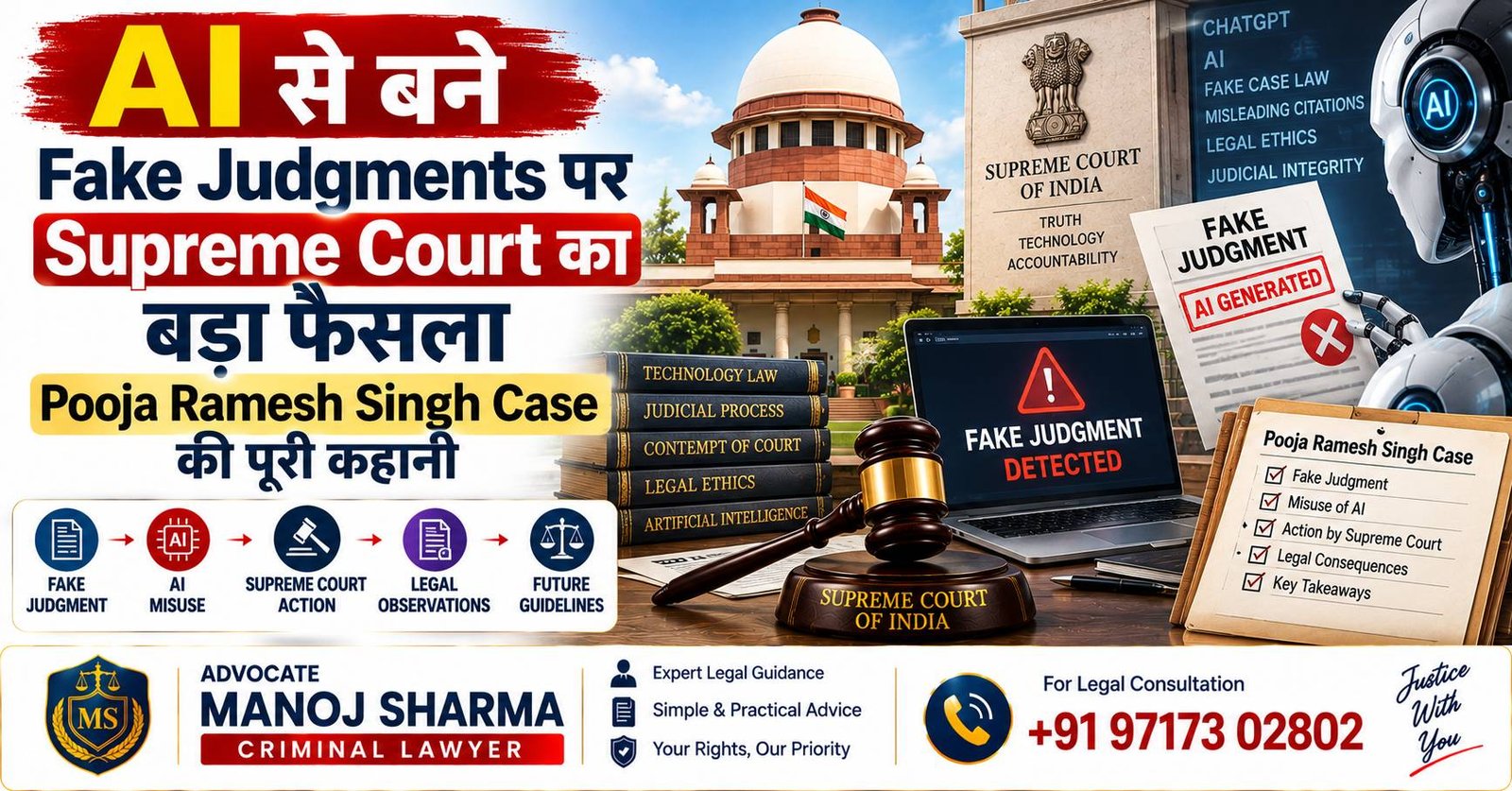
Pooja Ramesh Singh v. Jammu and Kashmir Bank Ltd., 2026 INSC 668 का फैसला केवल Artificial Intelligence के बारे में नहीं है।
इसके पीछे एक वास्तविक IBC insolvency dispute था—एक बैंक loan, corporate guarantee, borrower का default, NCLT में Section 7 की insolvency proceeding, NCLAT की appeal और फिर Supreme Court।
लेकिन Supreme Court तक आते-आते इस case का सबसे बड़ा सवाल debt से भी आगे निकल गया।
NCLT के order में ऐसे judgments और paragraphs का सहारा लिया गया था जो Supreme Court की जांच में non-existent, fake या गलत तरीके से attributed पाए गए। Supreme Court ने पाया कि छह cited authorities में कुछ citations ही अस्तित्व में नहीं थीं और कुछ genuine citations के साथ ऐसे paragraphs जोड़ दिए गए थे जो उन judgments में थे ही नहीं।
और यहीं से Supreme Court ने एक ऐसा principle दिया जिसे आने वाले वर्षों में lawyers, tribunals और courts के लिए ignore करना आसान नहीं होगा:
AI का इस्तेमाल अपने-आप गलत नहीं है; लेकिन AI से निकले fake या hallucinated legal authorities को बिना verification के genuine precedent की तरह इस्तेमाल करना स्वीकार्य नहीं है।
Supreme Court ने ऐसे material पर आधारित adjudication को “no decision in the eyes of law” माना और NCLT तथा NCLAT दोनों के orders set aside कर दिए।
मामला शुरू कैसे हुआ?
यह मामला किसी FIR, criminal complaint या trial से शुरू नहीं हुआ था।
इसकी शुरुआत एक financial transaction से हुई।
Jammu and Kashmir Bank Ltd. ने Pan India Utilities Distribution Company Ltd. (PIUDCL) को long-term working capital facility sanction की थी।
17 December 2013 को लगभग ₹200 करोड़ की facility sanction हुई थी। इस loan को secure करने के लिए Essel Infraprojects Ltd. (EIL) ने corporate guarantee दी और अपनी कुछ immovable property पर mortgage भी create किया।
27 December 2013 को loan agreement और security arrangements formalise हुए। बाद में 18 November 2017 को loan facility का renewal-cum-reduction हुआ।
यहीं से आगे चलकर एक महत्वपूर्ण corporate-law question पैदा हुआ:
अगर guarantor company के corporate structure में बाद में demerger और amalgamation हो जाए, तो क्या पहले दी गई corporate guarantee अपने-आप खत्म हो जाती है?
Pooja Ramesh Singh की ओर से इसी तरह का defence बाद में NCLT और NCLAT के सामने रखा गया।
Loan default कैसे हुआ?
PIUDCL ने agreed repayment schedule के अनुसार instalments repay नहीं कीं।
Bank के record के अनुसार loan account में default हुआ और outstanding liability बढ़ती गई।
NCLAT के record में दर्ज है कि financial creditor ने principal और interest सहित बड़ी outstanding amount का claim किया था। Bank ने January और March 2019 में repayment के संबंध में notices भी भेजे।
5 March 2019 को borrower PIUDCL ने bank के notice के जवाब में debt और default को dispute करने के बजाय liquidity problem का हवाला देते हुए repayment के लिए और समय मांगा।
यह detail महत्वपूर्ण है क्योंकि बाद की insolvency proceeding में existence of debt और default का सवाल पूरी तरह imaginary dispute नहीं था।
Corporate Guarantee पर विवाद कैसे खड़ा हुआ?
यहीं case का पहला बड़ा legal counter आया।
EIL का corporate structure बाद में बदला।
एक scheme of demerger के तहत Gorai land और उससे जुड़ा project Essel Urban Infraprojects Ltd. (EUIL) को transfer हुआ।
इस demerger को Bombay High Court ने 4 April 2014 को approve किया।
इसके बाद EUIL का merger Pan India Infraprojects Pvt. Ltd. (PIIPL) के साथ हुआ और यह scheme भी Bombay High Court ने 20 June 2014 को approve की।
अब EIL की तरफ से argument आया:
अगर assets और liabilities corporate restructuring के जरिए दूसरी companies में transfer हो गईं, तो EIL की original corporate guarantee liability भी transfer हो गई होगी।
यानी:
Original guarantor EIL
↓
Demerger
↓
EUIL
↓
Amalgamation
↓
PIIPL
इसलिए EIL के खिलाफ पुरानी guarantee के आधार पर insolvency proceeding नहीं चलनी चाहिए।
Bank ने guarantee खत्म क्यों नहीं मानी?
Guarantee deed में एक महत्वपूर्ण clause था—Clause 8।
उसका effect यह था कि guarantor company का absorption या amalgamation होने मात्र से guarantee समाप्त या prejudiced नहीं होगी और guarantee bank के favour में तब तक available रहेगी जब तक borrower का loan account bank की books में adjusted न हो जाए।
यही clause बाद में NCLT और NCLAT के reasoning का आधार बना।
इसलिए dispute केवल corporate restructuring का नहीं था।
असल सवाल था:
क्या approved demerger/amalgamation के बाद भी original corporate guarantee survive कर रही थी?
Bank ने IBC के तहत NCLT का दरवाजा क्यों खटखटाया?
Borrower के लगातार default के बाद Jammu and Kashmir Bank ने Insolvency and Bankruptcy Code, 2016 की Section 7 के तहत EIL के खिलाफ Corporate Insolvency Resolution Process शुरू करने के लिए application दायर की।
Section 7 का मूल framework financial creditor को corporate debtor के financial debt के default पर CIRP initiation के लिए adjudicating authority के सामने जाने का रास्ता देता है।
यहाँ EIL केवल एक ordinary company नहीं थी।
वह original borrower PIUDCL की corporate guarantor थी।
Supreme Court record में भी यही factual position दर्ज है कि PIUDCL ने bank से facilities ली थीं और EIL ने उन्हें secure करने के लिए corporate guarantee दी थी।
NCLT तक मामला कैसे पहुँचा?
इस proceeding की procedural history भी थोड़ी उलझी हुई है, और इसे छोड़ना नहीं चाहिए।
EIL के खिलाफ State Bank of India की एक अलग insolvency proceeding भी शुरू हुई थी और CP No. 543 of 2021 को 1 March 2023 को CIRP में admit किया गया था।
इसी दौरान Jammu and Kashmir Bank की proceeding CP (IB) No. 361/MB/2019 भी pending थी।
क्योंकि EIL पहले से CIRP में था, Jammu and Kashmir Bank की petition को 1 March 2023 को dismiss कर दिया गया।
लेकिन बाद में SBI वाली admission order appeal में set aside हुई।
इसके बाद Jammu and Kashmir Bank ने अपनी petition restore कराने की application दी, जिसे 2 November 2023 को allow किया गया।
इसी restoration के बाद proceeding को RCP No. 06/MB/2023, connected with CP No. 361/MB/2019, के रूप में आगे बढ़ाया गया।
यह छोटा procedural detail महत्वपूर्ण है क्योंकि Supreme Court का final order इसी restored Section 7 application को फिर से original number पर भेजता है।
NCLT ने क्या फैसला दिया और क्यों?
NCLT Mumbai ने financial debt और default को consider किया।
उसने EIL की उस objection को स्वीकार नहीं किया कि demerger और amalgamation के कारण corporate guarantee खत्म हो गई थी।
NCLT ने corporate guarantee की continuing nature को support करने के लिए कई Supreme Court judgments के नाम और citations अपने order में rely किए।
यहीं से case में एक ऐसा defect आया जिसने बाद में पूरे NCLT order की legal foundation को हिला दिया।
NCLT ने:
28 August 2024
Section 7 application admit कर दी।
इसके साथ:
- Corporate Insolvency Resolution Process शुरू हुआ;
- Interim Resolution Professional appoint हुआ;
- IBC Section 14 के तहत moratorium लगाया गया।
यहाँ तक मामला एक सामान्य insolvency dispute जैसा दिख रहा था।
लेकिन NCLT order में relied-upon authorities की बाद में Supreme Court ने जो जांच की, उसने पूरी कहानी बदल दी।
NCLT के खिलाफ Pooja Ramesh Singh की मुख्य आपत्ति क्या थी?
Pooja Ramesh Singh, जो EIL की suspended director थीं, ने NCLT admission order को challenge किया।
उनकी ओर से मुख्यतः दो layers में argument था।
पहली layer — Corporate guarantee
EIL की liability demerger और subsequent amalgamation के कारण दूसरी company में चली गई थी।
इसलिए EIL को उस पुरानी guarantee के आधार पर CIRP में नहीं डाला जा सकता।
दूसरी layer — 2017 renewed sanction
18 November 2017 की renewed sanction letter में guarantor/mortgagor की position बदली हुई थी।
Appellant की ओर से यह भी कहा गया कि 2013 की original sanction और 2017 की revised sanction को अलग-अलग देखा जाना चाहिए और revised arrangement में EIL की guarantee को उसी तरह continue नहीं माना जा सकता।
लेकिन NCLT ने यह argument स्वीकार नहीं किया।
NCLT के फैसले के खिलाफ NCLAT में क्या हुआ?
NCLT के 28 August 2024 order के खिलाफ Section 61 IBC के तहत appeal NCLAT में दाखिल हुई।
Case:
Company Appeal (AT) (Insolvency) No. 1808 of 2024
NCLAT Principal Bench, New Delhi ने 11 September 2025 को appeal dismiss कर दी।
NCLAT ने मूलतः NCLT की reasoning को support किया।
उसने कहा कि corporate restructuring के बावजूद guarantee deed का Clause 8 guarantee को absorption/amalgamation से समाप्त होने से बचाता था।
इसलिए NCLAT ने NCLT का Section 7 admission order कायम रखा।
यानी उस stage तक:
NCLT — Bank के पक्ष में
NCLAT — Bank के पक्ष में
और EIL की insolvency proceeding आगे बढ़ रही थी।
लेकिन Supreme Court में appeal पहुंचने के बाद मामला एक बिल्कुल अलग legal question में बदल गया।
Supreme Court तक मामला कैसे पहुँचा?
NCLAT के 11 September 2025 के order के खिलाफ Pooja Ramesh Singh ने Supreme Court में Civil Appeal No. 11950 of 2025 दाखिल की।
Supreme Court के सामने अब केवल insolvency liability का सवाल नहीं था।
Appellant की senior counsel Madhavi Divan ने शुरुआत में ही एक बहुत गंभीर point उठाया:
NCLT ने जिन Supreme Court judgments पर भरोसा किया था, उनमें से कुछ citations fake/non-existent थीं और कुछ genuine citations के साथ ऐसे paragraphs जोड़ दिए गए थे जो उन judgments में मौजूद ही नहीं थे।
अब Supreme Court को खुद उन authorities की verification करनी पड़ी।
और यहीं इस case का असली turning point आया।
Supreme Court के सामने असली कानूनी सवाल क्या थे?
Supreme Court ने इस matter को दो अलग layers में देखा।
पहला सवाल — Judicial authorities की authenticity
क्या NCLT और NCLAT ऐसे judgments पर legally rely कर सकते हैं जिनकी authenticity verify नहीं हुई?
दूसरा सवाल — AI-generated hallucination का judicial process पर प्रभाव
अगर कोई fake या hallucinated judgment genuine precedent की तरह judicial decision-making में प्रवेश कर जाए, तो क्या वह केवल “wrong citation” है या इससे पूरा adjudicatory decision legally tainted हो जाता है?
तीसरा सवाल — Bar और Bench की responsibility
अगर advocate fake precedent cite करे तो responsibility किसकी?
और यदि Tribunal स्वयं research करके fake authorities अपने order में इस्तेमाल कर ले, तो judicial responsibility कहाँ आती है?
चौथा सवाल — क्या AI का उपयोग ही prohibited है?
या समस्या केवल unverified AI-generated legal material को precedent के रूप में पेश करना है?
पाँचवाँ सवाल — Insolvency dispute का क्या होगा?
अगर NCLT और NCLAT के orders fake authorities के कारण set aside होते हैं, तो क्या Section 7 application भी खत्म हो जाएगी?
Supreme Court को इसका भी स्पष्ट answer देना था।
Appellant की दलील क्या थी?
Pooja Ramesh Singh की ओर से Supreme Court में एक महत्वपूर्ण submission यह था कि NCLT ने जिन authorities पर भरोसा किया था, वे वास्तविक judgments से match नहीं करतीं।
Argument केवल यह नहीं था कि citation number में typo है।
Point कहीं गंभीर था:
कुछ judgments के नाम/citations ही मौजूद नहीं थे।
और जहाँ citation genuine थी, वहाँ Court के order में quoted paragraph actual judgment में trace नहीं हो रहा था।
Appellant की ओर से यह भी merits पर argue किया गया कि:
- corporate guarantee transfer हो चुकी थी;
- Bombay High Court-approved demerger/amalgamation schemes binding थीं;
- 2017 renewed sanction को अलग प्रभाव दिया जाना चाहिए;
- EIL की पुरानी guarantee के आधार पर Section 7 proceeding maintainable नहीं थी।
Bank / Respondents का counter क्या था?
Respondents ने merits पर appellant की objections को counter किया।
लेकिन fake authorities के मुद्दे पर Supreme Court के record में एक बहुत महत्वपूर्ण बात सामने आई।
Jammu and Kashmir Bank ने affidavit दाखिल करके कहा कि:
NCLT के order में जिन alleged judgments पर reliance किया गया था, वे उसके counsel द्वारा Court में cite नहीं किए गए थे।
Supreme Court के सामने यह material आया कि ये authorities NCLT ने अपनी own research के दौरान इस्तेमाल की थीं।
यहीं एक rare judicial problem पैदा हुई:
अगर fake authorities lawyer ने cite नहीं की थीं, तो NCLT के judgment में वे आई कहाँ से?
Supreme Court ने इसी वजह से इस issue को सिर्फ advocate misconduct के रूप में treat नहीं किया।
NCLT ने कौन-कौन से छह संदिग्ध judgments इस्तेमाल किए थे?
यह पूरे मामले का सबसे महत्वपूर्ण evidence-map है। Supreme Court ने NCLT के आदेश में relied upon छह authorities को independently verify किया और पाया कि इनमें कई citations या तो अस्तित्व में ही नहीं थीं, या फिर cited paragraphs वास्तविक judgments में मौजूद नहीं थे।
1. State Bank of India v. M/s Shree Ram Urban Infrastructure Ltd.
NCLT में citation:
2020 SCC OnLine SC 341
Supreme Court की verification:
यह citation गलत थी। 2020 SCC OnLine SC 341 वास्तव में M. Subramaniam v. S. Janaki, (2020) 16 SCC 728 का judgment था।
इसके अलावा, NCLT ने जिस paragraph पर reliance रखा था, वह वास्तविक judgment में मौजूद ही नहीं था।
2. Everest Kento Cylinders Ltd. v. Union of India
NCLT में citation:
(2015) 2 SCC 1
Supreme Court की verification:
यह एक genuine reported judgment था। लेकिन NCLT ने जिस specific paragraph को अपने आदेश में rely किया था, वह paragraph उस judgment में अस्तित्व में नहीं था।
3. ICICI Bank Ltd. v. Urban Infrastructure Real Estate Ltd.
NCLT में citation:
(2019) 16 SCC 528
Supreme Court की verification:
Supreme Court ने इस citation को verify करते हुए पाया कि यह non-existent citation थी।
अर्थात जिस reported judgment और citation के आधार पर NCLT ने reliance रखा, उसका वास्तविक judicial record से correspondence नहीं मिला।
4. V.S. Dempo & Co. Ltd. v. Reliance Communications Ltd.
NCLT में citation:
(2021) 10 SCC 176
Supreme Court की verification:
यह citation भी non-existent पाई गई।
इसलिए NCLT द्वारा इस authority के आधार पर निकाला गया proposition गंभीर सवालों के घेरे में आ गया।
5. Canara Bank v. N.G. Subbaraya Setty
NCLT में citation:
(2018) 16 SCC 228
Supreme Court की verification:
यह citation genuine थी और वास्तविक judgment मौजूद था। लेकिन NCLT ने जिस paragraph को cite किया था, वह paragraph उस judgment में मौजूद नहीं था।
6. Sarbjit Singh v. Union Bank of India
NCLT में citation:
(2022) 7 SCC 464
Supreme Court की verification:
Supreme Court ने इसे भी non-existent citation पाया।
इसका अर्थ था कि NCLT के आदेश में जिस authority को judicial support के रूप में प्रस्तुत किया गया था, उसका cited form वास्तविक Supreme Court record से मेल नहीं खाता था।
Supreme Court की verification से क्या सामने आया?
इन छह authorities की independent verification के बाद Supreme Court के सामने एक स्पष्ट pattern आया।
कुछ citations पूरी तरह non-existent थीं।
कुछ citations वास्तविक judgments से संबंधित थीं, लेकिन NCLT ने जिन paragraphs या propositions पर reliance रखा था, वे उन judgments में मौजूद नहीं थे।
इसलिए समस्या केवल citation की छोटी-मोटी गलती तक सीमित नहीं थी। महत्वपूर्ण प्रश्न यह था कि NCLT के reasoning में जिन authorities को judicial support के रूप में इस्तेमाल किया गया, क्या वे वास्तव में वही propositions support करती थीं जिनके लिए उनका reliance किया गया था?
यही वह point है जहाँ “wrong citation” और “fake legal authority” के बीच का अंतर समझना जरूरी है।
एक spelling error या citation typo और ऐसे precedent का existence claim करना जो वास्तव में मौजूद ही नहीं है, दोनों को एक category में नहीं रखा जा सकता।
Supreme Court ने खुद verification क्यों की?
यहाँ Court के सामने practical judicial problem थी।
अगर हर advocate द्वारा cited judgment की authenticity judge को खुद verify करनी पड़े, तो judicial process की efficiency और trust दोनों प्रभावित होंगे।
Supreme Court ने specifically note किया कि courts और tribunals ordinarily lawyers द्वारा cited precedents पर भरोसा करते हैं। यदि हर authority को Court को independently authenticate करना पड़े, तो adjudication की प्रक्रिया पर भारी burden आएगा।
लेकिन इसका मतलब यह नहीं कि judge verification से पूरी तरह मुक्त हो गया।
यही इस judgment की balance वाली बात है:
Bar पर citation देने की professional responsibility है।
और:
Bench पर उस material को judicial finding में इस्तेमाल करने की responsibility है।
Supreme Court ने AI को पूरी तरह गलत क्यों नहीं कहा?
यह बहुत जरूरी distinction है।
Supreme Court ने AI को ban नहीं किया।
Court ने माना कि Artificial Intelligence:
- routine काम,
- intellectual work,
- research,
- efficiency,
- speed
में सहायता कर सकती है।
लेकिन Court ने एक fundamental danger पहचाना:
AI केवल information retrieve नहीं करती; वह कभी-कभी ऐसी information भी generate कर सकती है जो अस्तित्व में ही नहीं होती।
Legal research में यह खतरा अलग स्तर का है।
क्योंकि अगर कोई ordinary factual error है तो उसे correction से ठीक किया जा सकता है।
लेकिन यदि:
fake judgment → fake paragraph → fake legal proposition → judicial reasoning
की chain बन जाए, तो error सीधे rule of law की foundation को प्रभावित कर सकता है।
Supreme Court ने AI और सामान्य technology में क्या फर्क बताया?
Supreme Court ने कहा कि courts ने historically technology को अपनाया है।
Technology ने:
- filing,
- recording,
- research,
- communication,
- case management
को बेहतर बनाया है।
लेकिन AI की प्रकृति कुछ अलग है।
क्योंकि AI केवल human work को assist नहीं करती।
वह कई बार:
human thinking, reasoning और decision-making का alternative बनने की कोशिश करती है।
यहीं Court ने caution की जरूरत बताई।
यह observation future judicial AI policy के लिए बहुत महत्वपूर्ण है।
Supreme Court का “human in the loop” principle क्या है?
Judgment की शुरुआत में ही Supreme Court ने कहा कि AI को adjudication की सहायता में अपनाया जा सकता है, लेकिन:
adjudication पर total और absolute human control बना रहना चाहिए।
अर्थात:
AI assist कर सकती है।
लेकिन:
AI judicial mind की जगह नहीं ले सकती।
Final legal determination:
- fact क्या है,
- law क्या है,
- precedent genuine है या नहीं,
- proposition उस judgment में वास्तव में है या नहीं,
- evidence का legal effect क्या है,
इन सवालों पर human judicial reasoning का control रहना चाहिए।
Supreme Court ने “AI hallucination” को इतना गंभीर क्यों माना?
Court ने AI-generated fake material को सामान्य research mistake नहीं माना।
उसकी चिंता यह थी कि fake authority अक्सर शुरुआत में दिखती ही नहीं।
एक fabricated citation:
नाम असली जैसा
↓
citation असली जैसा
↓
paragraph legal language में
↓
proposition plausible
↓
judge/tribunal उसे precedent मान ले
और तब तक fake authority judicial reasoning में घुस चुकी होती है।
इसी invisible contamination को Supreme Court ने अत्यंत गंभीर बताया।
Supreme Court ने Zero Tolerance क्यों घोषित किया?
Supreme Court ने कहा कि courts को AI-generated precedents को बिना verification cite, produce या use करने के मामले में zero-tolerance approach अपनानी चाहिए।
यह केवल advocates के लिए नहीं है।
Advocate
अगर advocate AI-generated fake judgment को verify किए बिना genuine precedent की तरह cite करता है, तो Court ने इसे misconduct कहा।
Judge / Tribunal
अगर judge या tribunal ऐसा fake/hallucinated material अपने determination में precedent की तरह rely करता है, तो Supreme Court ने इसे serious lapse माना।
Supreme Court ने सबसे बड़ा फैसला क्या दिया?
यह इस judgment की सबसे powerful legal finding है।
Supreme Court ने कहा:
अगर fake या hallucinated material judicial decision-making में प्रवेश कर गया, तो वह decision “no decision in the eyes of law” है।
और Court ने इसे केवल तब नहीं माना जब fake material ने final outcome को directly बदल दिया हो।
Court ने कहा कि direct या indirect bearing की परवाह किए बिना fake/hallucinated material का decision-making process में प्रवेश judicial integrity को प्रभावित करता है।
इसीलिए ऐसे decision को set aside किया जाना चाहिए।
यानी:
“Outcome सही था, इसलिए fake precedent को ignore कर दो”
यह argument Supreme Court के इस principle के सामने टिकता नहीं है।
क्योंकि समस्या केवल outcome की correctness नहीं है।
समस्या है:
Judicial reasoning की legitimacy।
क्या Supreme Court ने कहा कि हर AI mistake से judgment invalid होगा?
नहीं।
यह distinction बहुत carefully समझना जरूरी है।
Supreme Court ने legitimate AI use पर कोई general ban नहीं लगाया।
Judgment का zero-tolerance principle इस specific conduct पर है:
Fake/hallucinated AI-generated legal material को genuine court precedent के रूप में प्रस्तुत करना या उस पर judicial reliance करना।
इसलिए:
AI से spelling ठीक करना और
AI से मिला fabricated Supreme Court judgment बिना verify किए court में cite करना
एक ही चीज नहीं है।
Bar की जिम्मेदारी कहाँ से शुरू होती है?
Lawyer के लिए इस judgment का सबसे practical lesson यही है:
AI ने अगर कोई case दिया है, तो उसे सीधे petition में डालना legal research नहीं है।
Verification chain बनानी होगी:
Step 1
Case name check करो।
Step 2
Citation check करो।
Step 3
Official / reliable judgment database में judgment खोलो।
Step 4
जिस paragraph पर proposition based है, वही paragraph actual judgment में पढ़ो।
Step 5
देखो कि paragraph का context वही है या AI ने sentence को किसी और principle से जोड़ दिया है।
Step 6
अगर judgment नहीं मिल रहा है, उसे precedent मत मानो।
Pooja Ramesh Singh judgment का core professional message यही है।
Bench की जिम्मेदारी कहाँ आती है?
यहाँ Court ने केवल lawyers को दोष नहीं दिया।
इस case में Jammu and Kashmir Bank के affidavit के अनुसार alleged authorities उसके counsel द्वारा cite नहीं की गई थीं।
यानी NCLT ने अपने research में उन authorities को इस्तेमाल किया था।
फिर वे authorities NCLAT की scrutiny से भी निकल गईं।
Supreme Court ने इस बात को specifically note किया।
इससे एक बड़ा institutional question सामने आता है:
क्या judicial research में भी AI-generated material की verification protocol जरूरी होगी?
Supreme Court का judgment इसी दिशा में human control और deliberate verification पर जोर देता है।
क्या NCLAT ने भी गलती की?
Supreme Court ने NCLAT के order को भी set aside किया।
कारण यह नहीं था कि NCLAT ने खुद नए fake judgments generate किए थे।
समस्या यह थी कि NCLAT ने NCLT द्वारा relied-upon authorities को independently scrutinise किए बिना उसी reasoning को आगे बढ़ा दिया।
Supreme Court ने कहा कि fake/non-existent authorities first statutory appellate tribunal की scrutiny से भी निकल गईं।
Rare procedural point:
यह case दिखाता है कि:
Trial Court/Tribunal error
→
First Appeal
→
Final Court
तक पहुंच सकता है।
अगर appellate stage पर foundational authority verify नहीं होती, तो appellate affirmation भी उसी defect से प्रभावित हो सकती है।
क्या Supreme Court ने corporate guarantee पर अंतिम फैसला दिया?
नहीं।
और इस point पर article में कोई ambiguity नहीं होनी चाहिए।
Supreme Court ने यह final finding नहीं दी कि:
- EIL की guarantee निश्चित रूप से समाप्त हो गई थी,
या
- Jammu and Kashmir Bank का debt claim निश्चित रूप से maintainable था।
Court ने साफ कहा:
उसने case के merits पर कोई opinion express नहीं किया।
NCLT को fresh decision लेना था।
यह बहुत महत्वपूर्ण है क्योंकि headline पढ़कर कोई यह न समझे कि Supreme Court ने underlying insolvency dispute में Bank या EIL में से किसी एक को final winner घोषित कर दिया।
Supreme Court ने NCLT और NCLAT के orders का क्या किया?
Supreme Court ने:
NCLT का 28 August 2024 order
और
NCLAT का 11 September 2025 order
दोनों set aside कर दिए।
लेकिन Section 7 application को खत्म नहीं किया।
इसे:
RCP (IB) No. 6/MB/2023
के original number पर restore कर दिया गया।
और NCLT को कहा गया कि वह:
कानून के अनुसार fresh order pass करे।
Supreme Court ने merits पर कोई opinion नहीं दिया।
Supreme Court ने NCLT को आगे क्या करने का आदेश दिया?
Supreme Court ने कहा कि Section 7 application काफी समय से pending है।
इसलिए NCLT को इसे:
expeditiously, preferably two weeks के भीतर
dispose करने का direction दिया गया।
जब तक fresh decision नहीं आता:
parties को status quo maintain करना था।
इसका मतलब यह हुआ कि Supreme Court ने judicial process को reset किया, लेकिन underlying insolvency dispute को खुद decide नहीं किया।
Bar Council of India को Supreme Court ने क्या direction दिया?
यह judgment का केवल observation नहीं, बल्कि institutional direction है।
Supreme Court ने Bar Council of India को, जो advocates का apex statutory body है, एक committee constitute करने को कहा।
Committee को:
- advocates द्वारा fake/hallucinated legal material submit करने की समस्या पर विचार करना है;
- guiding principles तैयार करने हैं;
- ऐसी conduct रोकने के लिए framework पर विचार करना है;
- violation होने पर disciplinary consequences prescribe करने हैं।
यानी judgment का effect केवल Pooja Ramesh Singh case तक सीमित नहीं है।
यह Bar के professional conduct और future AI-assisted legal research पर भी असर डालने वाला institutional judgment है।
इस Judgment से कौन सा कानूनी सिद्धांत साफ हुआ?
इस judgment से कई principles निकलते हैं।
1. AI legal research का substitute नहीं, controlled assistance है
AI उपयोगी हो सकती है, लेकिन final legal authority की authenticity human verification से तय होगी।
2. Fake precedent और ordinary citation error अलग हैं
एक minor typographical error और non-existent judgment को genuine precedent की तरह पेश करना legally equivalent नहीं है।
3. Judicial reasoning की integrity outcome से अलग concept है
अगर final result संयोग से सही भी हो, fake authority पर आधारित reasoning judicial process को contaminate कर सकती है।
4. Advocate की verification duty है
AI-generated authority को बिना verify किए cite करना professional misconduct बन सकता है।
5. Judge/Tribunal की भी responsibility है
Fake precedent को judicial determination में rely करना serious lapse है।
6. Appellate scrutiny foundational defect को cure कर सकती है—लेकिन अगर appellate body भी उसे detect न करे तो defect आगे बढ़ सकता है।
7. AI पर total ban Supreme Court ने नहीं लगाया
Court ने legitimate use of AI को expressly preserve किया है। समस्या fake/hallucinated output को genuine precedent के रूप में प्रस्तुत करने की है।
इस फैसले का महत्वपूर्ण/दुर्लभ बिंदु जिसे नजरअंदाज नहीं करना चाहिए
इस judgment का सबसे rare point सिर्फ यह नहीं है कि:
“AI fake cases बना सकती है।”
यह बात अब दुनिया जानती है।
Supreme Court ने उससे कहीं गहरा legal principle दिया है।
असली खतरा AI नहीं है।
असली खतरा है — unverified AI output का judicial authority बन जाना।
एक AI-generated fake case जब lawyer के laptop में रहता है, तब वह केवल गलत information है।
लेकिन वही fake case:
petition में citation बनता है
↓
Tribunal उसे precedent मानता है
↓
judgment में reasoning बनता है
↓
appellate court उसे repeat करता है
तो वह सिर्फ “AI error” नहीं रहता।
वह:
judicial process का हिस्सा बन जाता है।
यही वह point है जहाँ Supreme Court ने इसे rule of law की subversion माना।
कानूनी व्याख्या
Pooja Ramesh Singh case को दो अलग boxes में समझना चाहिए।
Box 1 — Underlying insolvency dispute
यह सवाल अभी खुला है:
क्या EIL की corporate guarantee default के बावजूद enforceable थी?
इस पर Supreme Court ने final opinion नहीं दिया।
Box 2 — Tainted adjudication
यह सवाल Supreme Court ने final रूप से तय किया:
Fake/hallucinated precedent पर आधारित adjudicatory decision sustainable नहीं है।
इस पर Court ने बहुत कठोर position ली।
यानी Supreme Court ने debt dispute को decide करने के बजाय पहले यह देखा कि:
जिस legal reasoning के आधार पर decision दिया गया, उसकी foundation ही genuine थी या नहीं।
और जब foundation में fake authorities मिलीं, तो Court ने पूरा NCLT/NCLAT adjudicatory result set aside कर दिया।
यह judicial review का एक बहुत महत्वपूर्ण dimension है।
Court केवल यह नहीं देख रहा था कि:
“Result सही है या गलत?”
Court ने यह भी देखा:
“Decision तक पहुँचने का judicial रास्ता वैध था या contaminated?”
यही इस judgment को अलग बनाता है।
अंतिम परिणाम: कौन जीता, किसे क्या राहत मिली?
अगर इसे सिर्फ “Bank जीता या Pooja Ramesh Singh जीती?” के रूप में देखा जाए तो picture अधूरी होगी।
Pooja Ramesh Singh / Appellant
उनकी appeal Supreme Court में सफल हुई इस अर्थ में कि:
- NCLT order set aside हुआ;
- NCLAT order set aside हुआ;
- Section 7 application fresh adjudication के लिए restore हुई।
Jammu and Kashmir Bank
Bank को underlying debt पर final defeat नहीं मिली।
Supreme Court ने यह नहीं कहा कि Bank का financial debt claim गलत है।
EIL / Corporate Debtor
EIL को merits पर final acquittal या discharge नहीं मिला।
उसे केवल यह relief मिला कि impugned NCLT/NCLAT decisions टिके नहीं और matter fresh adjudication के लिए वापस गया।
NCLT
उसे fresh hearing करनी थी।
Supreme Court ने merits पर कोई opinion नहीं दिया।
FAQ –
1. Pooja Ramesh Singh v. Jammu and Kashmir Bank Ltd. में Supreme Court ने क्या फैसला दिया?
Supreme Court ने 2026 INSC 668 में NCLT के 28 August 2024 और NCLAT के 11 September 2025 orders को set aside कर दिया। Court ने पाया कि NCLT के decision में fake, non-existent और hallucinated legal authorities का इस्तेमाल हुआ था। Section 7 IBC application को original number पर restore किया गया और NCLT को merits पर fresh decision लेने का निर्देश दिया गया।
2. क्या Supreme Court ने कहा कि AI का इस्तेमाल Courts में illegal है?
नहीं। Pooja Ramesh Singh v. Jammu and Kashmir Bank Ltd. में Supreme Court ने AI के legitimate use पर ban नहीं लगाया। Court ने कहा कि AI human work और research में सहायता कर सकती है, लेकिन adjudication में human control बना रहना चाहिए। Zero-tolerance approach fake या hallucinated AI-generated legal material को बिना verification के precedent की तरह इस्तेमाल करने पर है।
3. Supreme Court ने AI hallucination को इतना गंभीर क्यों माना?
क्योंकि Pooja Ramesh Singh case में समस्या केवल एक गलत citation की नहीं थी। NCLT के order में ऐसी authorities थीं जिनमें कुछ citations non-existent थीं और कुछ genuine citations के साथ ऐसे paragraphs attributed थे जो उन judgments में मौजूद नहीं थे। Supreme Court ने माना कि ऐसा material judicial reasoning में प्रवेश कर जाए तो adjudication की integrity प्रभावित होती है।
4. क्या AI से मिला fake Supreme Court judgment Court में cite करना misconduct है?
हाँ, Pooja Ramesh Singh v. Jammu and Kashmir Bank Ltd., 2026 INSC 668 में Supreme Court ने कहा कि advocate द्वारा AI-generated fake या hallucinated judgments को बिना verification के cite करना misconduct है। Court ने Bar Council of India को इस समस्या पर guiding principles और disciplinary consequences पर विचार करने के लिए committee बनाने का direction भी दिया।
5. क्या judge या NCLT भी responsible हो सकता है अगर AI-generated fake case law इस्तेमाल हो जाए?
हाँ। Supreme Court ने स्पष्ट किया कि केवल advocate की responsibility नहीं है। यदि judge या adjudicating authority fake या hallucinated AI-generated material को precedent मानकर अपने determination में rely करती है, तो वह serious lapse है। Pooja Ramesh Singh case में Supreme Court ने इसी वजह से NCLT और NCLAT के orders set aside किए।
6. Pooja Ramesh Singh case में कौन-कौन से fake judgments मिले थे?
Supreme Court ने छह authorities verify कीं। इनमें ICICI Bank Ltd. v. Urban Infrastructure Real Estate Ltd. (2019) 16 SCC 528, V.S. Dempo & Co. Ltd. v. Reliance Communications Ltd. (2021) 10 SCC 176 और Sarbjit Singh v. Union Bank of India (2022) 7 SCC 464 जैसी citations को non-existent बताया गया। Everest Kento Cylinders Ltd. v. Union of India (2015) 2 SCC 1 की citation genuine थी लेकिन cited paragraph non-existent था। Canara Bank v. N.G. Subbaraya Setty (2018) 16 SCC 228 के साथ भी non-existent paragraph इस्तेमाल हुआ। SBI v. Shree Ram Urban Infrastructure वाली citation गलत थी और cited paragraph भी non-existent था।
7. क्या NCLT ने ये fake cases किसी lawyer के arguments से लिए थे?
Supreme Court के record में Jammu and Kashmir Bank ने affidavit दाखिल करके बताया कि alleged judgments उसके counsel द्वारा Court में cite नहीं किए गए थे। Supreme Court ने record किया कि ये authorities NCLT की own research से आई थीं। यही वजह है कि Court ने issue को केवल advocate misconduct तक सीमित नहीं रखा और adjudicatory responsibility को भी गंभीरता से देखा।
8. क्या NCLAT ने NCLT का fake case law पकड़ लिया था?
नहीं। NCLAT judgment dated 11 September 2025 ने NCLT के reasoning को affirm किया और उसी cited authorities को अपने order में reproduce किया। Supreme Court ने बाद में कहा कि fake/non-existent judgments first statutory appellate tribunal की scrutiny से भी निकल गए।
9. क्या Supreme Court ने कहा कि fake precedent के कारण पूरा judgment automatically invalid हो जाता है?
Pooja Ramesh Singh judgment में Court ने बहुत कठोर principle दिया। उसने कहा कि यदि fake या hallucinated material decision-making process में प्रवेश करता है, तो ऐसा decision “no decision in the eyes of law” है, चाहे उसका final outcome पर direct या indirect bearing ही क्यों न हो। इसलिए Court ने NCLT और NCLAT decisions को set aside किया।
10. क्या Supreme Court ने EIL की corporate guarantee को खत्म माना?
नहीं। यह एक महत्वपूर्ण बात है। 2026 INSC 668 में Supreme Court ने corporate guarantee की merits पर final decision नहीं दिया। Court ने साफ कहा कि उसने underlying insolvency dispute के merits पर कोई opinion express नहीं किया। NCLT को Section 7 IBC application fresh merits पर decide करना था।
11. Pooja Ramesh Singh case में Section 7 IBC application का क्या हुआ?
Supreme Court ने RCP (IB) No. 6/MB/2023 वाली Section 7 application को original number पर restore कर दिया। NCLT को उसे कानून के अनुसार fresh decide करने का निर्देश दिया गया। Pending fresh decision, parties को status quo maintain करने को कहा गया।
12. NCLT ने 28 August 2024 को क्या किया था?
NCLT Mumbai ने Section 7, Insolvency and Bankruptcy Code, 2016 के तहत application admit की थी। उसने Corporate Insolvency Resolution Process शुरू किया, Interim Resolution Professional appoint किया और Section 14 IBC के तहत moratorium घोषित किया।
13. NCLAT ने 11 September 2025 को क्या फैसला दिया?
Company Appeal (AT) (Insolvency) No. 1808 of 2024 में NCLAT ने Pooja Ramesh Singh की appeal dismiss कर दी और NCLT का Section 7 admission order कायम रखा। NCLAT ने corporate guarantee के Clause 8 के आधार पर माना कि demerger/amalgamation से guarantee समाप्त नहीं हुई थी।
14. Corporate guarantee और demerger का इस case में क्या connection था?
EIL ने PIUDCL के loan को secure करने के लिए corporate guarantee दी थी। बाद में EIL के corporate structure में demerger और amalgamation हुआ। Pooja Ramesh Singh की ओर से argument था कि liabilities दूसरी entities में transfer हो गई थीं और इसलिए EIL की guarantee liability समाप्त हो गई। NCLT और NCLAT ने इस argument को स्वीकार नहीं किया; लेकिन Supreme Court ने fake authorities के कारण दोनों orders set aside करके merits को fresh adjudication के लिए NCLT को वापस भेज दिया।
15. क्या Supreme Court का यह judgment केवल lawyers के लिए है?
नहीं। Pooja Ramesh Singh v. Jammu and Kashmir Bank Ltd. का principle advocates, judges, NCLT/NCLAT जैसे tribunals, legal researchers और AI-assisted legal research करने वाले सभी professionals के लिए महत्वपूर्ण है। Court ने Bar और Bench दोनों के लिए verification और human control की आवश्यकता पर जोर दिया।
16. क्या AI से legal research करना सुरक्षित है?
AI को research assistant की तरह इस्तेमाल किया जा सकता है, लेकिन Pooja Ramesh Singh judgment के बाद एक बात साफ है—AI द्वारा दिया गया case name, citation, paragraph या legal proposition बिना verification के court authority नहीं माना जा सकता। Original judgment खोलकर proposition और paragraph दोनों verify करना आवश्यक है। Supreme Court ने legitimate AI use को नहीं रोका; उसने unverified fake/hallucinated precedent के उपयोग पर zero tolerance घोषित की।
17. क्या Bar Council of India को Supreme Court ने कोई direction दिया?
हाँ। Supreme Court ने Bar Council of India को एक committee constitute करने का direction दिया ताकि advocates द्वारा fake/hallucinated legal material को precedent की तरह submit करने की समस्या पर guiding principles और disciplinary consequences पर विचार किया जा सके।
18. इस judgment का सबसे बड़ा practical lesson क्या है?
Pooja Ramesh Singh v. Jammu and Kashmir Bank Ltd., 2026 INSC 668 का सबसे practical lesson है: AI से legal research लेना और AI के output को legal authority मान लेना दो अलग बातें हैं। Court में cite करने से पहले case name, citation, actual judgment और cited paragraph verify करना जरूरी है। अगर fake authority judicial reasoning में प्रवेश करती है, तो Supreme Court उसे केवल typographical error नहीं मानता।
कानूनी Disclaimer
यह लेख Pooja Ramesh Singh v. Jammu and Kashmir Bank Ltd., 2026 INSC 668 के judicial record और उपलब्ध adjudicatory material के आधार पर तैयार किया गया कानूनी विश्लेषण है। इसका उद्देश्य judgment, IBC proceedings, AI-generated fake legal authorities और Supreme Court की reasoning को समझाना है।
यह किसी व्यक्ति या company के specific dispute के लिए व्यक्तिगत legal advice नहीं है।
किसी वास्तविक insolvency matter में Section 7 IBC, corporate guarantee, CIRP, NCLT/NCLAT appeal या Supreme Court proceedings की strategy facts, documents, guarantee deed, loan documents, restructuring schemes और judicial record की अलग से examination के बाद तय की जानी चाहिए।
किसी allegation, submission या party की contention को court finding नहीं माना जाना चाहिए जब तक संबंधित court ने उस point पर finding न दी हो।
इस case में Supreme Court ने underlying insolvency dispute के merits पर final opinion नहीं दिया था। इसलिए इस judgment को यह कहने के लिए इस्तेमाल नहीं किया जाना चाहिए कि EIL की corporate guarantee ultimately valid या invalid साबित हो गई। Supreme Court ने केवल impugned NCLT और NCLAT decisions set aside करके Section 7 application को fresh adjudication के लिए restore किया।
Lucknow / Allahabad High Court से जुड़े मामलों में Consultation
यदि आपका मामला IBC, insolvency, corporate guarantee, debt recovery, NCLT/NCLAT appeal, commercial dispute या High Court proceedings से संबंधित है और उसका संबंध Lucknow या Allahabad High Court की Lucknow Bench के jurisdiction से है, तो अपने documents और complete procedural record के आधार पर qualified legal advice लेना उचित है।
Advocate Manoj Sharma High Court, Lucknow Bench – Criminal Lawyer
किसी भी litigation में final outcome की guarantee नहीं दी जा सकती। Legal strategy हमेशा case-specific facts, documents, applicable law और relevant judicial precedents की detailed examination के बाद तय होती है।
Original Supreme Court Judgment
Case: Pooja Ramesh Singh v. Jammu and Kashmir Bank Ltd. & Anr.
Citation: 2026 INSC 668
Civil Appeal: No. 11950 of 2025
Judgment Date: 2 July 2026
Bench: Justice Pamidighantam Sri Narasimha and Justice Alok Aradhe.
Supreme Court Judgment — 2026 INSC 668
Supreme Court की official Landmark Judgment Summary में भी इस case को AI-generated fake and hallucinated case law by courts and tribunals तथा judicial decision-making की sanctity से जोड़ा गया है। Court ने स्पष्ट किया है कि summary केवल understanding के लिए है और judgment/reasons का substitute नहीं है।
Related Legal Authorities / Judgments
इस case में NCLT द्वारा cited authorities की authenticity ही Supreme Court के सामने मुख्य controversy बनी। इसलिए related authorities को article में “supporting precedent” की तरह नहीं, बल्कि verification controversy के हिस्से के रूप में देखना चाहिए।
विशेष रूप से:
- M. Subramaniam v. S. Janaki, (2020) 16 SCC 728 / 2020 SCC OnLine SC 341 — NCLT ने इसे गलत cause title के साथ cite किया।
- Everest Kento Cylinders Ltd. v. Union of India, (2015) 2 SCC 1 — citation वास्तविक थी, लेकिन cited paragraph Supreme Court को नहीं मिला।
- Canara Bank v. N.G. Subbaraya Setty & Anr., (2018) 16 SCC 228 — citation वास्तविक थी, लेकिन relied-upon paragraph non-existent था।