Supreme Court Verdict Citation: 2024 INSC 866
Case: In Re: Directions in the matter of demolition of structures
Case Numbers: Writ Petition (Civil) No. 295 of 2022, साथ में W.P. (Criminal) No. 162 of 2022 और W.P. (Civil) No. 328 of 2022
Judgment Date: 13 November 2024
Bench: Justice B.R. Gavai और Justice K.V. Viswanathan
Jurisdiction: Civil/Criminal Original Jurisdiction
मुख्य संवैधानिक आधार: Article 32, Article 21, Article 142, Rule of Law, Separation of Powers, Natural Justice और Presumption of Innocence.
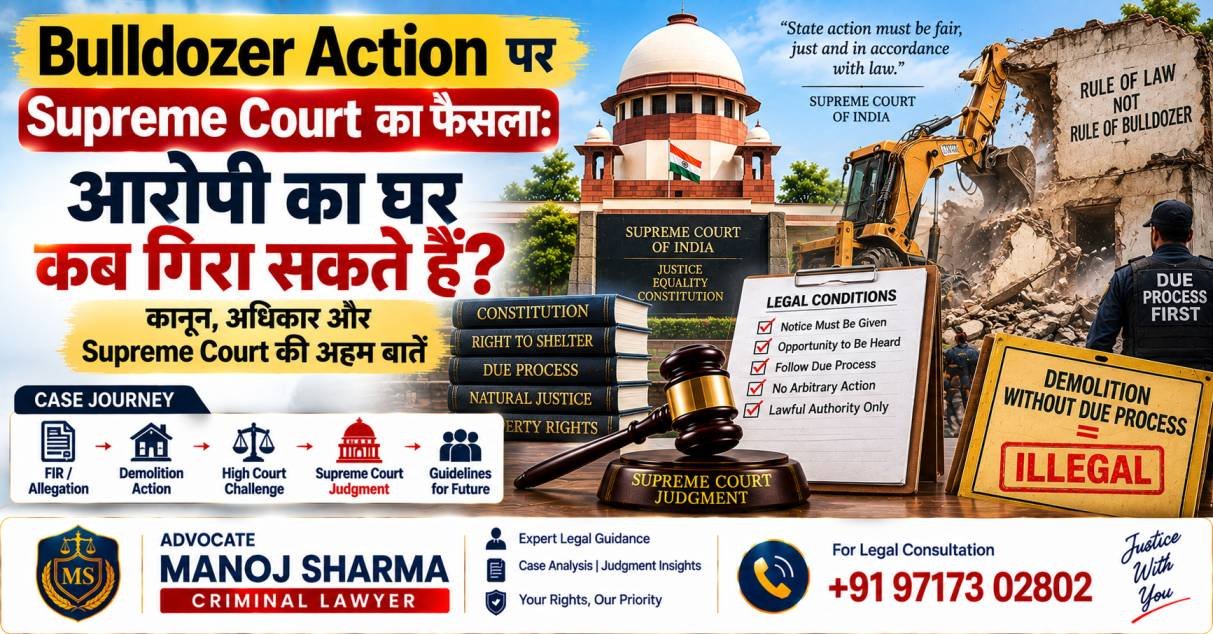
किसी व्यक्ति पर FIR दर्ज हो गई, वह किसी criminal case में accused बन गया या बाद में convicted हो गया—क्या सिर्फ इस वजह से उसका घर बुलडोजर से गिराया जा सकता है?
Supreme Court का जवाब साफ था: अपराध का आरोप या conviction, अपने-आप में किसी व्यक्ति के घर को demolition की सजा नहीं बना सकता।
लेकिन इसी के साथ Court ने दूसरी महत्वपूर्ण बात भी स्पष्ट की—इसका अर्थ यह नहीं है कि illegal construction को केवल इसलिए बचाया जा सकता है क्योंकि उसका मालिक किसी criminal case में accused है। अगर construction वास्तव में कानून के विरुद्ध है, तो competent authority applicable municipal/planning law के तहत action ले सकती है; मगर उसके लिए prescribed legal process का पालन करना होगा।
यही इस पूरे फैसले का असली legal distinction है—demolition का कारण illegal construction होना चाहिए, किसी criminal allegation को punish करना नहीं।
मामला Supreme Court तक कैसे पहुँचा?
विवाद केवल एक घर का नहीं, Executive Power की सीमा का था
Supreme Court के सामने Article 32 के तहत petitions का एक batch आया। याचिकाकर्ताओं की शिकायत यह थी कि कुछ लोगों की residential और commercial properties को इस आधार पर demolish किया गया कि वे criminal offences में accused थे और कई मामलों में demolition से पहले कानून द्वारा निर्धारित due process का पालन नहीं हुआ।
Petitions में Supreme Court से broadly यह protection मांगी गई कि criminal proceedings में accused व्यक्ति की residential या commercial property के खिलाफ केवल उसके accused होने के कारण precipitative action न लिया जाए और illegal demolition में शामिल officials के खिलाफ action हो।
यहां Court के सामने सवाल किसी एक FIR का फैसला करना नहीं था। असली सवाल था कि State machinery criminal accusation और property demolition को किस सीमा तक आपस में जोड़ सकती है।
2 September 2024 के बाद Supreme Court ने क्या किया?
2 September 2024 को Court ने पाया कि petitions का central grievance accused persons की properties के demolition से जुड़ा है। उसी stage पर Court ने parties से suggestions मांगे ताकि पूरे देश के लिए guidelines तैयार की जा सकें।
इसके बाद 17 September 2024 के order में Supreme Court ने एक महत्वपूर्ण interim direction दिया कि पूरे देश में demolition के लिए Court की leave ली जाए; हालांकि Court ने उसी समय दो महत्वपूर्ण exceptions स्पष्ट कर दिए—public places पर unauthorized structures और वे मामले जहां किसी Court ने demolition का order दिया हो।
फिर 1 October 2024 को matter पर विस्तृत hearing हुई और अलग-अलग पक्षों की ओर से demolition procedure पर detailed suggestions दिए गए।
Supreme Court के सामने असली कानूनी सवाल क्या था?
Court ने खुद issue को काफी सीमित और सटीक रूप में रखा।
मुख्य प्रश्न यह था कि क्या किसी crime के accused या even convicted व्यक्ति की property को बिना due process of law follow किए demolish किया जा सकता है? इसके साथ Rule of Law, constitutional protection against arbitrary State action, criminal justice में fairness, separation of powers और public officials की accountability के सवाल जुड़े हुए थे।
यह distinction बहुत महत्वपूर्ण है।
Court यह तय नहीं कर रहा था कि हर unauthorized construction बच जाएगी। Court यह तय कर रहा था कि किसी व्यक्ति का criminal case उसकी property के खिलाफ demolition power का shortcut नहीं बन सकता।
Petitioners की दलील क्या थी?
आरोप लगते ही demolition करना असल में punishment बन सकता है
Petitioners की तरफ से मुख्य चिंता यह थी कि कई मामलों में criminal case में व्यक्ति के आरोपी बनाए जाने और property demolition के बीच बहुत कम समय का अंतर था। उनका कहना था कि यह sequence इस बात की ओर इशारा कर सकता है कि demolition का वास्तविक उद्देश्य unauthorized construction हटाना नहीं बल्कि accused को punish करना था।
एक और महत्वपूर्ण argument यह था कि अगर किसी इलाके में कई constructions allegedly unauthorized हैं, लेकिन criminal case में accused व्यक्ति का घर ही अचानक चुनकर demolish कर दिया जाए, तो selective action और mala fide का सवाल उठना स्वाभाविक है।
Petitioners ने notice, hearing, reasoned order, appeal/challenge का अवसर, proportionality और अधिकारियों की accountability जैसे safeguards की मांग भी रखी।
State / Respondents की दलील क्या थी?
सरकार का जवाब: हर demolition को criminal punishment मत मानिए
States की ओर से यह position सामने रखी गई कि properties को criminal accusation की वजह से नहीं, बल्कि कई मामलों में municipal या planning laws के उल्लंघन के कारण demolish किया गया था। Solicitor General ने यह भी बताया कि कुछ structures public places पर unauthorized encroachments थे और applicable municipal laws कुछ परिस्थितियों में notice के बिना removal की अनुमति देते हैं।
इसलिए State side का मूल counter यह था कि illegal construction पर statutory action और accused को criminal case की वजह से punish करने वाली demolition—दो अलग चीजें हैं।
यही counter आगे Supreme Court की reasoning में भी महत्वपूर्ण रहा।
संबंधित कानून और संविधान इस मामले में क्या कहते हैं?
Rule of Law: अधिकारी भी कानून से ऊपर नहीं
Supreme Court ने Rule of Law को इस पूरे विवाद की foundation माना। Court ने स्पष्ट किया कि किसी व्यक्ति को body या property में नुकसान केवल किसी distinct breach of law और legally established process के आधार पर ही दिया जा सकता है। Punishment impose करने का constitutional institutional role Courts का है; executive अपनी administrative power को criminal punishment में बदल नहीं सकता।
Article 21: घर सिर्फ ईंट-पत्थर नहीं है
Court ने Right to Shelter को Article 21 के साथ जोड़ा। Chameli Singh v. State of U.P. जैसे precedents का सहारा लेते हुए Court ने कहा कि shelter का मतलब सिर्फ सिर पर छत नहीं, बल्कि dignity और meaningful life से जुड़ा हुआ अधिकार है।
इसका मतलब यह नहीं कि हर building को demolition से constitutional immunity मिल जाती है। मतलब यह है कि किसी व्यक्ति को उसके shelter से वंचित करने वाला State action कानून, fairness और proportionality की कसौटी पर खरा उतरना चाहिए।
Article 142: Supreme Court ने nationwide safeguards क्यों बनाए?
Court ने Article 142 की power का इस्तेमाल करते हुए पूरे देश में demolition procedure के लिए binding directions जारी कीं, ताकि arbitrary exercise of power को रोका जा सके और demolition order के बाद affected person को judicial remedy लेने का वास्तविक अवसर मिले।
Supreme Court ने पुराने फैसलों को कैसे देखा?
Rule of Law और constitutional limits
Court ने Indira Nehru Gandhi v. Raj Narain सहित precedents के माध्यम से Rule of Law को constitutional structure से जोड़ा। Court ने यह भी दोहराया कि State power और individual liberty के बीच constitutional balance की रक्षा करना judicial duty का हिस्सा है।
Proportionality का सिद्धांत
Court ने Modern Dental College, K.S. Puttaswamy और Vivek Narayan Sharma जैसे decisions में विकसित proportionality framework को demolition के संदर्भ में देखा। Court के अनुसार किसी constitutional right पर restriction तभी टिक सकती है जब उसका proper purpose हो, measure उस purpose से rationally connected हो, उससे कम restrictive alternative उपलब्ध न हो और final balance disproportionate न हो।
इसका demolition में सीधा मतलब निकला—अगर केवल unauthorized construction का एक हिस्सा हटाने या उसे compound करने का कानूनी रास्ता उपलब्ध है, तो पूरी property गिराना automatically justified नहीं हो जाता।
Supreme Court ने क्या reasoning दी?
Executive Court की जगह नहीं ले सकता
यह judgment का सबसे महत्वपूर्ण constitutional point है।
Supreme Court ने कहा कि अगर executive किसी accused की property केवल उसके criminal accusation के आधार पर demolish करता है, तो executive effectively यह तय करने लगता है कि accused दोषी है और उसे punishment मिलनी चाहिए।
लेकिन guilt तय करना और criminal punishment देना judicial process का क्षेत्र है।
Court ने साफ कहा कि executive judge बनकर accused को guilty घोषित नहीं कर सकता और फिर उसकी residential या commercial property demolish करके उसे punish नहीं कर सकता। ऐसा करना executive power की constitutional सीमा पार करना होगा।
Convicted व्यक्ति के मामले में भी यही principle
यहां Court ने एक और महत्वपूर्ण बात कही।
अगर व्यक्ति convicted भी हो चुका हो, तब भी उसकी property को सिर्फ conviction के आधार पर demolition की punishment नहीं बनाया जा सकता। Property demolition के लिए applicable law और due process follow करना होगा।
यानी “accused” और “convict” दोनों शब्द demolition power को unlimited नहीं बनाते।
आरोपी के परिवार का क्या होगा?
एक व्यक्ति के criminal case की सजा पूरे परिवार को नहीं दी जा सकती
Court ने इस सवाल को बहुत गहराई से देखा।
एक घर में आरोपी के साथ उसके spouse, बच्चे या parents भी रह सकते हैं। अगर उनमें से किसी का crime से कोई connection नहीं है, तो सिर्फ रिश्तेदारी के कारण उनका shelter छीनना किस आधार पर उचित होगा?
Supreme Court ने माना कि ऐसा करना उन लोगों को ऐसी सजा देना होगा जिनका alleged offence से कोई संबंध ही नहीं है। Court ने इसे constitutional right to life और shelter के संदर्भ में गंभीर समस्या माना।
यही “Collective Punishment” का असली खतरा है
Court ने criminal jurisprudence के presumption of innocence को भी इससे जोड़ा।
अगर एक व्यक्ति accused या convicted है और उसी घर में कई लोग रहते हैं, तो उस एक व्यक्ति के criminal status के आधार पर पूरा घर गिराने का असर पूरे परिवार पर पड़ेगा।
Court ने इसे collective punishment की तरह देखा और कहा कि constitutional scheme और criminal jurisprudence इसे स्वीकार नहीं कर सकते।
यह point इस judgment की सबसे गहरी constitutional observations में से एक है।
Illegal Construction हो तो क्या घर फिर भी गिराया जा सकता है?
हाँ, लेकिन criminal case की वजह से नहीं
यहीं इस judgment को गलत समझने का सबसे बड़ा खतरा है।
Supreme Court ने यह नहीं कहा कि municipal authority illegal construction देखकर हाथ बांधकर बैठ जाए।
Court ने माना कि unauthorized construction local municipal/planning law के तहत हटाया जा सकता है। लेकिन authority को पहले यह देखना होगा कि construction वास्तव में unauthorized है या नहीं, violation compoundable है या नहीं, केवल offending portion हटाया जा सकता है या नहीं और क्या complete demolition वास्तव में necessary है।
पूरी इमारत गिराना आखिरी रास्ता क्यों होना चाहिए?
अगर किसी building का केवल एक हिस्सा unauthorized है और कानून उस हिस्से को हटाकर बाकी structure बचाने की अनुमति देता है, तो पूरी building गिराना proportionality के सवाल में फंस सकता है।
Court ने इसी कारण कहा कि authority को satisfy होना चाहिए कि demolition ही available और necessary option है, और compounding या केवल unauthorized portion हटाने जैसे कम कठोर विकल्प उपलब्ध नहीं हैं।
Supreme Court ने Demolition के लिए कौन सी प्रक्रिया तय की?
1. पहले Show Cause Notice
सामान्य स्थिति में prior show-cause notice के बिना demolition नहीं किया जा सकता। Notice का returnable period applicable local municipal law के अनुसार होगा या service की तारीख से 15 दिन, जो भी बाद में हो। Notice owner/occupier को registered post A.D. से serve करना है और structure पर conspicuously affix भी करना है।
2. Notice में violation साफ होना चाहिए
Notice में unauthorized construction की nature, specific violation, demolition के grounds, reply के साथ मांगे गए documents और personal hearing की date तथा designated authority की जानकारी होनी चाहिए।
3. Personal Hearing का मौका
Affected person को personal hearing का अवसर देना होगा और hearing की minutes भी record करनी होंगी।
4. Final Order reasoned होना चाहिए
Authority को केवल “demolish” लिखकर आगे नहीं बढ़ना है।
Final order में noticee की contentions का उल्लेख और उनसे असहमति होने पर reasons देने होंगे। Authority को यह भी बताना होगा कि construction compoundable है या नहीं और यदि केवल एक हिस्सा unauthorized/non-compoundable है तो उसका विवरण क्या है।
5. पूरी demolition क्यों जरूरी है, यह भी बताना होगा
सबसे महत्वपूर्ण safeguard यही है।
Final order में यह स्पष्ट होना चाहिए कि demolition ही क्यों एकमात्र उपलब्ध option है, और compounding या केवल unauthorized portion हटाने जैसे alternatives क्यों उपलब्ध नहीं हैं।
6. Appeal / Judicial Challenge का मौका
Final demolition order को तुरंत execute नहीं किया जा सकता। Court ने कम से कम 15 दिनों की protection दी ताकि affected person available appellate या judicial remedy का इस्तेमाल कर सके।
7. Demolition से पहले inspection report
Demolition से पहले concerned authority को detailed inspection report तैयार करनी होगी, जिस पर दो Panchas के signatures होने चाहिए।
8. पूरी demolition process की video recording
Demolition proceedings की video recording करनी होगी और demolition report में participating police और civil personnel की details record करनी होंगी। Recording preserve करनी होगी और report prescribed digital mechanism पर upload भी करनी होगी।
किन मामलों में ये Supreme Court directions लागू नहीं होतीं?
यह हिस्सा title के सवाल का सीधा जवाब देता है।
Supreme Court ने खुद साफ किया कि ये directions public places पर unauthorized structures, जैसे road, street, footpath, railway line से लगे public encroachments या river/water bodies से संबंधित unauthorized structures पर लागू नहीं होंगी। इसी तरह जहां Court ने स्वयं demolition का order दिया है, वहां ये directions लागू नहीं होंगी।
इसलिए कोई व्यक्ति यह argument नहीं कर सकता कि “मैं accused हूं इसलिए मेरा illegal public encroachment नहीं हटाया जा सकता।”
और दूसरी तरफ authority भी यह नहीं कह सकती कि “वह accused है, इसलिए उसका निजी घर सीधे गिरा दो।”
दोनों स्थितियों के बीच फर्क करना ही judgment की असली कानूनी कुंजी है।
Supreme Court ने अधिकारियों की जवाबदेही कैसे तय की?
Guideline तोड़ना सिर्फ departmental mistake नहीं रहेगा
Court ने कहा कि इन directions का उल्लंघन होने पर contempt proceedings और prosecution शुरू हो सकते हैं।
और यदि demolition Supreme Court की directions के विरुद्ध पाया गया, तो concerned officer/officers को demolished property की restitution अपने personal cost पर करनी पड़ सकती है और damages भी देने पड़ सकते हैं।
यहां Court ने सिर्फ “भविष्य में सावधान रहें” वाली advisory नहीं दी। उसने administrative power के साथ personal accountability जोड़ दी।
Supreme Court ने आखिर क्या फैसला सुनाया?
Supreme Court ने 13 November 2024 को judgment में nationwide directions जारी कीं।
Court का मूल निष्कर्ष यह था कि किसी व्यक्ति के accused या even convicted होने के कारण उसकी property को criminal punishment की तरह demolish नहीं किया जा सकता। यदि property वास्तव में unauthorized है, तो competent authority applicable law के तहत due process follow करके action ले सकती है।
Court ने Article 142 का प्रयोग करते हुए notice, hearing, reasoned order, judicial/appellate scrutiny और documented demolition की पूरी procedural framework तैयार की।
इस Judgment से कौन सा कानूनी सिद्धांत साफ हुआ?
इस फैसले को एक line में समझना हो तो legal position यह है:
“Criminal accusation demolition का legal ground नहीं है; illegal construction पर lawful demolition हो सकता है, लेकिन वह due process और applicable law के अनुसार ही होगा।”
यानी:
Accused होना ≠ घर गिराने की अनुमति
और
Illegal construction होना = automatic, instant demolition की अनुमति भी नहीं।
Authority को दोनों questions अलग-अलग देखने होंगे—क्या construction illegal है? और क्या proposed demolition कानून के अनुसार justified और proportionate है?
इस फैसले का महत्वपूर्ण/दुर्लभ बिंदु जिसे नजरअंदाज नहीं करना चाहिए
Supreme Court ने “Bulldozer” से ज्यादा “Executive Power” पर फैसला दिया
बाहर से देखने पर यह judgment bulldozer action पर दिखाई देता है।
लेकिन constitutional lawyer की नजर से देखें तो इसका असली subject bulldozer नहीं, State power की सीमा है।
अगर executive किसी criminal allegation को देखकर किसी व्यक्ति की property को punishment की तरह गिरा सकता है, तो criminal justice system की पूरी institutional structure प्रभावित होगी। पहले आरोप लगेगा, फिर executive punishment दे देगा और judicial trial बाद में होगा।
Supreme Court ने इसी sequence को स्वीकार नहीं किया।
अदालत guilt तय करेगी; executive कानून के अनुसार administrative action करेगा; दोनों powers को एक-दूसरे की जगह इस्तेमाल नहीं किया जा सकता। यही Rule of Law और Separation of Powers का practical application है।
दूसरा rare point: घर सिर्फ accused की property नहीं हो सकता
जिस घर पर bulldozer चलता है, वहां आरोपी के अलावा उसके बच्चे, पत्नी, माता-पिता या अन्य लोग भी हो सकते हैं।
इसलिए demolition को सिर्फ “property action” समझना अधूरा है। कई परिस्थितियों में उसका सीधा असर innocent third parties के Article 21 और shelter पर पड़ सकता है। Supreme Court ने इसी वजह से collective punishment के खतरे को अलग constitutional concern माना।
अंतिम परिणाम: कौन जीता और क्या राहत मिली?
यह conventional criminal appeal नहीं थी जिसमें एक accused को acquit या convict किया गया हो।
Supreme Court ने इस batch में Pan-India procedural safeguards तय किए और authorities को demolition की प्रक्रिया कानून, natural justice, proportionality और judicial scrutiny के अधीन रखने के लिए binding directions जारी कीं।
इन directions का उल्लंघन होने पर contempt और prosecution का रास्ता खुला और illegal demolition के लिए officials पर personal restitution तथा damages की liability भी तय की गई।
इसलिए इस judgment का practical result किसी एक घर की रक्षा तक सीमित नहीं रहा—इसने देशभर में executive demolition power के इस्तेमाल के लिए constitutional guardrails तय किए।
FAQ –
क्या सिर्फ FIR दर्ज होने के बाद आरोपी का घर बुलडोजर से गिराया जा सकता है?
नहीं। केवल FIR, criminal allegation या accused status अपने-आप demolition का आधार नहीं बन सकता। In Re: Directions in the matter of demolition of structures, 2024 INSC 866 में Supreme Court ने स्पष्ट किया कि executive किसी accused को guilty घोषित करके उसकी property को punishment के रूप में demolish नहीं कर सकता। यदि construction unauthorized है, तो applicable municipal/planning law और prescribed procedure follow करना होगा।
क्या convicted व्यक्ति का घर भी गिराया जा सकता है?
Conviction अपने-आप demolition की सजा नहीं बनती। Supreme Court ने स्पष्ट किया कि convicted व्यक्ति की property भी बिना due process के demolish नहीं की जा सकती। यदि property का construction applicable law के अनुसार unauthorized है, तो competent authority lawful demolition proceedings चला सकती है।
क्या illegal construction होने पर Supreme Court का bulldozer judgment demolition रोक देता है?
नहीं। यह judgment illegal construction को immunity नहीं देता। Court ने माना कि unauthorized construction के खिलाफ municipal/planning laws के अनुसार action हो सकता है। लेकिन authority को notice, hearing, reasoned order, proportionality और उपलब्ध legal remedies जैसी safeguards का पालन करना होगा, subject to the exceptions expressly recognised by the judgment.
Demolition से पहले notice देना जरूरी है?
सामान्य मामलों में हाँ। Supreme Court ने prior show-cause notice का framework बनाया है और notice के लिए local municipal law में prescribed period या service से 15 दिन, जो बाद में हो, का rule रखा। लेकिन judgment ने public-place unauthorized structures और Court-ordered demolition को expressly बाहर रखा है।
क्या घर का केवल कुछ हिस्सा illegal हो तो पूरी building गिराई जा सकती है?
हर मामले में नहीं। Supreme Court ने कहा कि authority को यह examine करना होगा कि केवल offending portion हटाया जा सकता है या construction compoundable है। अगर कम कठोर lawful option उपलब्ध है, तो पूरी property demolish करना proportionality के सवाल में आएगा।
अगर Supreme Court की demolition guidelines का उल्लंघन हो जाए तो अधिकारी पर क्या कार्रवाई हो सकती है?
Judgment के अनुसार directions का violation contempt proceedings और prosecution को जन्म दे सकता है। यदि demolition Supreme Court की directions के विरुद्ध पाया जाता है, तो concerned officers पर demolished property की restitution personal cost पर और damages की liability भी आ सकती है।
क्या आरोपी के परिवार का घर भी उसके criminal case की वजह से गिराया जा सकता है?
सिर्फ आरोपी से रिश्तेदारी के आधार पर नहीं। Supreme Court ने विशेष रूप से माना कि एक structure में spouse, children या parents जैसे लोग भी रह सकते हैं और उनके खिलाफ collective punishment constitutional scheme के विपरीत होगी।
Supreme Court ने Bulldozer Action मामले में Article 21 को क्यों जोड़ा?
क्योंकि Court ने Right to Shelter को Article 21 के एक facet के रूप में माना। किसी व्यक्ति को shelter से वंचित करने वाला arbitrary State action उसके right to life और dignity को प्रभावित कर सकता है। इसलिए demolition को केवल property regulation के रूप में नहीं, बल्कि constitutional rights के प्रभाव के साथ भी देखना होगा।
कानूनी Disclaimer
यह लेख In Re: Directions in the matter of demolition of structures, 2024 INSC 866 के Supreme Court judgment पर आधारित सामान्य कानूनी जानकारी और विश्लेषण है। किसी specific property, demolition notice, municipal proceeding, criminal case या writ petition में लागू कानून और उपलब्ध remedies facts, State/municipal law और संबंधित orders के अनुसार अलग हो सकते हैं। यह लेख किसी व्यक्ति के मामले में व्यक्तिगत legal opinion या guaranteed outcome नहीं है।
कानूनी परामर्श के लिए
यदि किसी व्यक्ति को demolition notice, unauthorized construction proceeding, municipal action या criminal case के साथ जुड़ी property action का सामना करना पड़ रहा है, तो संबंधित documents और orders का कानूनी परीक्षण आवश्यक हो सकता है।
ऐसे मामले में Advocate Manoj Sharma, High Court Lucknow Bench से संबंधित legal consultation के लिए संपर्क किया जा सकता है। उपलब्ध documents के आधार पर applicable law, procedural compliance और उपलब्ध legal remedy का अलग से परीक्षण किया जा सकता है।
Original Supreme Court Judgment
Case: In Re: Directions in the matter of demolition of structures
Citation: 2024 INSC 866
W.P. (C) No. 295 of 2022 with connected matters
Judgment: 13 November 2024
Bench: B.R. Gavai, J. and K.V. Viswanathan, J.
Original Supreme Court Judgment — 2024 INSC 866
Related Supreme Court Judgments
- Indira Nehru Gandhi v. Raj Narain — Rule of Law और constitutional structure.
- Chameli Singh v. State of U.P. — Right to Shelter.
- Modern Dental College and Research Centre v. State of Madhya Pradesh — Proportionality.
- K.S. Puttaswamy v. Union of India — Constitutional rights और proportionality.
- Vivek Narayan Sharma v. Union of India — Proportionality framework.
- Gujarat Steel Tubes Ltd. v. Gujarat Steel Tubes Mazdoor Sabha — Individual guilt और collective punishment का distinction.
- D.K. Basu v. State of West Bengal — State action में procedural safeguards और accountability.