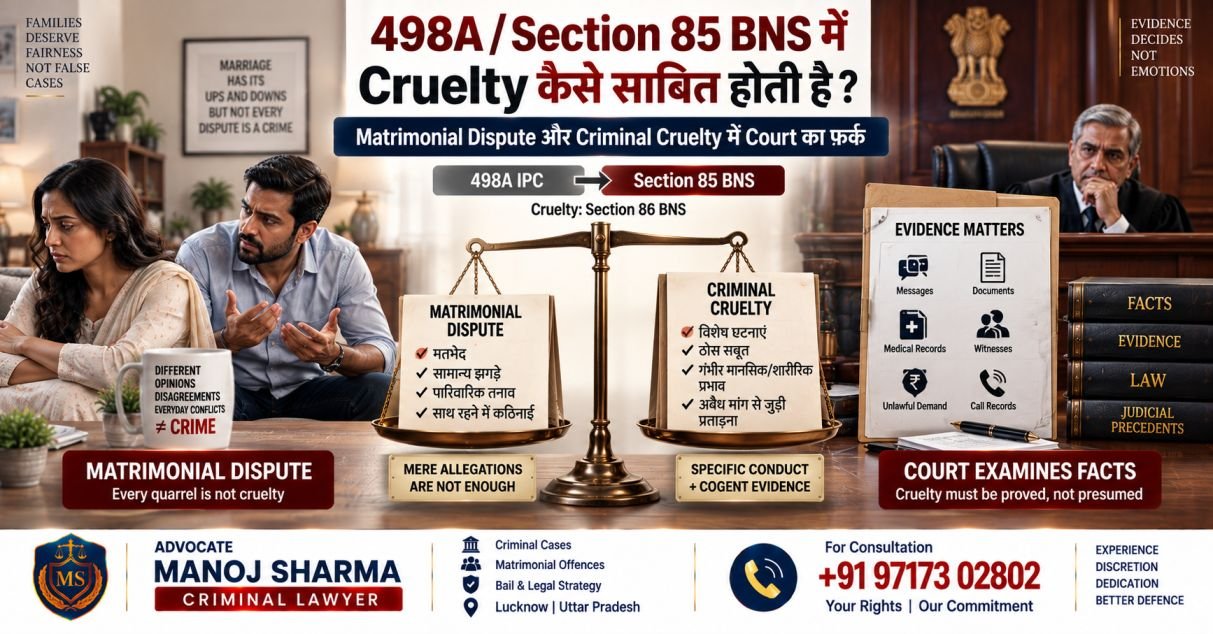
शादी के बाद पति-पत्नी में विवाद होना अपने आप में criminal offence नहीं है। लेकिन वही विवाद जब ऐसे conduct, harassment या unlawful demand का रूप ले लेता है जो कानून में defined “cruelty” की सीमा में आता है, तब criminal liability का सवाल पैदा होता है।
यहीं से 498A/अब BNS Section 85 के मामलों की सबसे महत्वपूर्ण कानूनी लड़ाई शुरू होती है।
एक तरफ महिला के साथ वास्तविक cruelty और dowry-related harassment के विरुद्ध criminal law की protection है। दूसरी तरफ किसी व्यक्ति को केवल matrimonial disagreement, vague allegation या family relationship के आधार पर criminal trial में घसीटना भी कानून का उद्देश्य नहीं है।
Supreme Court ने बार-बार इस distinction को महत्व दिया है। 2025 में Court ने कहा कि cruelty को specific instances के बिना स्थापित नहीं किया जा सकता और केवल general allegations of harassment से criminal proceedings जारी रखना उचित नहीं हो सकता।
2026 में भी Supreme Court ने Section 498A के एक मामले में prosecution द्वारा cruelty के ingredients को cogent evidence से साबित न किए जाने पर conviction set aside की।
इसलिए असली कानूनी प्रश्न केवल यह नहीं है कि “FIR में cruelty का आरोप है या नहीं?”
असली प्रश्न है:
कौन-सा conduct हुआ, किसने किया, कब किया, किस परिस्थिति में किया, उसका evidence क्या है और क्या वह conduct statutory definition of cruelty के भीतर आता है?
498A और Section 85 BNS में “Cruelty” का कानूनी मतलब क्या है?
1 July 2024 से Bharatiya Nyaya Sanhita, 2023 लागू है। BNS में husband या husband के relative द्वारा woman को cruelty subject करने का offence Section 85 में है और “cruelty” की definition Section 86 में दी गई है।
Section 85 के अनुसार husband या husband के relative द्वारा woman को cruelty subject करने पर तीन वर्ष तक का imprisonment और fine हो सकता है।
Section 86 cruelty को दो broad statutory situations में रखता है।
पहली स्थिति — गंभीर wilful conduct
ऐसा wilful conduct जो ऐसा हो कि woman को suicide करने के लिए drive करने की संभावना हो या उसके life, limb या health—physical या mental—को grave injury या danger हो।
दूसरी स्थिति — unlawful demand से जुड़ा harassment
ऐसा harassment जिसका उद्देश्य woman या उसके किसी relative को property या valuable security की unlawful demand पूरी करने के लिए coerce करना हो, या ऐसी demand पूरी न होने के कारण harassment किया गया हो।
यहीं एक महत्वपूर्ण legal distinction निकलता है।
हर unpleasant matrimonial conduct Section 85 की cruelty नहीं है।
Court को statutory ingredients तक पहुँचना होता है।
इसीलिए “शादी में बहुत झगड़ा होता था”, “पति बात नहीं करता था”, “ससुराल वाले परेशान करते थे” जैसे broad statements के बाद अगला कानूनी प्रश्न हमेशा रहेगा:
किस specific conduct की बात हो रही है?
Court Cruelty को कैसे पहचानती है? Allegation, Conduct और Criminal Proof में क्या फर्क है?
Matrimonial criminal cases में तीन अलग स्तरों को एक-दूसरे में मिला देना सबसे बड़ी legal mistake हो सकती है:
Allegation → Conduct → Proof
किसी FIR में allegation लिख दिया गया कि accused ने mental cruelty की।
यह पहला स्तर है।
इसके बाद Court को देखना पड़ सकता है कि allegedly हुआ actual conduct क्या था।
उदाहरण के लिए:
- क्या कोई specific threat दिया गया?
- क्या dowry या money की specific demand हुई?
- किस व्यक्ति ने demand की?
- घटना कब हुई?
- कहाँ हुई?
- क्या repeated conduct था?
- क्या कोई contemporaneous message या communication मौजूद है?
- क्या medical evidence है?
- क्या किसी independent person ने घटना देखी या उसके तत्काल बाद कुछ सुना?
- क्या complaint में और बाद के statements में chronology consistent है?
फिर तीसरा स्तर आता है:
क्या उपलब्ध material उस conduct को criminal cruelty के statutory ingredients तक ले जाता है?
Supreme Court ने 2025 में एक matrimonial case में इसी problem को highlight किया था। Court ने कहा कि cruelty को specific instances के बिना establish नहीं किया जा सकता और general allegations criminal proceedings को आगे बढ़ाने के लिए पर्याप्त नहीं हो सकते।
इसका अर्थ यह नहीं है कि हर cruelty allegation को FIR में हर minute detail के साथ लिखना अनिवार्य है।
लेकिन इसका अर्थ यह जरूर है कि criminal liability को केवल broad matrimonial vocabulary पर नहीं टिकाया जा सकता।
क्या Matrimonial Quarrel, Separation या Communication Breakdown अपने आप Criminal Cruelty बन सकता है?
यही वह जगह है जहाँ defence और prosecution दोनों के पास strong arguments हो सकते हैं।
Defence का argument
पति-पत्नी में disagreement, arguments, temporary separation या communication breakdown को तुरंत criminal cruelty नहीं माना जा सकता।
2026 के Jayesh Kanna v. Assistant Commissioner, Law and Order (West) में Supreme Court ने Section 498A IPC के आरोपों की evidence पर scrutiny करते हुए prosecution द्वारा cruelty के ingredients को cogent evidence से establish न किए जाने पर conviction set aside की। Judgment में alleged non-communication और available call records सहित evidence को examine किया गया।
इससे एक practical principle निकलता है:
Conduct को उसके surrounding circumstances से अलग करके नहीं देखना चाहिए।
लेकिन prosecution का counter भी उतना ही महत्वपूर्ण है।
Prosecution का counter
Mental cruelty का मतलब केवल physical assault नहीं है।
Section 86(a) expressly mental health को भी statutory definition में include करता है। इसलिए यह कहना कि “कोई physical injury नहीं हुई, इसलिए cruelty नहीं हुई” अपने आप में complete defence नहीं है।
Court को यह देखना होगा कि alleged conduct वास्तव में उस statutory threshold तक पहुँचता है या नहीं।
यानी:
No physical injury ≠ automatically no cruelty
और उसी तरह:
Mental suffering का allegation ≠ automatically proved criminal cruelty
बीच का पूरा evidentiary question ही trial का वास्तविक क्षेत्र बनता है।
Dowry Demand और Mental Cruelty में Court किस तरह Evidence की Chain देखती है?
Section 86 में unlawful demand से जुड़ा harassment एक अलग statutory route देता है।
लेकिन यहाँ भी केवल “दहेज माँगा गया” कहना अंतिम conclusion नहीं है।
Court के सामने कुछ practical questions आ सकते हैं:
किसने demand की?
पति?
सास?
ससुर?
देवर?
या कई लोगों पर collectively allegation है?
क्या demand specific थी?
Cash?
Car?
Property?
Jewellery?
Business investment?
कोई दूसरी valuable security?
कब demand की गई?
शादी के तुरंत बाद?
किसी particular occasion पर?
बार-बार?
किसी विवाद के दौरान?
क्या demand के बाद कोई identifiable harassment हुआ?
यही chronology prosecution case को मजबूत या कमजोर कर सकती है।
Dowry-death cases में Supreme Court ने भी evidentiary chain को isolated allegations की बजाय collectively examine किया है। तुम्हारे existing Brajesh Kumar article का legal lesson यही है कि prosecution evidence को अलग-अलग pieces की तरह नहीं बल्कि पूरी chain के रूप में test करना पड़ सकता है। उस judgment में delay, medical material, dying declaration और other evidentiary circumstances सहित prosecution case की overall reliability scrutinise की गई।
इसलिए 498A/Section 85 matter में defence का सही सवाल हमेशा यह नहीं होगा:
“क्या कोई evidence है?”
बल्कि:
“क्या उपलब्ध evidence statutory ingredient तक पहुँचने वाली complete chain बनाता है?”
“ससुराल वालों ने परेशान किया” जैसे General Allegations कब कमजोर पड़ते हैं?
यह article का सबसे महत्वपूर्ण rare points में से एक है।
कानून husband के साथ-साथ relative of husband को भी Section 85 के scope में रखता है। इसलिए केवल यह कहना भी गलत होगा कि relatives कभी liable नहीं हो सकते।
लेकिन relative के खिलाफ criminal liability का दूसरा प्रश्न है:
उस particular relative ने क्या किया?
2026 में Supreme Court ने एक case में इसी distinction को सीधे examine किया। Court ने husband के खिलाफ specific allegations—physical assault, dowry demand और mental torture—को अलग देखा और फिर यह पूछा कि relatives के खिलाफ FIR/chargesheet में उनके विरुद्ध specific allegations हैं या नहीं।
यहाँ से एक महत्वपूर्ण courtroom test निकलता है:
Husband के खिलाफ allegation
“X ने मुझे 15 June को ₹5 lakh की demand की और payment न करने पर मारपीट की।”
यह specific allegation है।
Relative के खिलाफ allegation
“मेरे पति और उनके सभी relatives मुझे दहेज के लिए परेशान करते थे।”
यह comparatively general allegation है।
दूसरे situation में Court naturally पूछ सकती है:
कौन-सा relative? कौन-सा act? कब? कहाँ? किस demand के संबंध में?
Supreme Court ने पहले भी matrimonial cases में यही caution दिया है कि criminal prosecution को general और sweeping allegations पर mechanically आगे नहीं बढ़ाया जाना चाहिए।
लेकिन इसका मतलब यह भी नहीं कि FIR में exact date न होने मात्र से हर case खत्म हो जाएगा।
Specificity का legal test facts और stage के अनुसार apply होगा।
FIR में नाम होना और Criminal Liability बनना क्या एक ही बात है?
नहीं।
FIR criminal investigation शुरू कर सकती है। लेकिन FIR में किसी व्यक्ति का नाम होना और उस व्यक्ति के खिलाफ trial में guilt establish होना दो अलग legal stages हैं।
इसी distinction को 2026 Supreme Court ने relatives के संदर्भ में practically demonstrate किया।
Court ने पूछा कि क्या allegations accused-relatives के खिलाफ specifically offences disclose करते हैं, या allegations मुख्यतः husband के खिलाफ हैं।
यहाँ defence के पास एक important counter हो सकता है:
“मेरे client का matrimonial home में रहना ही criminal overt act का proof नहीं है।”
लेकिन prosecution इसका उत्तर दे सकता है:
“यदि relative के खिलाफ specific demand, assault, harassment या participation का material है, तो केवल अलग residence या family relationship देखकर proceedings समाप्त नहीं की जा सकती।”
इसलिए residence, relationship और actual participation तीन अलग factual questions हैं।
2025 में Supreme Court ने एक case में यह भी observe किया कि अलग-अलग cities में रहने वाले relatives के खिलाफ allegations को विशेष सावधानी से scrutinise करना चाहिए और vague allegations के आधार पर criminal process आगे बढ़ाना abuse of process हो सकता है।
WhatsApp, Call Records, Bank Documents और Medical Evidence कितने महत्वपूर्ण हो सकते हैं?
आज matrimonial criminal litigation में evidence केवल oral testimony तक सीमित नहीं है।
किसी allegation की chronology को support या contradict करने वाले records महत्वपूर्ण हो सकते हैं:
WhatsApp / Messages
यदि allegation है कि लगातार threats दिए गए थे, तो contemporaneous messages relevant हो सकते हैं।
लेकिन केवल कुछ selected screenshots पर्याप्त conclusion नहीं बनाते।
Court context भी देख सकती है:
- पूरा conversation
- date/time
- sender/receiver
- preceding messages
- subsequent messages
- authenticity
- electronic evidence requirements
Call Records
अगर allegation किसी particular period में complete communication breakdown या repeated threatening calls का है, तो call records factual chronology को test करने में उपयोगी हो सकते हैं।
Jayesh Kanna में Supreme Court ने alleged non-communication के संदर्भ में call records सहित evidence पर विचार किया।
Bank Records
यदि prosecution case unlawful financial demand पर आधारित है, तो bank transfers, withdrawals, payment records या financial correspondence case की factual story को support या contradict कर सकते हैं।
Medical Records
Physical assault allegations में medical evidence relevant हो सकता है।
लेकिन medical record का absence हर physical-cruelty allegation को automatically false नहीं बनाता। Court overall evidence देखती है।
इसलिए defence की strategy केवल:
“Medical report नहीं है।”
तक सीमित करना सही legal approach नहीं होगा।
बेहतर question है:
“Alleged incident और available medical/electronic/oral evidence के बीच consistency क्या है?”
Prosecution का Counter क्या होगा? Mental Cruelty को “सिर्फ घरेलू विवाद” कहकर Defence कब असफल हो सकता है?
यह section जरूरी है क्योंकि article को केवल accused-side article नहीं बनाना है।
मान लीजिए defence कहता है:
“पति-पत्नी में झगड़ा हुआ था, बस।”
Prosecution counter कर सकता है:
“एक isolated quarrel नहीं, बल्कि repeated conduct की पूरी series है।”
अगर evidence यह दिखाता है कि:
- repeated unlawful demands थीं,
- demand के साथ harassment हुआ,
- threats लगातार थे,
- physical या mental harm का serious pattern था,
- accused का individual role identifiable था,
तो केवल “matrimonial dispute” कह देना sufficient defence नहीं होगा।
Section 86(a) mental health को expressly recognise करता है और Section 86(b) unlawful demand से linked harassment को separately cover करता है।
इसलिए Court का task केवल यह तय करना नहीं है कि:
“क्या husband-wife में dispute था?”
बल्कि:
“उस dispute के भीतर कौन-सा conduct criminal law की statutory boundary cross करता है?”
यही distinction article की central legal finding है।
498A/Section 85 में Police की Power कहाँ से शुरू होती है और Arrest कब automatic नहीं है?
यहाँ 498A content में एक बहुत जरूरी modern-law correction आता है।
FIR दर्ज होना और immediate arrest दो अलग चीजें हैं।
BNSS Section 35 arrest without warrant के framework को regulate करता है। Supreme Court ने January 2026 के Satender Kumar Antil v. CBI decision में Section 35(1)(b) के arrest conditions पर महत्वपूर्ण clarification दिया। Court ने कहा कि Section 35(1)(b)(i) में “reason to believe” के साथ Section 35(1)(b)(ii) की listed conditions में से applicable condition का compliance भी आवश्यक है; arrest की necessity और reasons का statutory framework follow करना होगा।
इसका practical मतलब:
“498A/BNS 85 की FIR है इसलिए arrest तो होगा ही” — यह legal proposition नहीं है।
पुराने Section 498A cases में Arnesh Kumar के arrest safeguards महत्वपूर्ण रहे हैं। Supreme Court ने यह निर्देश दिया था कि 498A registration के कारण police automatic arrest न करे और arrest की necessity को statutory parameters के अनुसार assess करे; Magistrate को भी detention authorise करते समय police material और reasons देखना चाहिए।
अब procedure BNSS के framework में पढ़ना होगा।
इसलिए 2026 में सही approach है:
Arnesh Kumar principles + current BNSS Section 35 + Satender Kumar Antil clarification
इन तीनों को साथ पढ़ना।
क्या Notice मिलने का मतलब है कि Arrest नहीं होगा?
जरूरी नहीं।
यहाँ भी एक common misconception है।
BNSS Section 35 के notice mechanism और arrest power को mechanically equate नहीं किया जा सकता।
Satender Kumar Antil में Supreme Court ने Section 35(3) notice और arrest necessity को अलग statutory questions के रूप में explain किया। Police को applicable conditions और reasons का compliance करना पड़ता है।
इसलिए accused के लिए practical legal question होना चाहिए:
- notice किस section के संदर्भ में है?
- क्या notice का compliance किया जा रहा है?
- investigation में cooperation हो रहा है?
- arrest की statutory necessity क्या बताई गई है?
- कोई anticipatory bail remedy आवश्यक है?
- क्या कोई special circumstance मौजूद है?
और police के लिए:
“FIR हुई → arrest करो”
वाला mechanical approach current Supreme Court framework से compatible नहीं माना जा सकता।
High Court में Section 528 BNSS के तहत Quashing कब relevant हो सकती है?
यहाँ भी “false FIR = quash” वाला shortcut सही नहीं है।
High Court की inherent power का उद्देश्य हर disputed fact की trial-stage investigation करना नहीं है।
लेकिन अगर FIR/complaint को उसके face value पर पढ़ने के बाद भी:
- offence के basic ingredients नहीं बनते,
- allegations inherently insufficient हैं,
- particular accused के खिलाफ specific criminal role नहीं दिखता,
- proceeding abuse of process की category में आती है,
तो quashing jurisdiction relevant हो सकती है।
Supreme Court ने 2026 में Section 528 BNSS के संदर्भ में फिर emphasize किया कि High Court quashing stage पर mini-trial नहीं कर सकती; लेकिन यदि FIR basic facts/material particulars के बिना vague है और alleged criminal acts के essential particulars prima facie disclose नहीं होते, तो ऐसे objections को mechanically reject भी नहीं किया जा सकता।
इसलिए quashing के दो extremes से बचना होगा:
गलत extreme 1
“FIR में contradiction है, इसलिए quash होनी चाहिए।”
गलत extreme 2
“FIR में allegation है, इसलिए High Court कुछ नहीं कर सकती।”
सही legal question:
क्या allegations, taken at face value, statutory offence के ingredients disclose करते हैं?
अगर हाँ, तो disputed evidence सामान्यतः trial का विषय बनेगा।
अगर नहीं, तो Section 528 BNSS का question seriously arise हो सकता है।
Supreme Court के 2025–2026 Judgments से इस Legal Test को कैसे समझें?
इस पूरे topic को चार judicial principles में समझना ज्यादा उपयोगी है।
पहला — Specificity matters
2025 में Supreme Court ने कहा कि cruelty को specific instances के बिना establish नहीं किया जा सकता और mere general allegations of harassment पर्याप्त नहीं हो सकते।
दूसरा — Every matrimonial disagreement is not criminal cruelty
2026 में Jayesh Kanna में Court ने prosecution evidence को examine करके पाया कि Section 498A cruelty के ingredients cogent evidence से establish नहीं हुए और conviction set aside की।
तीसरा — Husband और relatives की liability को अलग-अलग examine किया जा सकता है
2026 में Supreme Court ने यह specifically examine किया कि allegations accused-relatives के खिलाफ भी offence disclose करते हैं या primarily husband के खिलाफ हैं।
चौथा — Criminal process itself requires judicial scrutiny
Supreme Court ने matrimonial prosecutions में repeatedly caution किया है कि general and sweeping allegations के आधार पर persons को criminal trial face कराने से पहले allegations की prima facie specificity देखी जानी चाहिए।
इन principles को एक साथ रखने पर legal test यह बनता है:
Relationship → Alleged Conduct → Specificity → Statutory Ingredient → Evidence → Individual Role → Procedural Stage
और यही वह framework है जिसके आधार पर किसी 498A/Section 85 BNS case को वास्तव में समझा जाना चाहिए।
498A/Section 85 BNS Case में सबसे महत्वपूर्ण Defence क्या हो सकता है?
Defence को एक single sentence पर नहीं टिकाना चाहिए कि:
“आरोप झूठे हैं।”
Criminal litigation में stronger approach allegation-by-allegation examination हो सकती है।
उदाहरण:
Allegation: ₹5 lakh dowry demand.
Question: किसने माँगा?
Next: कब माँगा?
Next: किस context में?
Next: payment हुआ या नहीं?
Next: कोई message/bank record/witness?
Next: complaint में यही version है?
Next: बाद के statement में यही chronology है?
Next: alleged accused का उस घटना में actual role क्या था?
यही process prosecution story की legal testing करता है।
इसी तरह mental cruelty allegation में:
Conduct क्या था?
क्या वह wilful था?
क्या उसका statutory consequence Section 86(a) के threshold तक पहुँचता है?
और dowry-linked harassment में:
Unlawful demand क्या थी?
Demand और harassment का connection क्या है?
यह defence को “सब झूठ है” से उठाकर ingredient-by-ingredient legal challenge में बदल देता है।
Courtroom में Prosecution और Defence दोनों के Counter को कैसे समझना चाहिए?
Prosecution की मूल position
“Cruelty केवल physical beating नहीं है। Mental cruelty और unlawful-demand harassment भी कानून में expressly covered हैं।”
यह legally correct starting point है।
Defence का counter
“लेकिन statutory definition में आने वाला specific conduct और उसके supporting evidence को establish करना भी prosecution की responsibility है।”
यह भी Supreme Court के evidentiary approach से consistent है।
Prosecution का अगला counter
“Specificity का अर्थ यह नहीं कि FIR trial evidence की तरह detailed होनी चाहिए। Investigation के दौरान evidence collect होगा।”
Defence का जवाब
“लेकिन जिस व्यक्ति को accused बनाया गया है, उसके खिलाफ basic factual allegations तो होने चाहिए; केवल family relationship या omnibus allegation criminal liability establish नहीं करता।”
Supreme Court के 2025 और 2026 decisions इसी distinction की importance दिखाते हैं।
Court का वास्तविक प्रश्न
क्या available allegations और material, उस particular accused के खिलाफ, उस particular statutory offence को prima facie disclose करते हैं?
यहीं से case की अगली procedural stage तय हो सकती है।
Lucknow में 498A/Section 85 BNS Case हो तो Legal Analysis कहाँ से शुरू होना चाहिए?
Lucknow में किसी matrimonial criminal case को केवल FIR की sections देखकर analyse करना पर्याप्त नहीं है।
सबसे पहले एक chronology बनानी चाहिए:
Marriage → matrimonial dispute → alleged incident(s) → separation → complaint → FIR → investigation → notice/arrest → charge-sheet → cognizance → trial/quashing/bail stage
इसके बाद accused-wise matrix बनाया जा सकता है:
| व्यक्ति | FIR में allegation | Specific incident | Evidence | Current procedural stage |
|---|---|---|---|---|
| Husband | क्या आरोप? | क्या घटना? | कौन-सा material? | FIR/Investigation/Trial |
| Mother-in-law | क्या अलग role? | क्या specific incident? | क्या evidence? | — |
| Father-in-law | individual role? | date/place? | documentary/oral? | — |
| Other relative | actual participation? | specific conduct? | supporting material? | — |
यह approach इसलिए महत्वपूर्ण है क्योंकि husband के खिलाफ मजबूत allegation होने से हर relative के खिलाफ वही allegation automatically transfer नहीं हो जाता।
2026 Supreme Court का relative-specificity analysis इसी distinction को reinforce करता है।
और यदि matter Lucknow Bench तक Section 528 BNSS, anticipatory bail या अन्य criminal remedy के रूप में जाता है, तो remedy का selection case की exact procedural stage और available record पर depend करेगा; केवल “498A case है” इतना कहना पर्याप्त नहीं है।
इस पूरे कानून का Rare Legal Point क्या है?
498A/Section 85 litigation को केवल “wife vs husband” के रूप में पढ़ना अधूरा है।
असल legal structure ज्यादा layered है:
Marriage dispute
↓
Alleged conduct
↓
Specific individual role
↓
Section 86 का statutory test
↓
Supporting evidence
↓
Police investigation और arrest की statutory limits
↓
Prosecution की evidentiary burden
↓
Quashing / discharge / trial का procedural stage
↓
Final criminal liability
यही कारण है कि दो cases बाहर से एक जैसे दिख सकते हैं—दोनों में “dowry harassment” लिखा हो—लेकिन Court में दोनों की legal strength बिल्कुल अलग हो सकती है।
एक case में specific demand, contemporaneous messages, bank transactions और repeated conduct का evidence हो सकता है।
दूसरे में केवल broad allegations हों और particular accused का individual role स्पष्ट न हो।
कानून दोनों को केवल इसलिए एक जैसा treat नहीं करता कि FIR में एक ही section लिखा हुआ है।
और दूसरी तरफ, केवल यह कहना भी पर्याप्त नहीं कि “यह matrimonial dispute है”; यदि evidence Section 85/86 के statutory ingredients establish करता है, तो criminal liability का वास्तविक प्रश्न पैदा होता है।
यही Matrimonial Dispute और Criminal Cruelty के बीच Court द्वारा खींची जाने वाली legal boundary है।
Criminal Investigation में केवल FIR नहीं, पूरी “Evidence Trail” क्यों महत्वपूर्ण होती है?
Section 85 BNS का मामला FIR से शुरू हो सकता है, लेकिन criminal case की वास्तविक strength केवल FIR की language से तय नहीं होती।
Investigation के दौरान एक अलग evidentiary trail बनती है:
Complaint → FIR → witness statements → documents → electronic material → medical material → investigation findings → police report
यहीं defence और prosecution दोनों के लिए एक महत्वपूर्ण opportunity पैदा होती है।
यदि complaint में किसी particular घटना का allegation है, तो investigation में naturally यह प्रश्न उठ सकता है कि उसके supporting circumstances क्या हैं।
उदाहरण के लिए allegation है कि किसी particular date को accused ने dowry demand की।
तब investigation में यह material सामने आ सकता है:
- उस समय accused और complainant कहाँ थे?
- कोई communication हुआ था?
- कोई witness मौजूद था?
- उसके तुरंत बाद कोई message या call हुआ?
- कोई payment या demand-related transaction हुआ?
- क्या उसी घटना का उल्लेख किसी earlier complaint या communication में था?
- क्या बाद में दिए गए statement में वही chronology बनी रही?
यहाँ एक important distinction है।
हर contradiction FIR को false नहीं बनाता।
लेकिन material contradiction उस समय महत्वपूर्ण हो सकता है जब वह prosecution के core ingredient को प्रभावित करता हो।
इसी तरह delay भी अपने आप case समाप्त नहीं करता।
Supreme Court ने 2026 के matrimonial cases में delay को अकेले decisive ground मानने के बजाय उसे अन्य circumstances के साथ पढ़ा है। एक 2026 judgment में divorce proceedings पहले शुरू होने और उसके बाद criminal complaint आने की chronology को specific allegations की कमी के साथ पढ़ा गया।
इसलिए legal analysis का बेहतर तरीका है:
Delay + explanation + surrounding conduct + allegation specificity + supporting evidence
इन सबको साथ देखना।
क्या बाद की Complaint पहले के Conduct से Compare की जा सकती है?
हाँ, लेकिन इसे बहुत सावधानी से समझना होगा।
Matrimonial litigation में एक ही relationship से कई records पैदा हो सकते हैं:
- police complaint,
- matrimonial case,
- divorce petition,
- maintenance proceedings,
- Domestic Violence proceedings,
- emails,
- WhatsApp conversations,
- family communications.
यदि बाद में criminal complaint में कोई serious allegation आता है, तो defence यह देख सकता है कि उसी alleged period के बारे में पहले किसी proceeding में क्या factual version दिया गया था।
यहाँ “पहले complaint में नहीं लिखा, इसलिए बाद का allegation झूठा है” कहना automatically सही नहीं होगा।
लेकिन यदि:
- allegation बाद में पहली बार आया,
- allegation case के core ingredient से जुड़ा है,
- earlier document में materially different version है,
- और उसके लिए कोई satisfactory explanation नहीं है,
तो inconsistency evidentiary significance प्राप्त कर सकती है।
2026 में Supreme Court ने एक case में FIR और divorce petition को cumulative reading में देखा और पाया कि husband के खिलाफ specific allegations थे, जबकि relatives के खिलाफ allegations bald और generalised थे। उसी chronology में divorce petition और बाद की criminal complaint का timing भी relevant circumstance बना।
यहाँ rare point यह है:
Court केवल “कौन पहले बोला?” नहीं देखती; Court यह भी देख सकती है कि अलग-अलग proceedings में factual story की internal structure क्या है।
क्या एक ही घटना के बारे में अलग-अलग Proceedings में अलग Version Defence के लिए महत्वपूर्ण हो सकता है?
यह previous section से थोड़ा अलग सवाल है।
मान लीजिए matrimonial dispute में तीन documents हैं:
पहला: पत्नी की police complaint
दूसरा: divorce petition
तीसरा: बाद की criminal complaint
यदि तीनों में events की chronology materially अलग है, तो defence उस difference को evidence के रूप में use करने की कोशिश कर सकता है।
लेकिन Court यह भी पूछ सकती है:
- क्या document किसी अलग legal purpose के लिए बनाया गया था?
- क्या omission deliberate था या केवल drafting difference?
- क्या allegation बाद में develop हुआ?
- क्या earlier proceeding में उस fact को mention करना legally necessary था?
- क्या difference material है या merely peripheral?
यही वजह है कि experienced defence strategy में हर contradiction को “falsehood” घोषित करने के बजाय उसे materiality test से देखा जाता है।
Rare courtroom test
क्या contradiction prosecution की कहानी के किसी essential ingredient को हिलाता है?
अगर हाँ, उसका महत्व बढ़ सकता है।
अगर नहीं, तो Court उसे minor inconsistency मान सकती है।
यही distinction article को ordinary “498A false case” content से अलग करता है।
Section 85 BNS में Complaint कौन कर सकता है और यह Procedural Point इतना महत्वपूर्ण क्यों है?
BNS offence के साथ BNSS का procedural framework भी पढ़ना जरूरी है।
BNSS Section 220 विशेष रूप से Section 85 BNS के prosecution के लिए बताता है कि Court cognizance police report पर या aggrieved woman की complaint पर, तथा specified close relatives द्वारा की गई complaint पर ले सकती है; अन्य relative की complaint के लिए Court की leave का statutory mechanism भी दिया गया है।
यह एक ऐसा point है जो सामान्य 498A articles में अक्सर गायब रहता है।
क्योंकि criminal law में केवल यह पूछना पर्याप्त नहीं:
“Offence हुआ या नहीं?”
कभी-कभी procedural question भी उतना ही महत्वपूर्ण होता है:
“Case Court तक किस statutory route से पहुँचा?”
इसलिए Section 85 BNS का analysis केवल Section 85 और 86 तक सीमित नहीं होना चाहिए।
BNS substantive offence + BNSS procedural route
दोनों को साथ पढ़ना चाहिए।
Section 85 BNS का Cognizable और Non-Bailable होना क्या Automatic Arrest का मतलब है?
Section 85 BNS को BNSS First Schedule में cognizable and non-bailable classify किया गया है और यह Magistrate of the First Class द्वारा triable है।
लेकिन यहाँ एक अत्यंत महत्वपूर्ण distinction है:
Non-bailable ≠ arrest is compulsory.
और:
Cognizable ≠ police can ignore the statutory arrest safeguards.
यही कारण है कि पहले discuss किया गया BNSS Section 35 framework practical importance रखता है।
Supreme Court ने January 2026 में Satender Kumar Antil में Section 35 के arrest framework पर जोर देते हुए arrest की necessity और statutory conditions को अलग से examine किया।
पुराने Section 498A cases में विकसित Arnesh Kumar safeguards का practical relevance इसलिए बना रहता है, लेकिन 2026 में उन्हें current BNSS provisions के साथ पढ़ना चाहिए।
इसका मतलब accused के लिए यह समझना जरूरी है कि:
FIR की section देखना और arrest strategy तय करना एक ही चीज नहीं है।
क्या Investigation में Cooperation करना Defence का हिस्सा बन सकता है?
यहाँ “cooperation” को सिर्फ police station जाने या attendance लगाने तक सीमित नहीं समझना चाहिए।
एक accused की legal position में यह महत्वपूर्ण हो सकता है कि वह:
- lawful notice का response दे,
- relevant documents preserve करे,
- अपने defence records नष्ट न करे,
- investigation के दौरान consistent factual position रखे,
- unnecessary confrontation से बचे,
- और अपनी legal rights के भीतर investigation face करे।
लेकिन इसका दूसरा side भी है।
Investigation में cooperation का अर्थ prosecution की कहानी स्वीकार करना नहीं है।
Accused अपने defence documents और factual position legally place कर सकता है, लेकिन उसे ऐसा कोई statement देने की जरूरत नहीं जो बाद में उसके खिलाफ गलत context में इस्तेमाल हो सके।
इसलिए practical principle:
Cooperate with lawful investigation, but do not surrender the legal distinction between cooperation and admission.
Charge-sheet में Section 85 का नाम आ जाना क्या Cruelty Prove कर देता है?
नहीं।
Charge-sheet investigation का result है; conviction का proof नहीं।
यहाँ तीन अलग stages को अलग रखना जरूरी है:
Investigation
Police material collect करती है।
Charge / Trial
Court यह देखती है कि available material के आधार पर proceedings आगे बढ़ाने का legal basis है या नहीं।
Conviction
Prosecution को criminal charge required standard पर establish करना पड़ता है।
2026 के Jayesh Kanna judgment में Supreme Court ने इसी अंतिम evidentiary question पर prosecution case को test किया और पाया कि Section 498A IPC के ingredients cogent evidence से establish नहीं हुए। Conviction और sentence इसलिए set aside किए गए।
इसका मतलब यह नहीं कि हर Section 85 case में accused trial से पहले discharge हो जाएगा।
बल्कि इसका lesson यह है:
Charge-sheet का existence और offence का proof अलग legal propositions हैं।
Defence को “False Case” बोलने के बजाय क्या साबित करना चाहिए?
यहीं expert-level defence और ordinary defence में अंतर दिखाई देता है।
“मुझे झूठा फँसाया गया है” एक allegation है।
लेकिन Court के सामने stronger approach यह हो सकती है:
Allegation 1
Specific dowry demand.
Defence question:
किस accused ने की? किस circumstance में? supporting material?
Allegation 2
Mental cruelty.
Defence question:
कौन-सा wilful conduct? क्या statutory threshold तक पहुँचता है?
Allegation 3
Relative ने harassment किया।
Defence question:
उस relative का individual act क्या था?
Allegation 4
Repeated harassment.
Defence question:
Chronology कहाँ है? Earlier communications क्या दिखाती हैं?
Allegation 5
Financial demand.
Defence question:
Transaction trail कहाँ है?
इससे defence का structure बदल जाता है:
False → क्यों false?
से:
Ingredient → Evidence → Contradiction → Legal consequence
तक।
यही अधिक disciplined criminal defence analysis है।
क्या केवल Independent Witness न होने से 498A/Section 85 Case खत्म हो जाता है?
नहीं।
यह भी एक common misconception है।
Matrimonial incidents अक्सर घर के भीतर होते हैं। इसलिए हर घटना का independent eyewitness मिलना आवश्यक नहीं होता।
लेकिन independent evidence का absence prosecution case की overall strength assess करते समय एक circumstance हो सकता है—विशेषकर तब जब allegation गंभीर और specific हो तथा कोई supporting contemporaneous material भी उपलब्ध न हो।
इसके विपरीत:
- पत्नी की testimony,
- उसके तत्काल communications,
- medical evidence,
- financial records,
- electronic evidence,
- surrounding conduct
यदि collectively reliable पाए जाएँ, तो केवल “independent witness नहीं था” defence के लिए पर्याप्त नहीं होगा।
इसलिए सही legal test:
No independent witness ≠ no offence
और:
Allegation alone ≠ automatic proof
Court को evidence का cumulative assessment करना होता है।
क्या Electronic Evidence आज 498A/Section 85 Defence का Hidden Battlefield बन सकता है?
हाँ।
लेकिन electronic evidence को केवल screenshots के रूप में देखना खतरनाक हो सकता है।
मान लीजिए allegation है:
“Accused ने लगातार धमकी दी।”
Defence के पास केवल एक friendly WhatsApp message है:
“आपसे बात करके अच्छा लगा।”
यह अपने आप criminal allegation को destroy नहीं करता।
इसी तरह prosecution के पास केवल एक threatening message है तो उससे पूरा matrimonial history automatically establish नहीं हो जाता।
Court context देख सकती है:
- पूरा chat thread,
- dates,
- metadata/available electronic record,
- sender/receiver identity,
- preceding और subsequent conversation,
- authenticity,
- statutory admissibility requirements.
इसलिए electronic evidence की सबसे बड़ी ताकत contextual chronology है।
Rare point:
एक message की evidentiary value अक्सर उस message के आसपास के पूरे communication pattern से बदल सकती है।
यही कारण है कि defence को selective screenshot collection के बजाय complete records preserve करने चाहिए।
क्या Matrimonial Settlement के बाद Section 85/498A Case अपने आप खत्म हो जाता है?
यहाँ भी shortcut नहीं अपनाना चाहिए।
Settlement और criminal proceedings का relationship case की stage और applicable legal mechanism पर निर्भर करता है।
Supreme Court ने Shilpa Sailesh v. Varun Sreenivasan में matrimonial disputes के context में Article 142 की power और connected criminal proceedings को settlement के आधार पर समाप्त करने की constitutional power को recognise किया था, लेकिन यह Supreme Court की constitutional jurisdiction का exercise है—इसे यह सामान्य rule नहीं बनाया जा सकता कि हर trial court केवल private settlement के आधार पर Section 85 proceedings automatically terminate कर दे।
इसलिए practical distinction:
Settlement agreement
और
criminal proceedings का legal termination
दो अलग steps हैं।
अगर parties settlement पर पहुँचती हैं, तो यह देखना पड़ता है कि:
- matter किस Court में pending है?
- कौन-कौन से offences हैं?
- कौन-सी proceedings connected हैं?
- कौन-सी remedy legally available है?
- क्या High Court intervention आवश्यक है?
- क्या Supreme Court की constitutional jurisdiction involved है?
इसलिए “compromise हो गया, case खत्म” कहना legally unsafe है।
क्या Divorce Petition और Criminal Cruelty Case एक-दूसरे को Automatically Prove करते हैं?
नहीं।
Divorce proceeding और criminal prosecution के different legal purposes and standards होते हैं।
Divorce petition में matrimonial relief के लिए pleaded conduct और criminal case में Section 85 के ingredients को prove करने का question identical नहीं है।
लेकिन factual overlap होने के कारण दोनों proceedings के documents practical importance रख सकते हैं।
उदाहरण:
यदि divorce petition में husband और wife के बीच particular chronology दी गई है और बाद की criminal complaint उसी period के बारे में materially different factual narrative देती है, तो defence उस difference को confront कर सकता है।
लेकिन Court फिर भी यह देखेगी कि difference legally material है या नहीं।
यही कारण है कि matrimonial litigation में एक document को दूसरे proceeding से अलग करके पढ़ना कई बार अधूरा analysis हो सकता है।
क्या Relatives के खिलाफ Quashing का सबसे मजबूत Point केवल “वे अलग रहते थे” हो सकता है?
केवल अलग residence पर्याप्त नहीं है।
लेकिन residence एक relevant factual circumstance हो सकता है जब उसके साथ यह भी हो:
- FIR में specific role नहीं,
- allegations omnibus हैं,
- individual overt act नहीं,
- independent supporting material नहीं,
- chronology उस relative की involvement को support नहीं करती।
2026 में Supreme Court ने ऐसे ही cumulative assessment में husband और relatives के allegations को अलग किया और relatives के खिलाफ bald/generalised allegations तथा distinct criminal acts के अभाव को महत्व दिया।
और March 2026 के एक Supreme Court judgment में Court ने general and omnibus allegations के आधार पर in-laws के खिलाफ proceedings quash करने के High Court approach को uphold किया; divorce proceedings और बाद की complaint की timing भी अन्य circumstances के साथ देखी गई।
इससे rare proposition निकलता है:
“Separate residence” अकेला defence नहीं है; “separate residence + no specific role + no supporting material + surrounding chronology” कहीं अधिक meaningful legal combination हो सकता है।
लेकिन क्या Specific Allegation होने मात्र से Relative का Trial निश्चित हो जाता है?
नहीं।
यह भी उतना ही महत्वपूर्ण counter है।
यदि relative के खिलाफ specific allegation है, तब Court आगे देख सकती है:
- allegation prima facie offence disclose करता है?
- supporting material है?
- allegation inherently improbable तो नहीं?
- prosecution story के बाकी documents से consistent है?
- मामला trial का factual dispute है या legal deficiency का?
यानी specificity entry point है, conviction नहीं।
इसी तरह general allegation automatic acquittal नहीं है।
यही nuance इस पूरे topic का central judicial discipline है।
Courtroom में “Chronology” Defence का सबसे Powerful Tool कब बन सकती है?
किसी matrimonial criminal case को केवल sections की list की तरह पढ़ना अक्सर गलती हो सकती है।
एक experienced legal analysis पहले timeline बनाएगा:
Marriage
↓
First matrimonial dispute
↓
First alleged dowry demand
↓
Communication / complaint
↓
Separation
↓
Mediation / family intervention
↓
Divorce proceedings
↓
Police complaint
↓
FIR
↓
Investigation
↓
Charge-sheet
↓
Present stage
अब प्रत्येक major allegation को timeline पर रखा जाए।
फिर पूछा जाए:
क्या allegation उस समय के contemporaneous conduct से supported है?
यह कोई automatic truth test नहीं है।
लेकिन इससे Court को यह समझने में मदद मिल सकती है कि allegation isolated है या continuing pattern का हिस्सा है।
और defence को भी यह पता चलता है कि किस factual point पर real contradiction मौजूद है और कहाँ केवल drafting difference है।
498A/Section 85 Case में Defence की सबसे बड़ी गलती क्या हो सकती है?
सबसे बड़ी गलती यह मानना हो सकती है कि हर case का defence एक ही formula से चलेगा:
“False FIR + no medical + no independent witness + relatives अलग रहते थे = case खत्म.”
Criminal litigation इतनी mechanical नहीं है।
किसी case में medical evidence relevant हो सकता है।
किसी में नहीं।
किसी case में electronic evidence central हो सकता है।
किसी में oral testimony dominant हो सकती है।
किसी case में dowry demand का financial trail महत्वपूर्ण हो सकता है।
किसी case में specific relative involvement ही central issue हो सकता है।
इसलिए defence को पहले यह तय करना चाहिए:
Case का actual pressure point क्या है?
Ingredient missing?
Specific role missing?
Chronology inconsistent?
Electronic record contradictory?
Demand का evidence absent?
Medical evidence inconsistent?
Investigation defect material है?
Procedural defect है?
Quashing का मामला है या trial का?
यही diagnosis defence strategy को legally meaningful बनाता है।
इस पूरे विषय में Supreme Court की Approach को एक Legal Formula में कैसे समझें?
2025–2026 के recent matrimonial judgments को साथ पढ़ने पर एक useful analytical sequence सामने आता है:
पहला सवाल
किस accused के खिलाफ allegation है?
दूसरा
उस accused का specific conduct क्या बताया गया है?
तीसरा
क्या वह conduct Section 85/86 के statutory ingredients से जुड़ता है?
चौथा
उस conduct के supporting circumstances क्या हैं?
पाँचवाँ
क्या prosecution और defence के documents chronology को support या contradict करते हैं?
छठा
मामला investigation stage पर है, charge stage पर है या trial evidence के बाद?
सातवाँ
क्या issue factual appreciation का है या proceedings की legal maintainability का?
यह sequence महत्वपूर्ण है क्योंकि एक ही defence अलग procedural stage पर अलग weight रख सकता है।
FIR stage पर Court generally trial जैसा detailed evidence appreciation नहीं करेगी।
लेकिन quashing stage पर यह भी नहीं कहा जा सकता कि Court allegations के legal ingredients को देख ही नहीं सकती।
और trial में prosecution को अपने ingredients evidence से establish करना होगा।
यही procedural-stage sensitivity criminal litigation का एक overlooked aspect है।
498A से Section 85 BNS तक कानून समझते समय पुराने Judgments को कैसे पढ़ना चाहिए?
यह 2026 में विशेष रूप से जरूरी है।
पुराने cases Section 498A IPC के तहत decided हुए हैं।
अब BNS Section 85 और 86 लागू हैं।
लेकिन Section 85 और 86 का statutory structure IPC Section 498A के core cruelty framework से closely carried forward है। BNS Section 85 husband/relative द्वारा cruelty को punish करता है और Section 86 cruelty की दो statutory categories रखता है।
इसलिए पुराने Supreme Court judgments को simply “पुराना कानून है, इसलिए irrelevant है” कहना सही नहीं होगा।
लेकिन दूसरी तरफ:
हर पुराने procedural proposition को बिना current BNSS framework check किए 2026 article में paste करना भी सही नहीं है।
इसलिए modern legal reading यह होनी चाहिए:
Old 498A judicial principles
Current BNS 85–86
Current BNSS procedure
2025–2026 Supreme Court interpretation
यही combination आज के Section 85 BNS case को properly understand करने का तरीका है।
Final Legal Position: Matrimonial Dispute और Criminal Cruelty के बीच वास्तविक सीमा कहाँ है?
इस पूरे analysis का निष्कर्ष किसी एक पक्ष को सही या गलत घोषित करना नहीं है।
Legal boundary इससे बनती है:
Matrimonial disagreement
से criminal liability तभी legally meaningful होती है जब alleged conduct applicable statutory definition के भीतर आता हो और prosecution उसे required criminal standard पर establish कर सके।
इसी तरह केवल यह कहना कि:
“यह तो husband-wife का private dispute है”
किसी genuine cruelty allegation को खत्म नहीं करता।
Section 86 BNS expressly serious wilful conduct affecting physical or mental health और unlawful-demand-related harassment को cruelty के रूप में recognise करता है।
दूसरी तरफ, Supreme Court के recent decisions यह भी दिखाते हैं कि:
- general allegations और specific allegations में फर्क है;
- husband और उसके relatives के alleged roles अलग-अलग examine किए जा सकते हैं;
- matrimonial disagreement को mechanically criminal cruelty नहीं माना जा सकता;
- prosecution को cruelty के ingredients cogent evidence से establish करने होते हैं;
- और criminal process को केवल family relationship के आधार पर हर relative तक mechanically extend नहीं किया जाना चाहिए।
इसलिए Section 85 BNS case का सबसे महत्वपूर्ण सवाल यह नहीं है:
“क्या यह 498A का मामला है?”
बल्कि:
“किस accused ने कौन-सा specific conduct किया, वह conduct Section 86 की किस statutory category में आता है, उस conduct को support करने वाला evidence क्या है, और case की वर्तमान procedural stage पर Court उस material को किस legal standard से देख सकती है?”
यही वह point है जहाँ Matrimonial Dispute और Criminal Cruelty अलग-अलग legal categories बनते हैं।
और यही distinction किसी Section 85 BNS/legacy 498A case की वास्तविक defence या prosecution analysis की शुरुआत होनी चाहिए।
Frequently Asked Questions — 498A / Section 85 BNS में Cruelty –
1. क्या 498A अभी भी लागू है?
1 July 2024 से नए criminal offences के लिए Bharatiya Nyaya Sanhita, 2023 लागू है। Husband या husband के relative द्वारा cruelty का वर्तमान substantive provision Section 85 BNS है और cruelty की definition Section 86 BNS में है। पुराने Section 498A IPC के judgments की judicial principles को transition के संदर्भ में पढ़ना पड़ता है।
2. Section 85 BNS में Cruelty की सजा कितनी है?
Section 85 BNS के तहत cruelty के लिए तीन वर्ष तक का imprisonment और fine का प्रावधान है।
3. क्या पति-पत्नी का हर झगड़ा Section 85 BNS का Case बन सकता है?
नहीं। Ordinary matrimonial disagreement और statutory criminal cruelty को अलग-अलग examine करना होता है। Supreme Court ने भी कहा है कि हर matrimonial conduct, annoyance या ordinary quarrel अपने आप criminal cruelty नहीं बनता।
4. क्या Mental Cruelty के लिए Physical Violence होना जरूरी है?
नहीं। Section 86(a) में woman की physical या mental health को grave injury या danger पहुँचाने वाले specified wilful conduct को cruelty की definition में शामिल किया गया है। इसलिए physical injury का absence अपने आप case खत्म नहीं करता।
5. क्या केवल FIR में किसी Relative का नाम होने से वह दोषी माना जाएगा?
नहीं। FIR में नाम होना और criminal guilt establish होना अलग stages हैं। Relative के खिलाफ उसके specific role और alleged conduct को facts और evidence के अनुसार examine किया जा सकता है।
6. क्या ससुराल के सभी सदस्यों के खिलाफ एक जैसी allegation होने पर सभी पर Section 85 BNS लग जाएगा?
हर व्यक्ति की liability automatically समान नहीं हो जाती। Court individual allegations, specific role और available material को अलग-अलग देख सकती है। Supreme Court के recent matrimonial decisions में husband और relatives के alleged roles को अलग-अलग scrutinise किया गया है।
7. क्या अलग शहर में रहने वाले ससुराल वालों को भी आरोपी बनाया जा सकता है?
केवल अलग residence से liability समाप्त नहीं होती, लेकिन residence एक relevant factual circumstance हो सकता है। Court यह देख सकती है कि उस relative के खिलाफ कोई specific incident, participation या supporting material है या नहीं।
8. क्या 498A/Section 85 BNS Case में Arrest निश्चित होता है?
नहीं। Section 85 का offence non-bailable और cognizable classification रखता है, लेकिन non-bailable का अर्थ automatic arrest नहीं है। Arrest पर current BNSS framework और Supreme Court द्वारा clarified statutory safeguards लागू होते हैं।
9. क्या Police Section 85 BNS की FIR होते ही आरोपी को गिरफ्तार कर सकती है?
Police की investigation और arrest powers कानून से regulated हैं। BNSS Section 35 और Supreme Court के arrest jurisprudence के अनुसार arrest की necessity और statutory conditions को अलग से examine करना होता है; FIR में Section 85 लिखे होने मात्र से automatic arrest का rule नहीं बनता।
10. क्या केवल Dowry Demand का आरोप Section 85 BNS के लिए पर्याप्त है?
सिर्फ allegation और legally established ingredient अलग चीजें हैं। Section 86(b) unlawful demand से connected harassment को cover करता है, इसलिए Court demand, harassment और available evidence के factual connection को देख सकती है।
11. क्या WhatsApp Chat 498A/Section 85 BNS Case में Defence बन सकती है?
WhatsApp या अन्य electronic communication relevant evidence हो सकती है, लेकिन किसी isolated screenshot से पूरा case automatically तय नहीं होता। Complete conversation, authenticity, context, chronology और applicable evidentiary requirements महत्वपूर्ण हो सकते हैं।
12. क्या Divorce Case और Section 85 BNS Case में दिए गए अलग-अलग Statements को Court देख सकती है?
हाँ, यदि दोनों proceedings में relevant factual allegations overlap करते हैं तो उनकी consistency और material differences evidentiary assessment में relevant हो सकते हैं। लेकिन हर omission या wording difference को automatic falsehood नहीं माना जाता।
13. क्या Section 85 BNS की FIR High Court में Quash हो सकती है?
कुछ circumstances में High Court की inherent jurisdiction relevant हो सकती है, लेकिन quashing automatic remedy नहीं है। यह देखना पड़ता है कि allegations को उनके face value पर लेने के बाद भी offence के ingredients disclose होते हैं या proceedings abuse of process की category में आती हैं।
14. क्या Charge-sheet दाखिल होने के बाद Section 85 BNS Case खत्म किया जा सकता है?
Charge-sheet filing अपने आप guilt establish नहीं करती। Case की stage के अनुसार discharge, quashing या trial-related remedies के legal questions अलग हो सकते हैं। कौन-सी remedy उपलब्ध है, यह record और procedural stage पर निर्भर करता है।
15. क्या Husband और उसके Relatives के खिलाफ एक ही Defence Strategy होनी चाहिए?
जरूरी नहीं। Husband के खिलाफ allegations और किसी relative के खिलाफ allegations अलग हो सकते हैं। इसलिए accused-wise analysis अधिक उपयोगी हो सकता है—किसके खिलाफ कौन-सा allegation, कौन-सा incident और कौन-सा supporting evidence है।
16. क्या Settlement होने पर Section 85 BNS Case अपने आप खत्म हो जाता है?
नहीं। Matrimonial settlement और criminal proceedings का formal termination अलग legal questions हैं। Case की stage, offences और applicable procedural remedy के अनुसार आगे की legal action तय होती है।
17. क्या Independent Witness न होने से Section 85 BNS Case खत्म हो जाता है?
नहीं। Independent witness की absence अपने आप acquittal का आधार नहीं है। Court available oral, documentary, electronic, medical और surrounding evidence का cumulative assessment कर सकती है।
18. Section 85 BNS Case में Defence को सबसे पहले क्या देखना चाहिए?
सबसे पहले accused-wise chronology बनाना उपयोगी हो सकता है:
Allegation → Specific conduct → Date/occasion → Statutory ingredient → Supporting evidence → Contradiction, if any → Present procedural stage
यही तय करता है कि वास्तविक legal issue FIR, investigation, arrest, quashing, discharge या trial में कहाँ है।
कानूनी Disclaimer
यह लेख केवल सामान्य कानूनी जानकारी और educational purpose के लिए है। Section 85 BNS, Section 86 BNS या पुराने Section 498A IPC से जुड़े प्रत्येक मामले के facts, evidence, procedural stage और लागू कानून अलग हो सकते हैं।
किसी FIR, arrest, anticipatory bail, quashing, discharge या trial के संबंध में केवल इस लेख के आधार पर legal decision नहीं लेना चाहिए। वास्तविक मामले में FIR, complaint, statements, documents, electronic evidence और अन्य relevant records की समीक्षा के बाद qualified legal advice लेना उचित है।
इस लेख में पुराने Section 498A IPC के Supreme Court judgments को current Section 85/86 BNS के statutory framework के संदर्भ में समझाया गया है। पुराने judgments के procedural aspects को वर्तमान BNSS provisions के साथ पढ़ना आवश्यक हो सकता है।
किसी particular case में applicable law और latest judicial position की स्वतंत्र पुष्टि आवश्यक हो सकती है।
यह भी पढ़ें 👇
- Supreme Court Judgment: Jayesh Kanna में 498A Cruelty को लेकर Court ने क्या कहा?
- Supreme Court Judgment: Brajesh Kumar Dowry Death Case में Supreme Court ने Evidence को कैसे देखा?
- FIR दर्ज होने के बाद आरोपी को क्या करना चाहिए? गिरफ्तारी, जमानत और कानूनी बचाव की पूरी रणनीति
- गंभीर आपराधिक आरोप लगने पर आरोपी को तुरंत Criminal Lawyer की जरूरत क्यों पड़ती है?