Cheque किसी व्यक्ति को दिया गया और Bank ने उसे dishonour कर दिया—यहीं से आम तौर पर एक सीधा सवाल पैदा होता है:
“अब क्या होगा?”
लेकिन कानून में केवल cheque bounce होना ही पूरा answer नहीं है।
Section 138, Negotiable Instruments Act, 1881 के तहत criminal liability बनने के लिए कई statutory conditions एक साथ देखनी पड़ती हैं। Cheque किस liability के लिए दिया गया था, उसे समय पर present किया गया या नहीं, bank ने किस कारण से return किया, statutory notice कब भेजा गया, payment का अवसर दिया गया या नहीं और complaint limitation के भीतर दाखिल हुई या नहीं—इन सबका अपना legal महत्व है।
और दूसरी तरफ accused के लिए भी केवल यह कहना कि “मेरे account में पैसे नहीं थे” या “cheque security के लिए था” अपने-आप complete defence नहीं बन जाता।
यही कारण है कि cheque bounce matter को केवल “138 का केस” कहकर छोड़ देना पर्याप्त नहीं है।
Cheque Bounce होने पर Section 138 NI Act कब लागू होता है और हर Dishonour Criminal Case क्यों नहीं बनता?
Section 138 का मूल structure समझे बिना आगे की पूरी strategy अधूरी रहती है।
कानून में cheque dishonour को criminal offence बनाने के लिए केवल bank द्वारा payment refuse कर देना पर्याप्त नहीं है।
Section 138 में cheque किस purpose के लिए होना चाहिए?
Section 138 उस cheque से संबंधित है जो किसी व्यक्ति ने अपने bank account से किसी legally enforceable debt या other liability के पूरे या आंशिक discharge के लिए दिया हो।
यदि cheque dishonour होता है, तो Section 138 की statutory conditions पूरी होने पर offence बन सकता है। India Code में Section 138 इसी framework को expressly set out करता है.
इसका एक महत्वपूर्ण consequence है:
हर bounced cheque अपने-आप Section 138 का criminal offence नहीं बनता।
Court को यह देखना पड़ सकता है कि cheque के पीछे legally enforceable debt या liability थी या नहीं और Section 138 की बाकी statutory requirements पूरी हुईं या नहीं।
Section 138 को एक checklist की तरह पढ़ना चाहिए
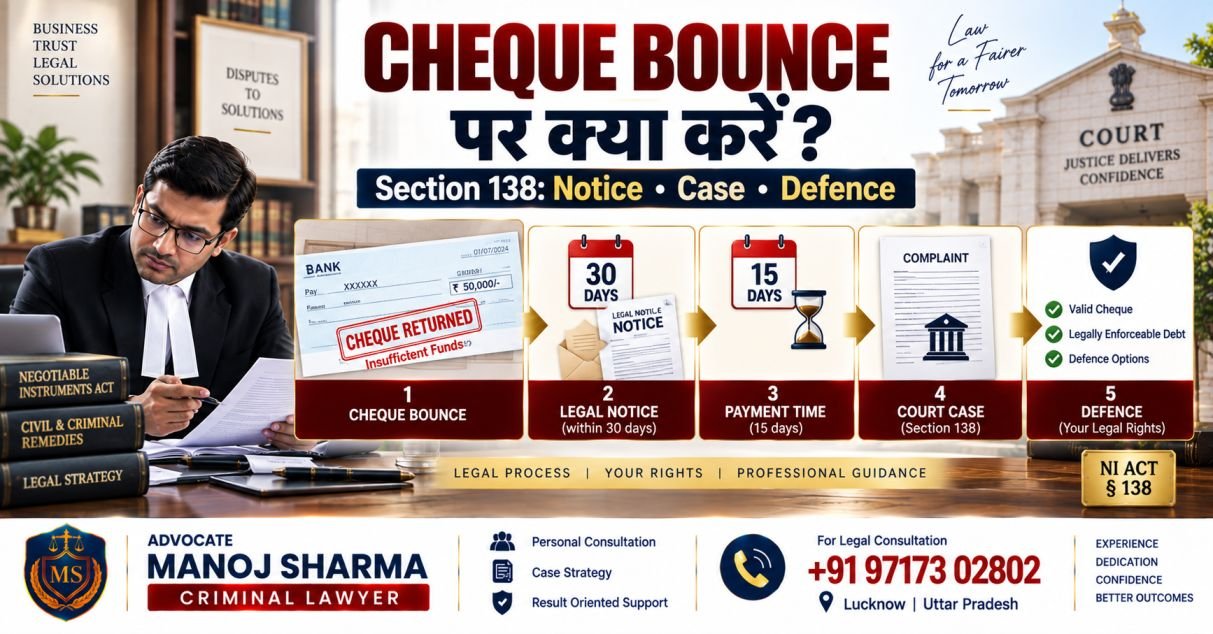
किसी cheque bounce matter को analyse करते समय sequence broadly इस तरह बनेगा:
Cheque → legally enforceable debt/liability → presentation → dishonour → statutory notice → payment opportunity → complaint → limitation
इनमें से किसी stage पर material legal defect हो तो उसका effect पूरे prosecution पर पड़ सकता है।
यही वह point है जहां complainant और accused दोनों की preparation अलग दिशा में जाती है।
Cheque dishonour का reason क्यों important है?
Bank return memo में dishonour का reason दिया जाता है।
Section 138 का statutory language principally insufficiency of funds या amount exceeding arrangement जैसी circumstances को address करता है, जबकि Supreme Court ने Section 138 jurisprudence में cheque dishonour के अलग factual contexts को भी examine किया है.
इसलिए केवल “cheque bounce हो गया” कहना पर्याप्त factual description नहीं है।
Case file में कम-से-कम यह देखना चाहिए:
- cheque number;
- cheque date;
- amount;
- drawee bank;
- presentation date;
- return date;
- bank return reason;
- underlying transaction;
- debt/liability का nature;
- और subsequent statutory notice.
“Cheque मेरे नाम से था” और “Debt legally enforceable थी” एक ही बात नहीं
कई disputes में cheque signed होने की बात dispute नहीं होती।
लेकिन accused का वास्तविक defence यह हो सकता है कि cheque जिस liability के लिए alleged है, वह legally enforceable debt नहीं थी।
यहीं Section 139 की statutory presumption बाद में महत्वपूर्ण होती है—लेकिन presumption का existence और उसके final rebuttal का question एक ही stage पर decide नहीं होता।
Supreme Court ने 2026 में इसी distinction को फिर से emphasise किया।
2026 INSC 327 में Supreme Court ने कहा कि जब cheque issuance/signature dispute नहीं था और Section 138 की basic ingredients तथा statutory notice/complaint requirements prima facie satisfied थीं, तब Section 139 की presumption को trial शुरू होने से पहले ही खत्म करके complaint dismiss करना उचित नहीं था। Presumption के rebuttal का proper exercise trial में evidence/material के माध्यम से होना था.
यह accused के लिए भी एक important lesson है:
Defence होना और उस defence को सही procedural stage पर prove/rebut करना—दो अलग questions हैं।
2026 Supreme Court का एक और important distinction: Cheque Bounce ≠ Automatically Cheating
यह point cheque bounce litigation में बहुत important है।
2026 INSC 265 में Supreme Court ने post-dated cheques के dishonour और cheating allegation के बीच distinction किया। Court ने कहा कि cheque dishonour Section 138 की proceeding को जन्म दे सकता है, लेकिन इससे अपने-आप cheating establish नहीं होती; cheating के लिए dishonest intention transaction की शुरुआत से मौजूद होना relevant है.
इसलिए किसी cheque bounce dispute में दो अलग questions हो सकते हैं:
Question 1: क्या Section 138 NI Act की ingredients पूरी हैं?
Question 2: क्या अलग से cheating का offence बनाने के लिए dishonest intention from inception establish होती है?
इन दोनों को एक ही allegation मानना गलत legal approach हो सकता है।
Cheque Bounce के बाद Legal Notice कितने समय में भेजना होता है और Notice में क्या होना चाहिए?
Section 138 proceeding में statutory notice केवल एक formal letter नहीं है।
यह वह stage है जहां complainant dishonoured cheque की payment की statutory demand करता है और drawer को कानून द्वारा दिया गया payment opportunity मिलता है।
Bank से dishonour information मिलने के बाद 30 दिन का महत्व
Section 138 के proviso के अनुसार, payee या holder in due course को bank से cheque return होने की information मिलने के 30 दिनों के भीतर written demand notice देना होता है। Notice में cheque amount की payment की demand होनी चाहिए.
इसलिए practical chronology बहुत साफ रखनी चाहिए:
Cheque dishonour → Bank information → 30-day notice period
यहां dates अनुमान से नहीं, documents से निकाली जानी चाहिए।
Notice में क्या demand होनी चाहिए?
Statutory notice का central purpose है drawer को dishonoured cheque की amount pay करने की demand करना।
इसलिए notice में factual identification clear होना चाहिए:
- cheque number;
- cheque date;
- cheque amount;
- bank details;
- dishonour की date/reason;
- underlying liability का factual basis;
- और statutory payment demand.
Notice में unnecessary allegations भर देने से legal strength अपने-आप नहीं बढ़ती।
असल बात यह है कि drawer को legally meaningful demand और transaction की पहचान स्पष्ट रूप से मिले।
Notice भेजना और Notice serve होना अलग questions हैं
यह distinction practical litigation में बहुत important है।
Complainant को केवल यह दिखाना पर्याप्त नहीं कि उसने envelope post कर दिया।
Service का question भी arise कर सकता है।
इसलिए address, mode of dispatch, postal record, tracking, delivery/return endorsement और applicable service principles का documentary record संभालना चाहिए।
Drawer notice receive करे तो क्या होता है?
Section 138 के proviso के अनुसार drawer को notice प्राप्त होने के बाद cheque amount pay करने के लिए 15 days का statutory opportunity मिलता है. यदि उस period में payment नहीं होती, तो cause of action आगे arise होता है.
इसलिए cheque bounce matter में dates की chain बहुत महत्वपूर्ण है:
Bank information date → Notice date → Service/receipt → 15-day payment period → Cause of action → Complaint limitation
किसी भी lawyer को इस chain को calendar पर reconstruct करना चाहिए।
Notice में एक practical legal opportunity भी छिपी होती है
यहीं से complainant और accused दोनों की litigation strategy अलग होती है।
Complainant के लिए notice यह opportunity है कि transaction और demand को formally place किया जाए।
Accused के लिए वही notice future defence का पहला important documentary stage बन सकता है।
अगर accused का वास्तविक case है कि:
- debt मौजूद नहीं थी;
- amount पहले ही paid हो चुकी थी;
- cheque किसी अलग transaction का था;
- cheque security arrangement में दिया गया था;
- amount गलत है;
- underlying transaction legally defective था;
- या complainant की story factual records से contradict होती है—
तो notice का timely और legally precise reply बाद में evidentiary significance रख सकता है।
लेकिन इसका मतलब यह नहीं कि हर case में reply notice देना ही statutory condition है।
Section 138 prosecution की statutory validity और accused की reply strategy को अलग-अलग समझना चाहिए।
Notice मिलने के बाद Cheque देने वाले व्यक्ति को क्या करना चाहिए? Reply कब Defence बन सकता है?
Cheque bounce case में notice मिलने के बाद सबसे बड़ी practical mistake यह हो सकती है कि व्यक्ति notice को ignore कर दे और बाद में पहली बार Court में अपना version बनाए।
Criminal litigation में earlier contemporaneous documents कई बार बाद की oral explanation से अधिक useful हो सकते हैं।
सबसे पहले transaction की पूरी file बनाइए
Notice मिलने के बाद केवल cheque की copy देखना पर्याप्त नहीं।
Accused-side analysis में ideally यह documents एक साथ देखने चाहिए:
- original transaction agreement;
- invoice/bill;
- loan documents;
- bank statements;
- payment records;
- WhatsApp/email communication;
- account entries;
- ledger;
- cheque issuance circumstances;
- security arrangement documents;
- previous correspondence;
- notice;
- bank return memo.
इसके बाद एक basic question पूछा जाना चाहिए:
“जिस liability के discharge के लिए cheque बताया जा रहा है, वह वास्तव में क्या थी?”
Financial capacity का defence कब relevant हो सकता है?
यह 2026 की important Supreme Court jurisprudence का हिस्सा है।
Section 139 presumption के कारण signed cheque के बाद accused पर rebuttal burden का question आता है। लेकिन अगर accused transaction की very existence या complainant की financial capacity को genuinely dispute कर रहा है, तो उसका legal significance facts पर depend करेगा।
यहां एक important Supreme Court principle है कि financial capacity का defence केवल trial में अचानक पहली बार लाने के बजाय appropriate case में statutory notice के reply में timely raise करना evidentiary significance रख सकता है।
इस point को mechanically हर case पर apply नहीं करना चाहिए, लेकिन accused की contemporaneous response strategy के लिए यह महत्वपूर्ण consideration है।
क्या Notice का Reply देना compulsory है?
Section 138 की statutory ingredients में ऐसा universal requirement नहीं है कि हर drawer को reply notice देना ही होगा।
लेकिन practical litigation में reply कई बार useful हो सकता है क्योंकि उसमें accused अपना contemporaneous position record कर सकता है।
उदाहरण के लिए, अगर defence यह है कि:
“कोई legally enforceable debt थी ही नहीं।”
तो notice के समय उस objection को clearly record करना बाद की defence को factual continuity दे सकता है।
लेकिन reply भी carefully draft होना चाहिए।
अनावश्यक admission, contradictory explanation या ऐसा statement जो बाद में complainant के case को strengthen करे—इनसे बचना जरूरी है।
Signature admitted हो तो क्या मामला खत्म हो जाता है?
नहीं।
लेकिन signature/issuance admit होने से Section 139 की statutory presumption का question गंभीर हो जाता है।
2026 INSC 327 में Supreme Court ने इसी point पर कहा कि जब drawer cheque issuance/signature dispute नहीं करता और Section 138 की basic requirements satisfied हैं, तो Section 139 presumption को complaint stage पर ही ignore करके prosecution समाप्त करना उचित नहीं है। Rebuttal का proper arena trial है.
इसलिए accused के लिए बेहतर सवाल यह नहीं है:
“Cheque मेरा था, अब क्या बचा?”
बल्कि:
“मैं statutory presumption को किस legally admissible material और probable defence से rebut कर सकता हूं?”
यही litigation-level thinking है।
Cheque Bounce Case Court में कैसे शुरू होता है और Complaint की Limitation कहाँ टूट सकती है?
Notice के बाद भी payment नहीं हुई तो matter automatically conviction में convert नहीं हो जाता।
अब complainant को statutory complaint process follow करना होता है।
Section 142 क्यों महत्वपूर्ण है?
NI Act Section 142 यह बताता है कि Section 138 offence के संबंध में Court cognizance किस तरीके से लेगी और complaint किस procedural framework में होनी चाहिए. India Code में Section 142 cognizance और limitation-related requirements का statutory provision है.
इसलिए Section 138 litigation में तीन अलग dates को mix नहीं करना चाहिए:
Cheque dishonour date
Notice/service और 15-day period
Cause of action के बाद complaint filing limitation
इनकी गणना अलग statutory stages से होती है।
Complaint कब file करनी होती है?
Section 138 के proviso और Section 142 को साथ पढ़ना पड़ता है।
15-day payment period खत्म होने के बाद cause of action arise होता है और Section 142 के statutory limitation framework के भीतर complaint file करनी होती है.
इसलिए practical file preparation में chronology table बनाना useful है:
| Event | Date |
|---|---|
| Cheque issued | ___ |
| Cheque presented | ___ |
| Bank return | ___ |
| Dishonour information received | ___ |
| Statutory notice | ___ |
| Notice served/received | ___ |
| 15-day period expires | ___ |
| Cause of action | ___ |
| Complaint filed | ___ |
यह कोई cosmetic exercise नहीं है।
Section 138 litigation में limitation itself substantive procedural consequence पैदा कर सकती है।
Jurisdiction भी केवल “जहां cheque जमा हुआ” से तय नहीं होती
Cheque dishonour litigation में territorial jurisdiction पर Supreme Court ने महत्वपूर्ण jurisprudence विकसित की है।
Section 142(2) के बाद jurisdiction को statutory amendment के माध्यम से specific framework दिया गया, और Section 142A pending cases के transfer/validation से संबंधित है. India Code में दोनों provisions मौजूद हैं.
इसलिए पुराने judgments को current statutory text के बिना पढ़ना risky हो सकता है।
Current case में यह देखना होगा:
- cheque account किस branch में maintained था;
- cheque collection किस mechanism से हुई;
- payee की bank branch;
- applicable statutory framework;
- और complaint किस Court में filed हुई।
Complaint file होने के बाद accused की पहली चिंता क्या होनी चाहिए?
Complaint file होने का मतलब यह नहीं कि accused उसी moment guilty है।
लेकिन Section 139 presumption और statutory complaint requirements के कारण accused को early stage से defence architecture बनानी चाहिए।
2026 INSC 327 में Supreme Court ने विशेष रूप से यह कहा कि अगर basic Section 138 ingredients prima facie satisfied हैं और signature/issuance disputed नहीं है, तो legally enforceable debt के contrary defence को trial में evidence/material के जरिए establish करने का opportunity दिया जाना चाहिए; complaint को pre-trial stage पर prematurely dismiss करके statutory presumption को neutralise नहीं किया जा सकता.
यानी case का अगला महत्वपूर्ण battlefield trial evidence हो सकता है।
Section 139 की Presumption क्या है और Accused को Legally Enforceable Debt के खिलाफ Defence कैसे बनाना होता है?
यहीं Section 138 case का सबसे important evidentiary turn आता है।
Section 139 कहता है कि जब तक contrary proved न हो, Court यह presume करेगी कि cheque के holder को cheque किसी debt या other liability के पूरे या आंशिक discharge के लिए मिला था. India Code में यह statutory presumption expressly provided है.
इसलिए signed cheque के मामले में accused को केवल bare denial पर निर्भर रहना risky हो सकता है।
Section 139 का मतलब क्या accused दोषी मान लिया गया?
नहीं।
Presumption और final finding of guilt एक ही चीज नहीं हैं।
Section 139 prosecution को statutory evidentiary advantage देता है, लेकिन accused को उसे rebut करने का opportunity मिलता है।
Supreme Court ने इस distinction को अनेक cases में develop किया है और 2026 INSC 327 में भी यही point practical रूप से सामने आया—Section 139 presumption को complaint की शुरुआत में ही खत्म करके prosecution dismiss नहीं किया जा सकता जब statutory ingredients prima facie मौजूद हों; rebuttal का question evidence stage पर properly examine होना चाहिए.
Accused को क्या prove करना होता है?
यहां “prove” शब्द को carefully समझना चाहिए।
Section 139 की presumption के बाद accused को अपना defence इस तरह प्रस्तुत करना होता है कि legally enforceable debt/liability के existence पर statutory presumption को rebut किया जा सके।
Defence के लिए possible material हो सकता है:
- transaction documents;
- bank records;
- repayment evidence;
- correspondence;
- account statements;
- complainant के own documents;
- admissions;
- contradictions;
- circumstances surrounding cheque issuance;
- underlying agreement;
- या अन्य admissible material.
हर case में एक ही defence काम नहीं करता।
Security Cheque होने का सवाल
“Cheque security के लिए था” Section 138 litigation में frequently उठाया जाता है।
लेकिन केवल cheque पर “security” लिखे होने या oral statement देने से matter automatically खत्म नहीं होता।
Supreme Court ने post-dated/security cheque jurisprudence में यह देखा है कि cheque जिस समय payable हुआ, उस समय legally enforceable liability मौजूद थी या नहीं—यह critical question हो सकता है।
Sampelly Satyanarayana Rao और बाद की jurisprudence ने इस area को refine किया। Supreme Court ने स्पष्ट किया कि post-dated cheque होने मात्र से Section 138 automatically बाहर नहीं हो जाता; maturity के समय legally enforceable debt/liability का existence महत्वपूर्ण है.
इसलिए defence का सही formulation:
“Cheque security था, इसलिए 138 नहीं लगेगा”
से ज्यादा precise होगा:
“Cheque किस liability के security के रूप में दिया गया था, उस liability की maturity पर legally enforceable debt मौजूद थी या नहीं?”
यही factual question Court को address करना पड़ सकता है।
2026 में Supreme Court ने Section 139 के बारे में क्या स्पष्ट किया?
2026 INSC 327 में Supreme Court ने complaint dismissal के उस approach को reject किया जिसमें Section 138 की basic ingredients satisfied होने के बावजूद Court ने pre-trial stage पर यह conclude कर दिया कि cheque legally enforceable debt के लिए नहीं था।
Supreme Court ने कहा कि यदि cheque issuance और signature undisputed हैं, dishonour और statutory notice/complaint requirements भी satisfied हैं, तो Section 139 की statutory presumption को trial शुरू होने से पहले ही neutralise नहीं किया जा सकता। Accused को trial में presumption rebut करने का opportunity मिलना चाहिए.
यह distinction complainant और accused दोनों के लिए important है:
Complainant: statutory presumption को properly invoke कर सकता है।
Accused: presumption को rebut करने के लिए वास्तविक evidentiary defence तैयार करना होगा।
लेकिन दोनों को यह समझना होगा कि presumption itself final conviction नहीं है।
यहीं से cheque bounce litigation का अगला और अधिक contested हिस्सा शुरू होता है—कौन-सा defence वास्तव में presumption को rebut कर सकता है और Court किस material को कितना weight देगी।
Cheque Bounce Case में कौन-कौन से Defence वास्तव में Court में टिक सकते हैं?
Cheque Bounce Case में सबसे common mistake यह होती है कि accused एक ही sentence को पूरा defence समझ लेता है—“Cheque security के लिए था”, “मैंने पैसा लिया ही नहीं”, या “Cheque misuse हुआ है।”
Court में defence केवल allegation से नहीं बनता। उसे available documents, circumstances, cross-examination और applicable legal principles से support करना पड़ता है।
Section 139 की statutory presumption पहले से मौजूद हो सकती है। इसलिए defence का वास्तविक उद्देश्य यह देखना होता है कि उस presumption को किस material से rebut किया जा सकता है।
क्या “कोई पैसा लिया ही नहीं” अपने-आप पर्याप्त defence है?
अगर accused transaction को पूरी तरह deny करता है, तो Court surrounding circumstances देख सकती है।
उदाहरण के लिए:
- alleged loan की date क्या थी;
- payment cash में हुई या bank से;
- complainant के पास इतनी रकम देने का financial capacity material है या नहीं;
- कोई agreement था या नहीं;
- repayment का कोई record है या नहीं;
- parties के बीच पहले क्या correspondence हुई;
- cheque किस परिस्थिति में दिया गया;
- और complaint में बताई गई कहानी documents से match करती है या नहीं।
इसलिए bare denial से ज्यादा महत्वपूर्ण है probable defence का evidentiary foundation।
Financial Capacity का सवाल कब meaningful बनता है?
अगर complainant किसी बड़ी रकम के loan का दावा करता है और accused genuinely उस financial transaction को dispute करता है, तो complainant की financial capacity relevant factual issue बन सकती है।
लेकिन यह भी समझना जरूरी है कि हर Section 138 case में complainant को शुरुआत से bank statement दिखाकर अपनी financial capacity prove करनी ही होगी, ऐसा universal rule नहीं है।
2026 Supreme Court jurisprudence में यह बात महत्वपूर्ण रही कि यदि accused complainant की financial capacity को defence बनाना चाहता है, तो उसे appropriate stage पर—विशेषकर statutory notice के reply में—raise करना evidentiary significance रख सकता है।
यानी defence जितना जल्दी और consistently record पर आता है, उतना बेहतर factual continuity बन सकती है।
क्या Security Cheque एक complete defence है?
नहीं।
“Security cheque” शब्द अपने-आप Section 138 को खत्म नहीं करता।
Court को यह देखना पड़ सकता है कि cheque किस underlying transaction के संबंध में दिया गया था और जब cheque present किया गया, तब कोई legally enforceable debt or liability वास्तव में due थी या नहीं।
इसलिए defence को केवल label पर नहीं रुकना चाहिए:
Security cheque → underlying transaction → maturity → outstanding liability → presentation
पूरी chain examine करनी होगी।
क्या Cheque में alteration या manipulation Defence बन सकता है?
यदि cheque की amount, date, payee या अन्य material particulars में alteration का genuine dispute है, तो original cheque और bank record महत्वपूर्ण हो सकते हैं।
2026 में Allahabad High Court के एक Section 138-related matter में cheque पर alleged addition/alteration का issue सामने आया। Court ने यह distinction maintain किया कि जब उसी cheque का Section 138 proceeding competent Court में pending है, तो उस factual issue को उसी proceeding में examine किया जाना चाहिए; अलग criminal route से उसी dispute को bypass नहीं किया जा सकता.
यह एक practical lesson है:
Cheque की authenticity पर objection है तो original instrument, bank record और complaint के pleadings को साथ पढ़ना होगा।
क्या गलत amount वाला cheque Defence बन सकता है?
हो सकता है, लेकिन फिर factual record देखना होगा।
अगर accused कहता है कि cheque किसी छोटी liability के लिए दिया गया था लेकिन complainant ने अलग amount claim कर दी, तो:
- original transaction;
- ledger;
- payment history;
- cheque amount;
- correspondence;
- और account records
आपस में compare किए जाएंगे।
Defence का strength केवल statement में नहीं, documents के आपसी consistency में होगा।
Notice में कोई specific defence नहीं लिया था तो क्या trial में लिया जा सकता है?
हर omission automatic waiver नहीं बनता।
लेकिन अगर accused ने notice receive करने के बाद कोई detailed reply दिया था और उसमें transaction, amount, liability या cheque की circumstances पर एक particular stand लिया था, तो बाद में Court उस contemporaneous version को भी देख सकती है।
इसलिए defence की सबसे मजबूत स्थिति अक्सर यह होती है:
Notice reply → pleadings → cross-examination → defence evidence
इन चारों में factual story broadly consistent रहे।
Company का Cheque Bounce हो तो Director और Company की Liability कैसे तय होती है?
जब cheque किसी company के bank account से issue होता है, तब एक अलग legal question सामने आता है:
क्या company के साथ उसके हर director पर भी Section 138 का criminal liability automatically आ जाती है?
उत्तर है—नहीं।
यहाँ Section 141 NI Act का अलग statutory framework लागू होता है।
Company और Director की liability को अलग क्यों देखना पड़ता है?
Section 141 में company के द्वारा offence होने की स्थिति में उन व्यक्तियों की liability का framework दिया गया है जो offence के समय company के business के conduct के लिए responsible और in charge थे, subject to the statutory requirements and defences.
इसलिए केवल designation:
“Director”
अपने-आप Section 141 liability साबित नहीं करता।
Complaint में relevant factual averments का महत्व हो सकता है।
क्या हर Director को accused बनाया जा सकता है?
सिर्फ इसलिए कि कोई व्यक्ति company के board में director है, Section 141 की criminal liability automatically नहीं बन जाती।
Court को complaint में किए गए averments और applicable law के आधार पर यह देखना पड़ सकता है कि accused person company के business conduct में किस legal capacity में responsible था।
Supreme Court की Section 141 jurisprudence में यही distinction repeatedly महत्वपूर्ण रहा है—designation और statutory responsibility एक ही बात नहीं हैं।
Managing Director और ordinary Director में practical difference क्यों आता है?
Managing Director या signatory की position factual circumstances में अलग हो सकती है।
लेकिन यहां भी automatic conviction का कोई shortcut नहीं है।
Court को company structure, cheque issuance, complaint averments और accused की statutory role को देखना पड़ता है।
Director के resign करने का क्या effect हो सकता है?
अगर कोई director claim करता है कि cheque issue होने या offence के relevant period से पहले ही उसने company छोड़ दी थी, तो resignation date और corporate records महत्वपूर्ण हो सकते हैं।
लेकिन केवल resignation का statement पर्याप्त नहीं माना जा सकता।
Relevant questions हो सकते हैं:
- resignation कब हुआ?
- ROC/company records में क्या स्थिति थी?
- cheque कब issue हुआ?
- liability कब arose हुई?
- statutory notice कब आया?
- accused उस समय company के business conduct में किस position में था?
यानी Director liability भी chronology-driven issue है।
Cheque Bounce Case में Interim Compensation, Settlement और Compromise का क्या कानून है?
Cheque Bounce litigation का एक important aspect यह है कि case हमेशा केवल “conviction होगी या acquittal” तक सीमित नहीं रहता।
NI Act में Legislature ने proceedings को जल्दी conclude करने और monetary dispute को resolve करने के लिए specific provisions भी रखे हैं।
Section 143A — Interim Compensation
Section 143A के तहत Court specified circumstances में drawer को interim compensation pay करने का direction दे सकती है।
यह final conviction नहीं है।
इसलिए accused को interim compensation order और final liability को एक ही चीज नहीं समझना चाहिए।
Section 143A का application statutory conditions और stage पर depend करता है।
Section 147 — Compounding
NI Act Section 147 offences को compoundable बनाता है।
इसका practical significance बड़ा है क्योंकि cheque dispute में parties कई बार monetary settlement के जरिए criminal proceeding समाप्त करने की कोशिश करती हैं।
लेकिन settlement के terms clear होने चाहिए।
उदाहरण:
- total settlement amount;
- payment schedule;
- pending cheque cases की details;
- default होने पर consequence;
- withdrawal/compounding की stage;
- और Court में कौन-सा formal step लेना है।
केवल WhatsApp पर “settled” लिख देने से judicial proceeding अपने-आप समाप्त नहीं होती।
Settlement कब ज्यादा useful हो सकता है?
अगर underlying dispute मूलतः monetary है और parties commercially settlement चाहती हैं, तो Section 147 का statutory framework relevant हो सकता है।
लेकिन accused के लिए settlement करने से पहले यह समझना जरूरी है कि:
क्या settlement legally binding terms में documented है?
और complainant के लिए:
क्या payment वास्तव में received/secured है?
यह दोनों sides के लिए अलग risk assessment है।
Section 148 — Appeal के बाद Deposit
अगर Section 138 case में conviction हो चुकी है और accused appeal करता है, तो Section 148 appellate stage पर deposit से संबंधित statutory framework देता है।
इसका मतलब यह है कि trial खत्म होने के बाद भी cheque case की financial consequences पूरी तरह समाप्त नहीं हो जातीं।
इसलिए Section 138 litigation को केवल trial-stage dispute मानना अधूरा होगा।
Cheque Bounce को Cheating का Case कब बनाया जा सकता है और कब केवल Section 138 का मामला रहता है?
यह शायद cheque bounce litigation का सबसे frequently misunderstood हिस्सा है।
किसी व्यक्ति ने cheque दिया और वह dishonour हो गया।
इसके बाद क्या complainant सीधे यह कह सकता है कि:
“Cheque bounce हुआ है, इसलिए cheating भी हुई है”?
हर case में नहीं।
Cheating के लिए अलग legal ingredients चाहिए
Cheating का criminal offence केवल बाद में payment न होने से establish नहीं होता।
Central question यह हो सकता है कि transaction की शुरुआत के समय ही accused के पास dishonest intention थी या नहीं।
अगर व्यक्ति ने transaction के समय genuinely liability undertake की और बाद में circumstances के कारण payment नहीं कर पाया, तो केवल subsequent dishonour से cheating का offence automatically establish नहीं होता।
Supreme Court का 2026 principle
2026 INSC 265 में Supreme Court ने post-dated cheques के dishonour और cheating allegation के बीच इसी distinction को examine किया।
Court ने स्पष्ट किया कि cheque dishonour Section 138 NI Act की proceeding को attract कर सकता है, लेकिन इससे अपने-आप यह conclusion नहीं निकलता कि cheating भी committed हुई थी। Cheating के लिए dishonest intention at the inception of the transaction का legal requirement अलग है.
इसलिए lawyer को दोनों allegations को अलग-अलग test करना चाहिए:
Section 138:
क्या statutory cheque dishonour ingredients पूरी हैं?
Cheating:
क्या transaction की शुरुआत से dishonest inducement/intention establish करने वाला material है?
क्या दोनों proceedings कभी साथ चल सकती हैं?
कुछ factual situations में अलग offences के ingredients अलग होने के कारण multiple proceedings के questions arise हो सकते हैं।
लेकिन केवल cheque bounce को देखकर cheating जोड़ देना legally sufficient नहीं है।
यह distinction accused और complainant दोनों के लिए महत्वपूर्ण है।
Accused के लिए इसका अर्थ है कि Section 138 proceeding और cheating allegation के ingredients अलग-अलग challenge किए जा सकते हैं।
Complainant के लिए इसका अर्थ है कि cheating allegation के लिए Section 138 का dishonour memo अकेला पर्याप्त नहीं हो सकता।
Lucknow में Cheque Bounce Case में Complainant या Accused को आगे कौन-सा Legal Roadmap अपनाना चाहिए?
अब पूरे matter को practical legal sequence में रखिए।
Cheque bounce dispute में सबसे पहले यह तय होना चाहिए कि आप complainant side पर हैं या accused side पर। दोनों की legal priorities अलग हैं।
अगर आप Complainant हैं
पहला काम cheque और transaction documents को preserve करना है।
इसके बाद chronology बनाइए:
Cheque → Presentation → Dishonour → Bank Information → Statutory Notice → Service → 15 Days → Cause of Action → Complaint
Notice और limitation में छोटी procedural mistake भी बाद में dispute बन सकती है।
Supreme Court और Allahabad High Court jurisprudence में यह repeatedly सामने आया है कि 15-day statutory payment period समाप्त होने से पहले Section 138 complaint maintainable नहीं होती। Allahabad High Court के 2026 material में भी Supreme Court के इस principle को specifically reproduce किया गया है.
इसलिए complaint जल्दी file करना हमेशा बेहतर नहीं होता।
सही statutory date पर file करना महत्वपूर्ण है।
अगर आप Accused हैं
Notice या summons मिलने के बाद matter को ignore नहीं करना चाहिए।
सबसे पहले:
- cheque की circumstances;
- underlying debt;
- payments already made;
- bank records;
- complainant की financial capacity, जहां relevant हो;
- notice reply;
- cheque issuance circumstances;
- और previous correspondence
एक साथ examine करना चाहिए।
फिर Section 139 presumption के सामने probable defence की architecture तैयार करनी चाहिए।
2026 INSC 327 का practical lesson यही है कि यदि Section 138 की basic ingredients और Section 139 presumption prima facie trigger हो रही है, तो defence को trial evidence के लिए तैयार करना पड़ेगा; केवल शुरुआती stage पर “debt prove नहीं हुई” कहकर पूरा prosecution समाप्त हो जाएगा, यह मानना सुरक्षित नहीं है.
अगर Company involved है
तुरंत यह determine करना चाहिए:
Company drawer कौन है?
फिर:
कौन-से directors/statutory officers वास्तव में Section 141 के scope में आते हैं?
सभी directors को एक ही category में रखकर defence या prosecution strategy बनाना सही नहीं होगा।
अगर Settlement की संभावना है
Section 147 के compounding framework को देखना चाहिए।
लेकिन settlement के बाद Court में required procedural step भी पूरा होना चाहिए।
अगर Trial Court का adverse order आ गया है
तब remedy का selection order की nature, stage और statutory framework देखकर करना होगा।
हर adverse order का answer एक जैसा नहीं होता।
और यही reason है कि cheque bounce litigation में order की exact wording और case stage बहुत महत्वपूर्ण होती है।
Lucknow में local procedural reality
अगर Section 138 complaint Lucknow में pending है, तो actual Court, territorial jurisdiction, case stage और applicable procedural orders के अनुसार next step तय होगा।
Allahabad High Court की Lucknow Bench के सामने Section 138 matters में procedural questions—जैसे complaint maintainability, statutory compliance और complaint-related defects—पहले भी आए हैं। उदाहरण के लिए, Allahabad High Court ने एक matter में Section 138 complaint के संदर्भ में power-of-attorney holder की capacity और complaint में transaction knowledge के averments को examine किया था.
इसलिए Lucknow में भी किसी cheque bounce case को केवल “138 का case है” कहकर handle करना पर्याप्त नहीं है।
पहले procedural map बनता है, फिर defence या prosecution strategy।
अंतिम Legal Roadmap
पूरे Section 138 dispute को इस chain में पढ़ना अधिक सुरक्षित है:
Cheque → Underlying Liability → Dishonour → Notice → 15 Days → Cause of Action → Complaint → Presumption → Defence → Evidence → Judgment → Settlement/Appeal
और हर stage पर अलग legal question होता है।
Complainant के लिए सवाल है:
“क्या मैंने Section 138 की statutory chain पूरी और समय पर comply की?”
Accused के लिए सवाल है:
“Section 139 की presumption के सामने मेरे पास कौन-सा probable, documentary और legally sustainable defence है?”
और Court के लिए मूल प्रश्न ultimately यही रहता है कि statutory ingredients और evidence को लागू कानून के अनुसार कैसे assess किया जाए।
यही वजह है कि cheque bounce matter को केवल “पैसा देना है या नहीं देना है” का civil dispute समझना भी अधूरा है और केवल “cheque bounce हुआ, इसलिए conviction होगी” मान लेना भी।
Section 138 एक विशेष statutory criminal mechanism है—जिसमें commercial transaction, statutory notice, evidentiary presumptions, limitation और criminal procedure एक ही litigation में जुड़ जाते हैं।
Cheque Bounce Case में कौन-कौन से Defence वास्तव में Court में टिक सकते हैं?
Cheque Bounce Case में सबसे common mistake यह होती है कि accused एक ही sentence को पूरा defence समझ लेता है—“Cheque security के लिए था”, “मैंने पैसा लिया ही नहीं”, या “Cheque misuse हुआ है।”
Court में defence केवल allegation से नहीं बनता। उसे available documents, circumstances, cross-examination और applicable legal principles से support करना पड़ता है।
Section 139 की statutory presumption पहले से मौजूद हो सकती है। इसलिए defence का वास्तविक उद्देश्य यह देखना होता है कि उस presumption को किस material से rebut किया जा सकता है।
क्या “कोई पैसा लिया ही नहीं” अपने-आप पर्याप्त defence है?
अगर accused transaction को पूरी तरह deny करता है, तो Court surrounding circumstances देख सकती है।
उदाहरण के लिए:
- alleged loan की date क्या थी;
- payment cash में हुई या bank से;
- complainant के पास इतनी रकम देने का financial capacity material है या नहीं;
- कोई agreement था या नहीं;
- repayment का कोई record है या नहीं;
- parties के बीच पहले क्या correspondence हुई;
- cheque किस परिस्थिति में दिया गया;
- और complaint में बताई गई कहानी documents से match करती है या नहीं।
इसलिए bare denial से ज्यादा महत्वपूर्ण है probable defence का evidentiary foundation।
Financial Capacity का सवाल कब meaningful बनता है?
अगर complainant किसी बड़ी रकम के loan का दावा करता है और accused genuinely उस financial transaction को dispute करता है, तो complainant की financial capacity relevant factual issue बन सकती है।
लेकिन यह भी समझना जरूरी है कि हर Section 138 case में complainant को शुरुआत से bank statement दिखाकर अपनी financial capacity prove करनी ही होगी, ऐसा universal rule नहीं है।
2026 Supreme Court jurisprudence में यह बात महत्वपूर्ण रही कि यदि accused complainant की financial capacity को defence बनाना चाहता है, तो उसे appropriate stage पर—विशेषकर statutory notice के reply में—raise करना evidentiary significance रख सकता है।
यानी defence जितना जल्दी और consistently record पर आता है, उतना बेहतर factual continuity बन सकती है।
क्या Security Cheque एक complete defence है?
नहीं।
“Security cheque” शब्द अपने-आप Section 138 को खत्म नहीं करता।
Court को यह देखना पड़ सकता है कि cheque किस underlying transaction के संबंध में दिया गया था और जब cheque present किया गया, तब कोई legally enforceable debt or liability वास्तव में due थी या नहीं।
इसलिए defence को केवल label पर नहीं रुकना चाहिए:
Security cheque → underlying transaction → maturity → outstanding liability → presentation
पूरी chain examine करनी होगी।
क्या Cheque में alteration या manipulation Defence बन सकता है?
यदि cheque की amount, date, payee या अन्य material particulars में alteration का genuine dispute है, तो original cheque और bank record महत्वपूर्ण हो सकते हैं।
2026 में Allahabad High Court के एक Section 138-related matter में cheque पर alleged addition/alteration का issue सामने आया। Court ने यह distinction maintain किया कि जब उसी cheque का Section 138 proceeding competent Court में pending है, तो उस factual issue को उसी proceeding में examine किया जाना चाहिए; अलग criminal route से उसी dispute को bypass नहीं किया जा सकता.
यह एक practical lesson है:
Cheque की authenticity पर objection है तो original instrument, bank record और complaint के pleadings को साथ पढ़ना होगा।
क्या गलत amount वाला cheque Defence बन सकता है?
हो सकता है, लेकिन फिर factual record देखना होगा।
अगर accused कहता है कि cheque किसी छोटी liability के लिए दिया गया था लेकिन complainant ने अलग amount claim कर दी, तो:
- original transaction;
- ledger;
- payment history;
- cheque amount;
- correspondence;
- और account records
आपस में compare किए जाएंगे।
Defence का strength केवल statement में नहीं, documents के आपसी consistency में होगा।
Notice में कोई specific defence नहीं लिया था तो क्या trial में लिया जा सकता है?
हर omission automatic waiver नहीं बनता।
लेकिन अगर accused ने notice receive करने के बाद कोई detailed reply दिया था और उसमें transaction, amount, liability या cheque की circumstances पर एक particular stand लिया था, तो बाद में Court उस contemporaneous version को भी देख सकती है।
इसलिए defence की सबसे मजबूत स्थिति अक्सर यह होती है:
Notice reply → pleadings → cross-examination → defence evidence
इन चारों में factual story broadly consistent रहे।
Company का Cheque Bounce हो तो Director और Company की Liability कैसे तय होती है?
जब cheque किसी company के bank account से issue होता है, तब एक अलग legal question सामने आता है:
क्या company के साथ उसके हर director पर भी Section 138 का criminal liability automatically आ जाती है?
उत्तर है—नहीं।
यहाँ Section 141 NI Act का अलग statutory framework लागू होता है।
Company और Director की liability को अलग क्यों देखना पड़ता है?
Section 141 में company के द्वारा offence होने की स्थिति में उन व्यक्तियों की liability का framework दिया गया है जो offence के समय company के business के conduct के लिए responsible और in charge थे, subject to the statutory requirements and defences.
इसलिए केवल designation:
“Director”
अपने-आप Section 141 liability साबित नहीं करता।
Complaint में relevant factual averments का महत्व हो सकता है।
क्या हर Director को accused बनाया जा सकता है?
सिर्फ इसलिए कि कोई व्यक्ति company के board में director है, Section 141 की criminal liability automatically नहीं बन जाती।
Court को complaint में किए गए averments और applicable law के आधार पर यह देखना पड़ सकता है कि accused person company के business conduct में किस legal capacity में responsible था।
Supreme Court की Section 141 jurisprudence में यही distinction repeatedly महत्वपूर्ण रहा है—designation और statutory responsibility एक ही बात नहीं हैं।
Managing Director और ordinary Director में practical difference क्यों आता है?
Managing Director या signatory की position factual circumstances में अलग हो सकती है।
लेकिन यहां भी automatic conviction का कोई shortcut नहीं है।
Court को company structure, cheque issuance, complaint averments और accused की statutory role को देखना पड़ता है।
Director के resign करने का क्या effect हो सकता है?
अगर कोई director claim करता है कि cheque issue होने या offence के relevant period से पहले ही उसने company छोड़ दी थी, तो resignation date और corporate records महत्वपूर्ण हो सकते हैं।
लेकिन केवल resignation का statement पर्याप्त नहीं माना जा सकता।
Relevant questions हो सकते हैं:
- resignation कब हुआ?
- ROC/company records में क्या स्थिति थी?
- cheque कब issue हुआ?
- liability कब arose हुई?
- statutory notice कब आया?
- accused उस समय company के business conduct में किस position में था?
यानी Director liability भी chronology-driven issue है।
Cheque Bounce Case में Interim Compensation, Settlement और Compromise का क्या कानून है?
Cheque Bounce litigation का एक important aspect यह है कि case हमेशा केवल “conviction होगी या acquittal” तक सीमित नहीं रहता।
NI Act में Legislature ने proceedings को जल्दी conclude करने और monetary dispute को resolve करने के लिए specific provisions भी रखे हैं।
Section 143A — Interim Compensation
Section 143A के तहत Court specified circumstances में drawer को interim compensation pay करने का direction दे सकती है।
यह final conviction नहीं है।
इसलिए accused को interim compensation order और final liability को एक ही चीज नहीं समझना चाहिए।
Section 143A का application statutory conditions और stage पर depend करता है।
Section 147 — Compounding
NI Act Section 147 offences को compoundable बनाता है।
इसका practical significance बड़ा है क्योंकि cheque dispute में parties कई बार monetary settlement के जरिए criminal proceeding समाप्त करने की कोशिश करती हैं।
लेकिन settlement के terms clear होने चाहिए।
उदाहरण:
- total settlement amount;
- payment schedule;
- pending cheque cases की details;
- default होने पर consequence;
- withdrawal/compounding की stage;
- और Court में कौन-सा formal step लेना है।
केवल WhatsApp पर “settled” लिख देने से judicial proceeding अपने-आप समाप्त नहीं होती।
Settlement कब ज्यादा useful हो सकता है?
अगर underlying dispute मूलतः monetary है और parties commercially settlement चाहती हैं, तो Section 147 का statutory framework relevant हो सकता है।
लेकिन accused के लिए settlement करने से पहले यह समझना जरूरी है कि:
क्या settlement legally binding terms में documented है?
और complainant के लिए:
क्या payment वास्तव में received/secured है?
यह दोनों sides के लिए अलग risk assessment है।
Section 148 — Appeal के बाद Deposit
अगर Section 138 case में conviction हो चुकी है और accused appeal करता है, तो Section 148 appellate stage पर deposit से संबंधित statutory framework देता है।
इसका मतलब यह है कि trial खत्म होने के बाद भी cheque case की financial consequences पूरी तरह समाप्त नहीं हो जातीं।
इसलिए Section 138 litigation को केवल trial-stage dispute मानना अधूरा होगा।
Cheque Bounce को Cheating का Case कब बनाया जा सकता है और कब केवल Section 138 का मामला रहता है?
यह शायद cheque bounce litigation का सबसे frequently misunderstood हिस्सा है।
किसी व्यक्ति ने cheque दिया और वह dishonour हो गया।
इसके बाद क्या complainant सीधे यह कह सकता है कि:
“Cheque bounce हुआ है, इसलिए cheating भी हुई है”?
हर case में नहीं।
Cheating के लिए अलग legal ingredients चाहिए
Cheating का criminal offence केवल बाद में payment न होने से establish नहीं होता।
Central question यह हो सकता है कि transaction की शुरुआत के समय ही accused के पास dishonest intention थी या नहीं।
अगर व्यक्ति ने transaction के समय genuinely liability undertake की और बाद में circumstances के कारण payment नहीं कर पाया, तो केवल subsequent dishonour से cheating का offence automatically establish नहीं होता।
Supreme Court का 2026 principle
2026 INSC 265 में Supreme Court ने post-dated cheques के dishonour और cheating allegation के बीच इसी distinction को examine किया।
Court ने स्पष्ट किया कि cheque dishonour Section 138 NI Act की proceeding को attract कर सकता है, लेकिन इससे अपने-आप यह conclusion नहीं निकलता कि cheating भी committed हुई थी। Cheating के लिए dishonest intention at the inception of the transaction का legal requirement अलग है.
इसलिए lawyer को दोनों allegations को अलग-अलग test करना चाहिए:
Section 138:
क्या statutory cheque dishonour ingredients पूरी हैं?
Cheating:
क्या transaction की शुरुआत से dishonest inducement/intention establish करने वाला material है?
क्या दोनों proceedings कभी साथ चल सकती हैं?
कुछ factual situations में अलग offences के ingredients अलग होने के कारण multiple proceedings के questions arise हो सकते हैं।
लेकिन केवल cheque bounce को देखकर cheating जोड़ देना legally sufficient नहीं है।
यह distinction accused और complainant दोनों के लिए महत्वपूर्ण है।
Accused के लिए इसका अर्थ है कि Section 138 proceeding और cheating allegation के ingredients अलग-अलग challenge किए जा सकते हैं।
Complainant के लिए इसका अर्थ है कि cheating allegation के लिए Section 138 का dishonour memo अकेला पर्याप्त नहीं हो सकता।
Lucknow में Cheque Bounce Case में Complainant या Accused को आगे कौन-सा Legal Roadmap अपनाना चाहिए?
अब पूरे matter को practical legal sequence में रखिए।
Cheque bounce dispute में सबसे पहले यह तय होना चाहिए कि आप complainant side पर हैं या accused side पर। दोनों की legal priorities अलग हैं।
अगर आप Complainant हैं
पहला काम cheque और transaction documents को preserve करना है।
इसके बाद chronology बनाइए:
Cheque → Presentation → Dishonour → Bank Information → Statutory Notice → Service → 15 Days → Cause of Action → Complaint
Notice और limitation में छोटी procedural mistake भी बाद में dispute बन सकती है।
Supreme Court और Allahabad High Court jurisprudence में यह repeatedly सामने आया है कि 15-day statutory payment period समाप्त होने से पहले Section 138 complaint maintainable नहीं होती। Allahabad High Court के 2026 material में भी Supreme Court के इस principle को specifically reproduce किया गया है.
इसलिए complaint जल्दी file करना हमेशा बेहतर नहीं होता।
सही statutory date पर file करना महत्वपूर्ण है।
अगर आप Accused हैं
Notice या summons मिलने के बाद matter को ignore नहीं करना चाहिए।
सबसे पहले:
- cheque की circumstances;
- underlying debt;
- payments already made;
- bank records;
- complainant की financial capacity, जहां relevant हो;
- notice reply;
- cheque issuance circumstances;
- और previous correspondence
एक साथ examine करना चाहिए।
फिर Section 139 presumption के सामने probable defence की architecture तैयार करनी चाहिए।
2026 INSC 327 का practical lesson यही है कि यदि Section 138 की basic ingredients और Section 139 presumption prima facie trigger हो रही है, तो defence को trial evidence के लिए तैयार करना पड़ेगा; केवल शुरुआती stage पर “debt prove नहीं हुई” कहकर पूरा prosecution समाप्त हो जाएगा, यह मानना सुरक्षित नहीं है.
अगर Company involved है
तुरंत यह determine करना चाहिए:
Company drawer कौन है?
फिर:
कौन-से directors/statutory officers वास्तव में Section 141 के scope में आते हैं?
सभी directors को एक ही category में रखकर defence या prosecution strategy बनाना सही नहीं होगा।
अगर Settlement की संभावना है
Section 147 के compounding framework को देखना चाहिए।
लेकिन settlement के बाद Court में required procedural step भी पूरा होना चाहिए।
अगर Trial Court का adverse order आ गया है
तब remedy का selection order की nature, stage और statutory framework देखकर करना होगा।
हर adverse order का answer एक जैसा नहीं होता।
और यही reason है कि cheque bounce litigation में order की exact wording और case stage बहुत महत्वपूर्ण होती है।
Lucknow में local procedural reality
अगर Section 138 complaint Lucknow में pending है, तो actual Court, territorial jurisdiction, case stage और applicable procedural orders के अनुसार next step तय होगा।
Allahabad High Court की Lucknow Bench के सामने Section 138 matters में procedural questions—जैसे complaint maintainability, statutory compliance और complaint-related defects—पहले भी आए हैं। उदाहरण के लिए, Allahabad High Court ने एक matter में Section 138 complaint के संदर्भ में power-of-attorney holder की capacity और complaint में transaction knowledge के averments को examine किया था.
इसलिए Lucknow में भी किसी cheque bounce case को केवल “138 का case है” कहकर handle करना पर्याप्त नहीं है।
पहले procedural map बनता है, फिर defence या prosecution strategy।
अंतिम Legal Roadmap
पूरे Section 138 dispute को इस chain में पढ़ना अधिक सुरक्षित है:
Cheque → Underlying Liability → Dishonour → Notice → 15 Days → Cause of Action → Complaint → Presumption → Defence → Evidence → Judgment → Settlement/Appeal
और हर stage पर अलग legal question होता है।
Complainant के लिए सवाल है:
“क्या मैंने Section 138 की statutory chain पूरी और समय पर comply की?”
Accused के लिए सवाल है:
“Section 139 की presumption के सामने मेरे पास कौन-सा probable, documentary और legally sustainable defence है?”
और Court के लिए मूल प्रश्न ultimately यही रहता है कि statutory ingredients और evidence को लागू कानून के अनुसार कैसे assess किया जाए।
यही वजह है कि cheque bounce matter को केवल “पैसा देना है या नहीं देना है” का civil dispute समझना भी अधूरा है और केवल “cheque bounce हुआ, इसलिए conviction होगी” मान लेना भी।
Section 138 एक विशेष statutory criminal mechanism है—जिसमें commercial transaction, statutory notice, evidentiary presumptions, limitation और criminal procedure एक ही litigation में जुड़ जाते हैं।
Cheque Bounce Case से जुड़े Frequently Asked Questions (FAQ) –
1. Cheque Bounce होने पर Section 138 का Case कब बनता है?
Section 138 NI Act तब लागू हो सकता है जब cheque किसी legally enforceable debt या liability के भुगतान के लिए जारी किया गया हो, cheque dishonour हो, निर्धारित समय में statutory legal notice दिया जाए और notice मिलने के 15 दिनों के भीतर payment न की जाए। इसके बाद complaint के लिए limitation का भी पालन करना होता है।
2. Cheque Bounce होने के बाद Legal Notice कितने दिन में भेजना होता है?
Bank से cheque dishonour की information मिलने के 30 दिनों के भीतर written demand notice भेजना होता है। Notice मिलने के बाद drawer को payment के लिए 15 दिन का statutory period मिलता है।
3. Legal Notice मिलने के बाद payment कर देने पर क्या Section 138 Case बच सकता है?
यदि notice मिलने के बाद निर्धारित 15 दिनों के भीतर cheque amount का payment कर दिया जाता है, तो Section 138 के offence के लिए आवश्यक statutory condition पूरी नहीं होती। लेकिन किसी अलग civil या contractual dispute का अस्तित्व facts पर निर्भर कर सकता है।
4. क्या हर Cheque Bounce अपने आप Criminal Case बन जाता है?
नहीं। केवल cheque dishonour होना पर्याप्त नहीं है। Section 138 के statutory ingredients पूरे होने चाहिए, जिसमें legally enforceable debt या liability और notice/payment से संबंधित conditions भी शामिल हैं।
5. Section 139 की Presumption क्या होती है?
Section 139 के तहत Court यह presume करती है कि cheque holder को cheque किसी debt या liability के discharge के लिए मिला था, जब तक इसके विपरीत साबित न हो। यह presumption rebuttable है।
Supreme Court ने 2026 में भी स्पष्ट किया कि जब Section 138 के basic ingredients और Section 139 की statutory presumption prima facie trigger हो चुकी हो, तो केवल pre-trial stage पर legally enforceable debt का निष्कर्ष निकालकर complaint को dismiss करना उचित नहीं हो सकता।
6. क्या Accused Section 139 की Presumption को खत्म कर सकता है?
हाँ। Accused probable defence के माध्यम से statutory presumption को rebut कर सकता है। इसके लिए हर मामले में accused को अपना अलग evidence देना ही आवश्यक नहीं होता; complainant के अपने documents और circumstances भी defence को support कर सकते हैं। Supreme Court ने evidentiary burden और standard of preponderance of probabilities को महत्वपूर्ण माना है।
7. क्या Security Cheque Bounce होने पर भी Section 138 लग सकता है?
सिर्फ यह कह देना कि cheque “security cheque” था, अपने आप Section 138 liability समाप्त नहीं करता। असली प्रश्न यह होता है कि cheque प्रस्तुत किए जाने के समय कोई legally enforceable debt या liability मौजूद थी या नहीं और cheque उस liability के discharge के लिए enforceable हुआ था या नहीं।
8. क्या Cheque Bounce के साथ Cheating का Case भी हो सकता है?
कुछ परिस्थितियों में अलग से cheating का allegation संभव हो सकता है, लेकिन cheque dishonour अपने आप cheating साबित नहीं करता। Cheating के लिए उसके अलग statutory ingredients, including dishonest intention where required, facts से establish होने चाहिए।
9. Company का Cheque Bounce होने पर क्या Director भी आरोपी बन सकता है?
Company के cheque dishonour में Section 141 NI Act महत्वपूर्ण हो जाता है। केवल Director होना हर situation में automatic criminal liability के लिए पर्याप्त नहीं है। Complaint में statutory requirements के अनुसार यह दिखाना महत्वपूर्ण होता है कि संबंधित व्यक्ति company के business के conduct के लिए responsible था, subject to the applicable facts and law.
10. क्या Cheque Bounce Case में Interim Compensation देना पड़ सकता है?
हाँ। Section 143A के तहत Court कुछ परिस्थितियों में interim compensation का आदेश दे सकती है। यह cheque amount के 20% तक हो सकता है, subject to the statutory conditions.
11. क्या Cheque Bounce Case में Settlement या Compromise हो सकता है?
हाँ। Section 147 NI Act offences under the Act को compoundable बनाता है। इसलिए parties settlement/compounding की दिशा में जा सकती हैं, लेकिन इसका procedural effect case की stage और Court के applicable orders पर निर्भर करेगा।
12. Cheque Bounce Case में Complainant को कौन-कौन से Documents रखने चाहिए?
आमतौर पर cheque, bank return memo, transaction/debt से जुड़े documents, statutory legal notice, notice dispatch/service proof, payment records और relevant correspondence महत्वपूर्ण हो सकते हैं। कौन-सा evidence आवश्यक होगा, यह transaction की nature पर निर्भर करता है।
13. Accused को Legal Notice मिलने पर क्या करना चाहिए?
Notice को ignore नहीं करना चाहिए। सबसे पहले cheque किस transaction के संदर्भ में दिया गया था, payment history क्या है, कोई security arrangement था या नहीं, amount में dispute है या नहीं और available documentary/electronic evidence क्या है—इन सबको examine करना चाहिए। जरूरत होने पर legally consistent reply तैयार किया जा सकता है।
14. क्या Cheque Bounce Case में सीधे High Court जाया जा सकता है?
हर मामले में High Court जाना उचित या आवश्यक नहीं होता। Remedy case की stage, complaint की maintainability, statutory compliance और alleged legal defect पर निर्भर करती है। इसलिए पहले यह identify करना जरूरी है कि dispute factual trial का है या कोई genuine legal/procedural defect मौजूद है।
कानूनी Disclaimer
यह लेख केवल general legal information और educational purpose के लिए है। Cheque Bounce का प्रत्येक मामला उसके cheque, transaction, bank records, notice, payment history, documents और procedural stage के आधार पर अलग हो सकता है।
इस लेख को किसी specific case में legal opinion, litigation strategy या guaranteed result के रूप में नहीं माना जाना चाहिए। किसी वास्तविक Section 138 NI Act matter में notice, complaint, defence, settlement या High Court remedy लेने से पहले पूरे case documents के आधार पर qualified legal advice लेना उचित है।
कानून और judicial interpretation समय-समय पर बदल सकते हैं। इसलिए किसी specific matter में लागू वर्तमान कानून और latest judicial decisions की अलग से पुष्टि आवश्यक हो सकती है।
Advocate Manoj Sharma से Legal Consultation के संदर्भ में
यदि Lucknow में Cheque Bounce/Section 138 matter पर legal consultation ली जा रही है, तो consultation के दौरान सबसे उपयोगी प्रश्न केवल “Case जीतेंगे या नहीं?” नहीं होते। ज्यादा महत्वपूर्ण यह समझना होता है कि मामला किस procedural stage पर है, कौन-सी statutory deadline लागू है, Section 139 की presumption किस तरह operate करेगी, और कौन-से documents आपके पक्ष या विपक्ष में जा सकते हैं।
Consultation के समय cheque, bank return memo, legal notice, notice का reply, transaction documents, payment records और relevant communications साथ रखना case की प्रारंभिक legal assessment को अधिक स्पष्ट बना सकता है।
यह भी पढ़ें 👇
- Lucknow में Criminal Case के लिए सही Criminal Lawyer कैसे चुनें और Lawyer को कब नियुक्त करें?
- गंभीर आपराधिक आरोप लगने पर आरोपी को तुरंत Criminal Lawyer की जरूरत क्यों पड़ती है?
- FIR दर्ज होने के बाद आरोपी को क्या करना चाहिए? गिरफ्तारी, जमानत और कानूनी बचाव की पूरी रणनीति